

Review: Garmin Xero C2 Chronograph
How does the new and improved Garmin Xero C2 stack up against the original? Read on to find out.
By Brendan Jones
Unless you’ve been living under a rock, in a cave or on the moon, any naivete regarding Garmin’s 2023 Xero C1 chronograph won’t be forgiven. No shooting product in recent memory has proved as disruptive and truly game changing. You might, however, plead ignorance over its identical looking 2026 successor, the Xero C2. Questions like ‘What does it add?’, ‘Can you really improve on perfection?’ and ‘Did they stuff up the sequel?’ flood to mind. These questions, and more, will be answered in this hands-on review.
What is doppler radar?
Doppler radar is a type of RADAR (Radio detection and ranging) leveraging the ‘doppler effect’ (after physicist Christian Doppler) to measure the velocity and direction of moving objects. The observed shift in the frequency of a wave caused by movement between the observer and object (doppler effect) is exploited for a wide range of tasks, including weather monitoring, aircraft tracking, speed limit enforcement and, of interest to this discussion, projectile velocity. The Garmin Xero line of chronographs harness this phenomenon, bouncing microwaves back off projectiles as they fly down range to give shooters the speed of their bullets or arrows or almost anything else.
Harder, better, faster, stronger
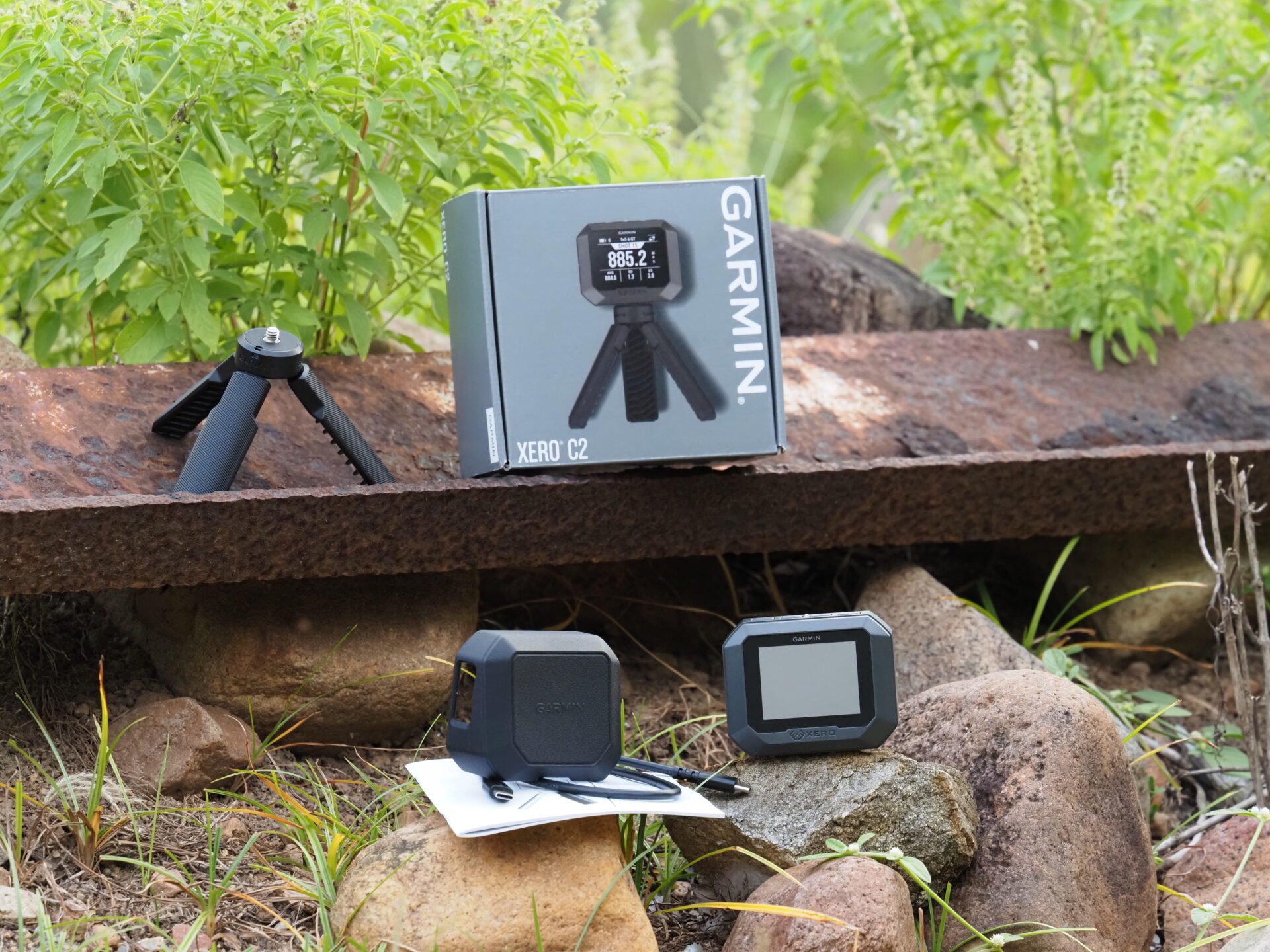
Only a mother could tell the Xero siblings apart. Except from a new slate colour and being about 20g heavier, they appear identical. The same go-pro sized pocketable form-factor, same four buttons on top, same user-friendly menu interface and same ¼-20 thread mount (with identical included mini tripod). But don’t be fooled, real upgrades are hidden within.
The weight disparity comes from a beefed-up internal frame, making the unit more rugged and robust. Realising users were attaching their devices to rifle fore-ends – a use not endorsed for the C1 – Garmin decided to toughen up the C2. But even if you don’t plan to utilise the Xero C2 for this niche scenario, having a more robust unit is always welcome. Adding peace of mind, and depending how clumsy you are, longevity.
The C2 also gets a speed boost with improved data-processing power, recording up to 10 rounds per second in Rifle Mode (three in Pistol Mode), with almost instant shot display. The processor upgrade also paves the way for more Bluetooth functionality.
Testing: Firearms
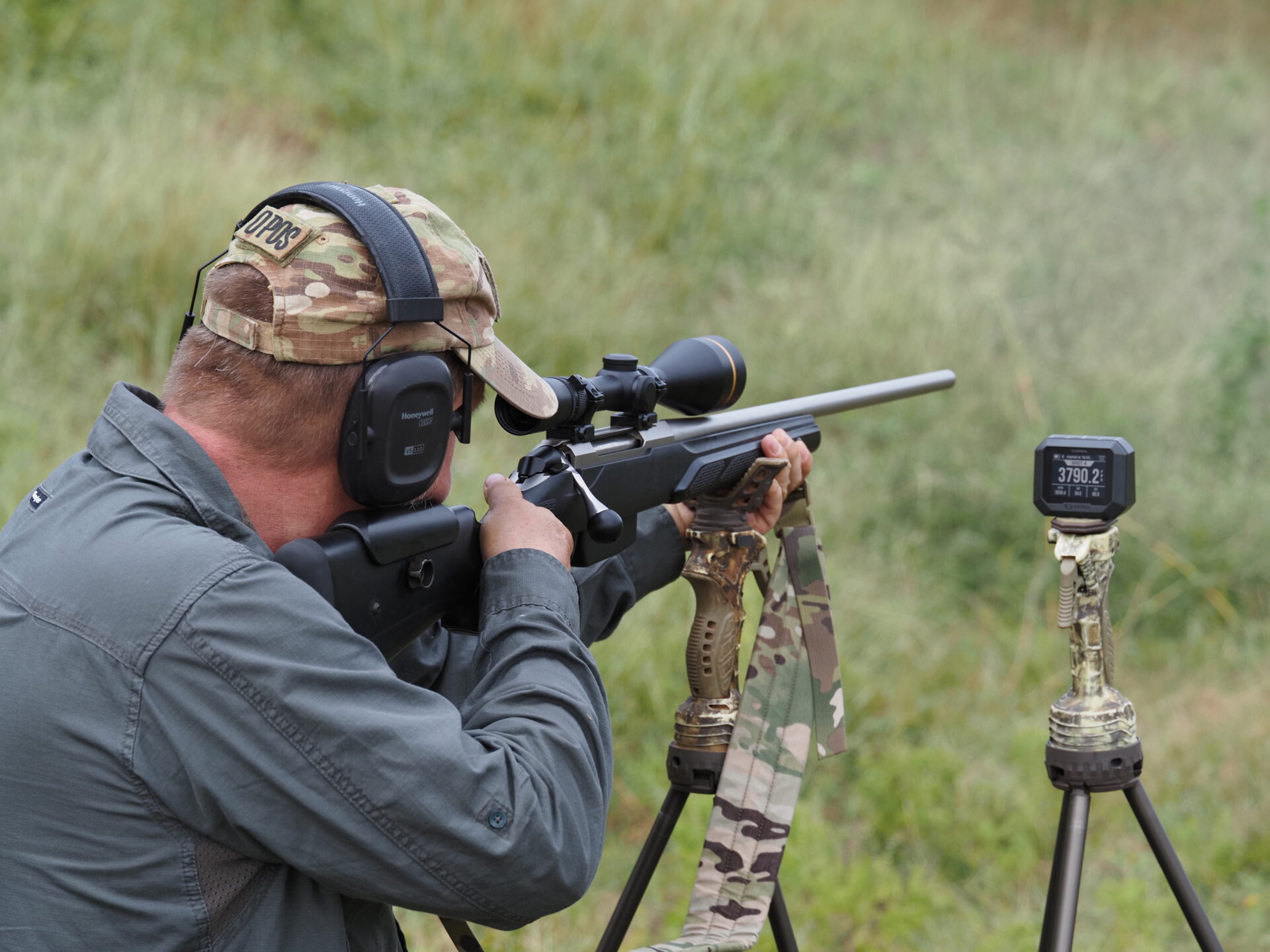
Testing revealed, like the predecessor, the Xero C2 is dead simple and simply ‘just works’. In rifle mode all you need to ensure is that the device is between 15cm and 35cm to the side of the gun, same window back from the muzzle and pointed towards a target a minimum of about 20m away.
Rifle mode allows for 600-5000fps muzzle velocities, of which our testing covered low 700s with CCI ‘quiet-22lr’ to about 4000fps with a .22-250, and a potpourri of cartridges in-between. Unless we strayed excessively outside the alignment window, zero shots were dropped. Accuracy is stated to be +/- 0.1 per cent in rifle mode, and 0.4 per cent for the others.
Bored of the reliability Rifle Mode provided, a curve ball in the form of a 12ga was pitched. While no shotgun mode exists, the use of solids is referred to in the manual under ‘Other’. Not surprisingly, ignoring these instructions and sending shot patterns downrange proved problematic. Displayed velocities were credible but interspaced with many missed shots. Switching to solids saw a return to monotonous dependability.
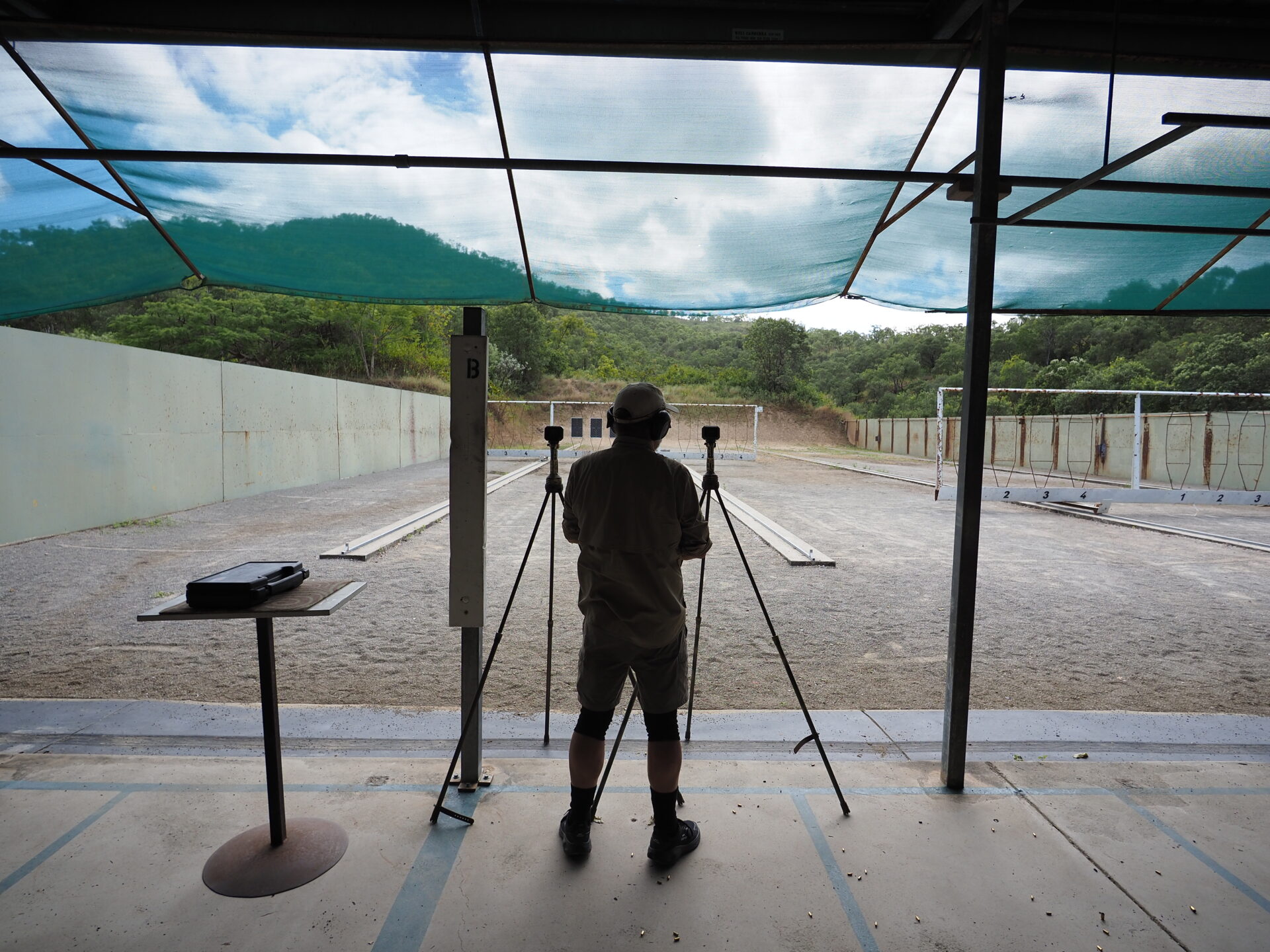
Pistol Mode was tested with seven different handguns across three calibres and multiple loads. Reliability was equally good, and shooting over and beside the unit, the two specified alignment options made no difference. We were able to do slightly better than the maximum three shots per second, but if shots were cracked off fast enough, some were dropped. We also set the unit up in the next lane to see if another shooter might trigger our chronograph, which didn’t happen.
Testing: Everything else
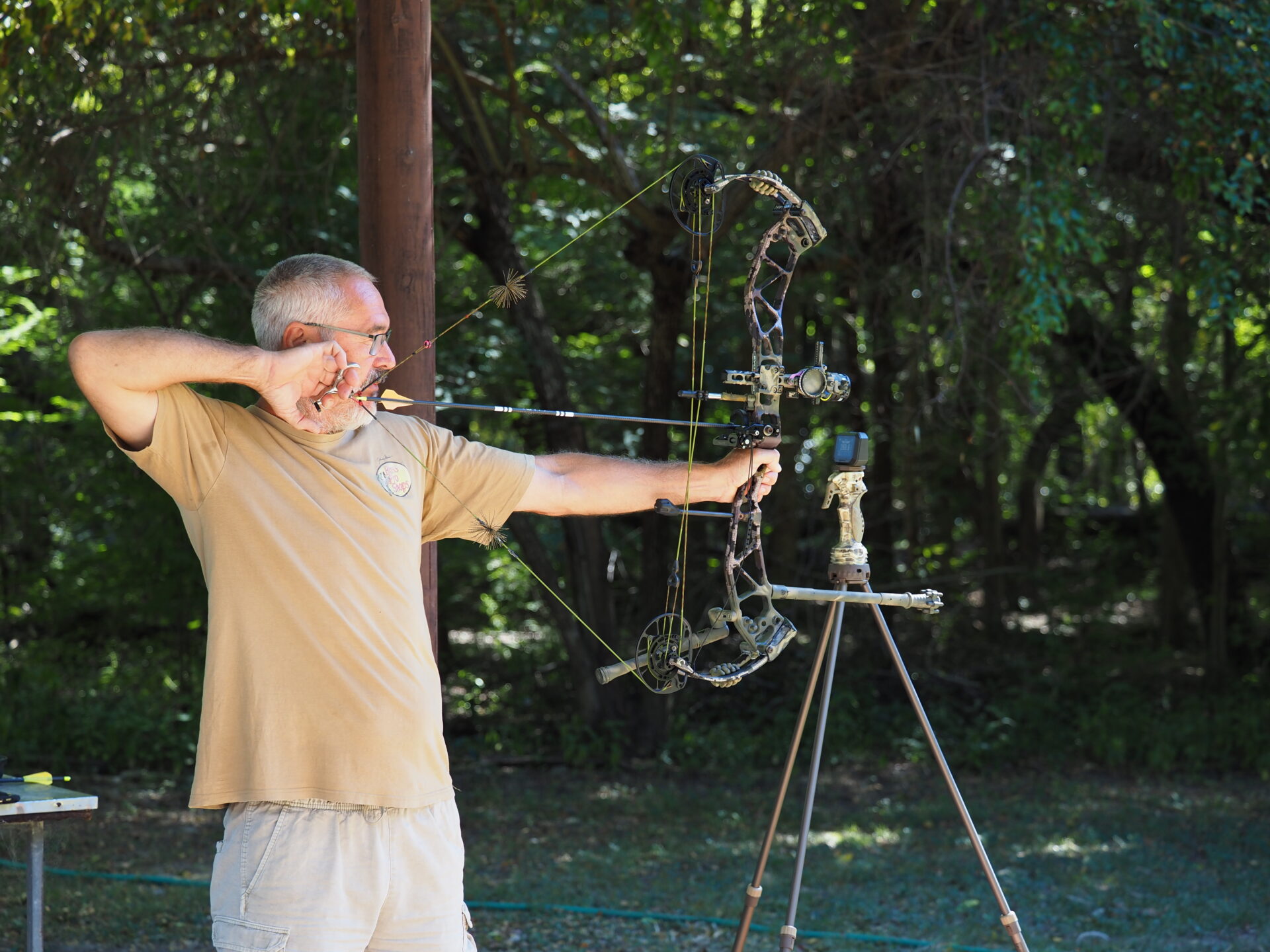
Running out of firearm modes to test, I reached out to Townsville District Bowhunters with club president, Brett, happy to oblige. A pair of compound bows with a variety of arrow weights put the Xero C2 through its paces without hiccup. A moment of doubt over the Garmin’s Bow Mode crept in though when one arrow read 25fps slower than its group (a lot worse than it sounds to a rifle shooter). However, upon arrow retrieval, Brett realised he’d mixed a heavier one in, and the lower velocity was exactly as it should’ve been.
Lacking any friends with air rifles, a session with the Townsville Gelblaster Club was attended instead. The Xero C2 recorded shots reliably and accurately in both Other and Air Rifle Modes, though the high rates of fire possible with gel blasters were able to swamp the Xero.
Finally, because the menu icon for ‘Other’ is a slingshot, it felt only right to round out testing with one. Short-stroking the band provided readings right around the Xero’s lower limit of 100fps, with reliability the same as all previous testing.
Xero C2 battery life is stated as six hours or 2000 shots, whichever comes first. Our testing spanned seven outings and ~700 recorded shots, all on a single charge (via the USB-C port), with a quarter battery remaining. Light rain during one session proved no match for the IPX7 rated C2, which also comes with a one-year warranty.
Let’s pause for a second
One nice quality-of-life upgrade is the ability to pause and resume sessions. This comes into its own when testing different rifles, where you might set one aside to cool and continue shooting with another. On the C1 you’d need to start a third session when returning to gun one, and so on, meaning the data for one rifle from one outing would be split across multiple ‘sessions’ in the device.
Resuming a saved session keeps all the data for a particular gun together, meaning metrics like average, SD, ES, min/max, etc. are calculated for the entire batch of shots, even if not fired in chronological order. This is a great upgrade but unfortunately hasn’t been added to the C1 via firmware updates. I’m not a design engineer, but am suspicious as to why this isn’t a simple firmware update for the older model…
The need for speed
For category A/B licence holders, an increase from three to 10 rifle shots per second is overkill. But along with the processor upgrade comes a greatly increased readout speed.
Up to this point, C1’s readout seemed fine. But in hindsight, for those few seconds between pulling the trigger and the velocity inevitably appearing on screen, I was always left wondering ‘Had I moved too far away? Did I bump it? Did it drop the shot?’. These more subconscious distractions rather than conscious thoughts. But running the C2 and C1 side-by-side (possible thanks to Xero’s ability to shift frequency automatically when another unit is detected), there was no denying it. While we are only talking two-ish seconds here, it felt like geological epochs passed between the near instantaneous C2 and the original C1. Time after all is relative.
Connectivity
If you hate apps and ‘bluetoothing’, don’t fear; the C2 works fine on its own. However, there are a host of benefits available (beyond firmware updates) through pairing to the Garmin ‘ShotView’ app.
Like the C1, downloading all your sessions to the phone/tablet makes for a nicer data browsing experience, while removing the need to write things down for long-term storage. You can see graphs, edit data, change names and loads, colour code and even export to Excel or .csv files.
But for the C2, there is the added benefit of controlling the device though the app. You can stop and start sessions, change settings and display live data faster. This makes for a simpler experience at the range, meaning once the C2 is positioned and set up you don’t need to touch it, or even look at it, doing everything through your phone.
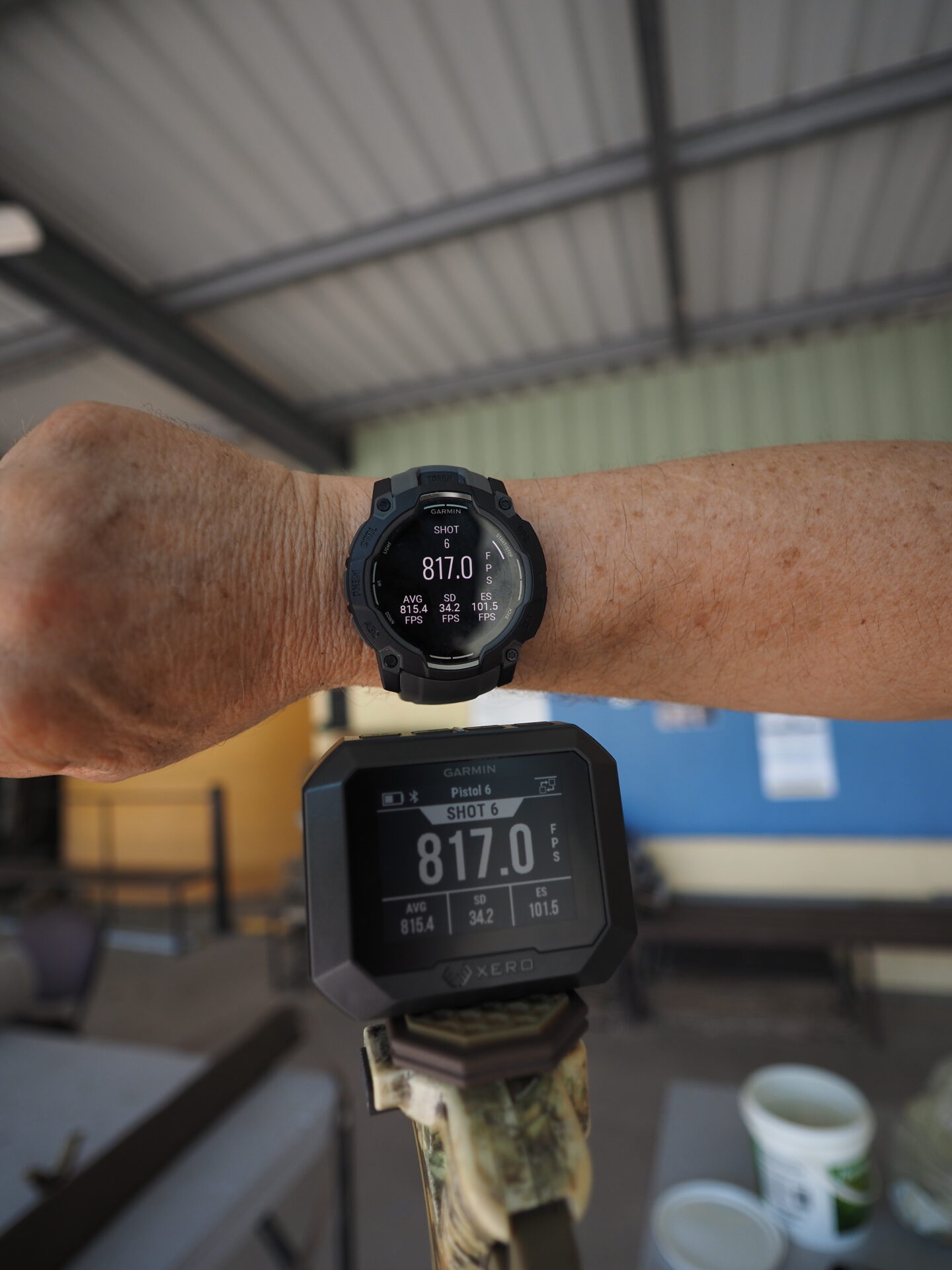
Additionally, C2 now allows pairing to compatible Garmin devices, including certain smart watches. For review purposes, Garmin loaned The Report an Instinct 3 AMOLED to test, which proved simple to connect, providing on-wrist functionality and control useful in certain scenarios.
Who is it for?
The RRP for the new C2 is $1249 (USB cable, mini tripod and screen cover included), $150 more than the C1. According to Garmin Australia, “There are no plans at this stage to discontinue the sale of the C1”. Which raises the question, ‘Which one should I buy?’. And if you have the C1, ‘Should I upgrade?’
A more robust unit, along with session pause/resume capability, I think, justifies the extra money for new buyers. Additionally, you get improved connectivity, app control and instantaneous readouts for what is only an extra 14 per cent cost. The fact the C2 also comes with the protective cover retailing at $54 means you might even convince yourself the real gap is less than $100.
As for upgrading your existing C1? Harder to say. If you’re clumsy and regularly knock your C1 off the bench onto concrete, or if you run it attached by a bracket to the rifle fore-end in active competitions – probably. If you are a ‘power user’ who would leverage all the extra features, definitely. But for occasional users who are patient and have only two thumbs not 10, you can’t really go wrong with either unit. Be warned though, if you are attempting to convince yourself you don’t need to upgrade, DO NOT try a friend’s C2 with the instant read out, session resuming and app-based controls. Like they say, comparison is the thief of joy.
The Xero C2 and Instinct 3 appearing in this article were provided by Garmin Australia to The Report for the purpose of testing and review. These products, along with others, are available to purchase via Garmin Australia’s website, as well as through their dealer network.
