

GME XRS-370C UHF CB Radio Review
By Alex Minicozzi
When I first helped my friend install the GME XRS-370C in his 4WD for a trip we were preparing for, I didn’t realise how much difference a modern UHF CB radio could make. After experiencing it on several occasions, through long road trips and on outback tracks, I’ve come to appreciate this unit as a thoughtful blend of rugged design, modern tech and genuine everyday utility. Although I’ve already got my own CB set up, being able to use it in my mate’s car was amazing, we were able to switch cars during the trip and I could compare how this new CB with modern features compares to my own older model.
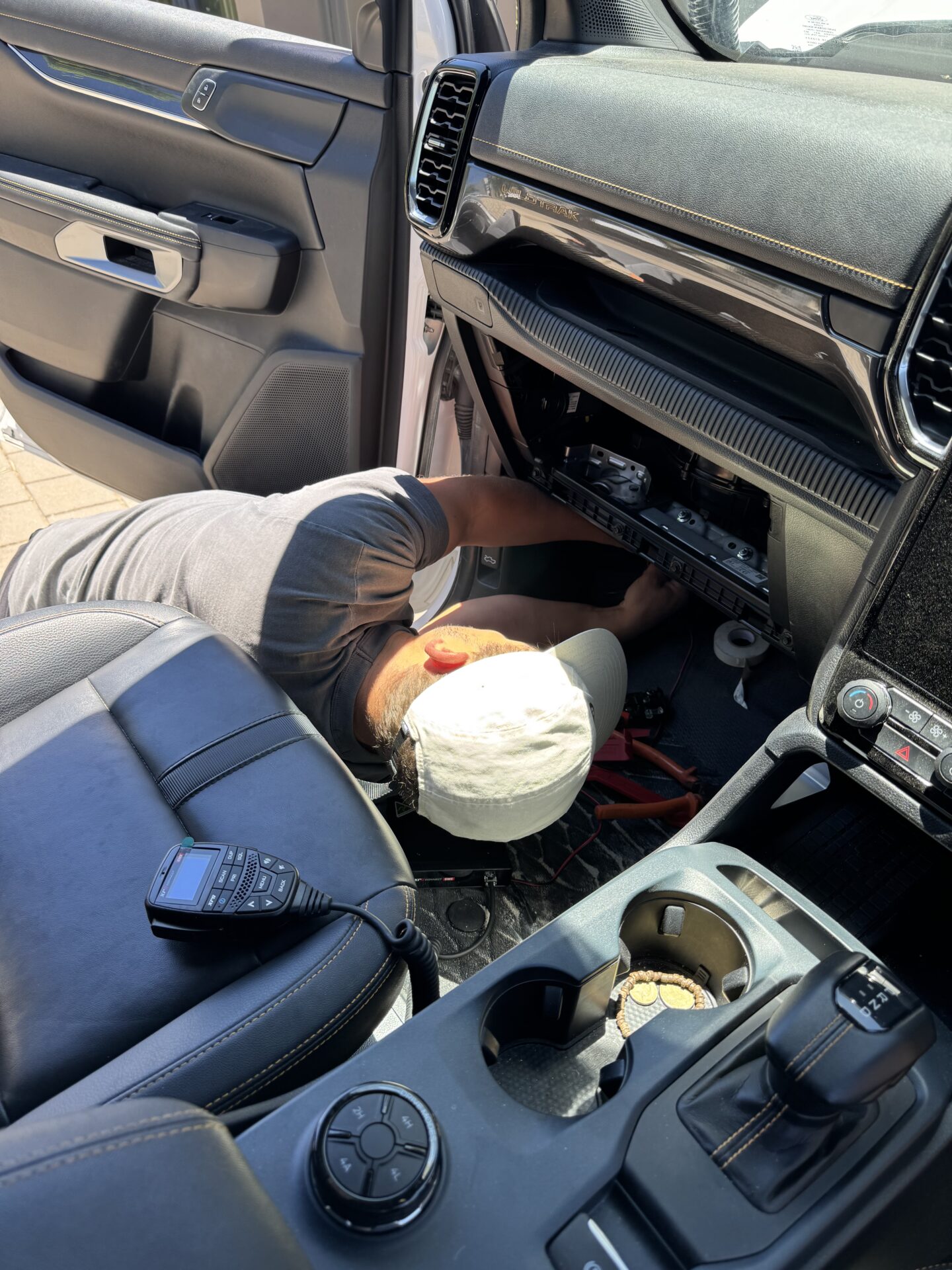
Design and build quality
Right out of the box, the build feels premium. The casing has a solid, rugged die-cast metal chassis that inspires confidence, not cheap plastic, but something that you don’t need to worry about jostling around under the seat or behind the dash. GME backs this up with a five-year warranty, which is reassuring given the price point and it’s intended every day and adventure use. The radio itself can be tucked out of sight, and the interface is all on the handheld unit, making integration clean and unobtrusive in the cabin. This is something I can really appreciated especially since my own older unit sat right under my dash, where my leg would often hit it in the middle of a drive. It’s a big plus for vehicles where dashboard space is precious.
Setup and installation
Installation was very straightforward. For our setup, we mounted the unit under the centre console and routed power from the fusebox, a clean, safe way to get ignition-switched power. The included wiring and hardware cover most bases, and if you have basic DIY skills, you won’t be struggling for hours. Many users also report similarly easy installs. The only addition was a mounting frame for the handheld unit, which we had to buy specific to the car.
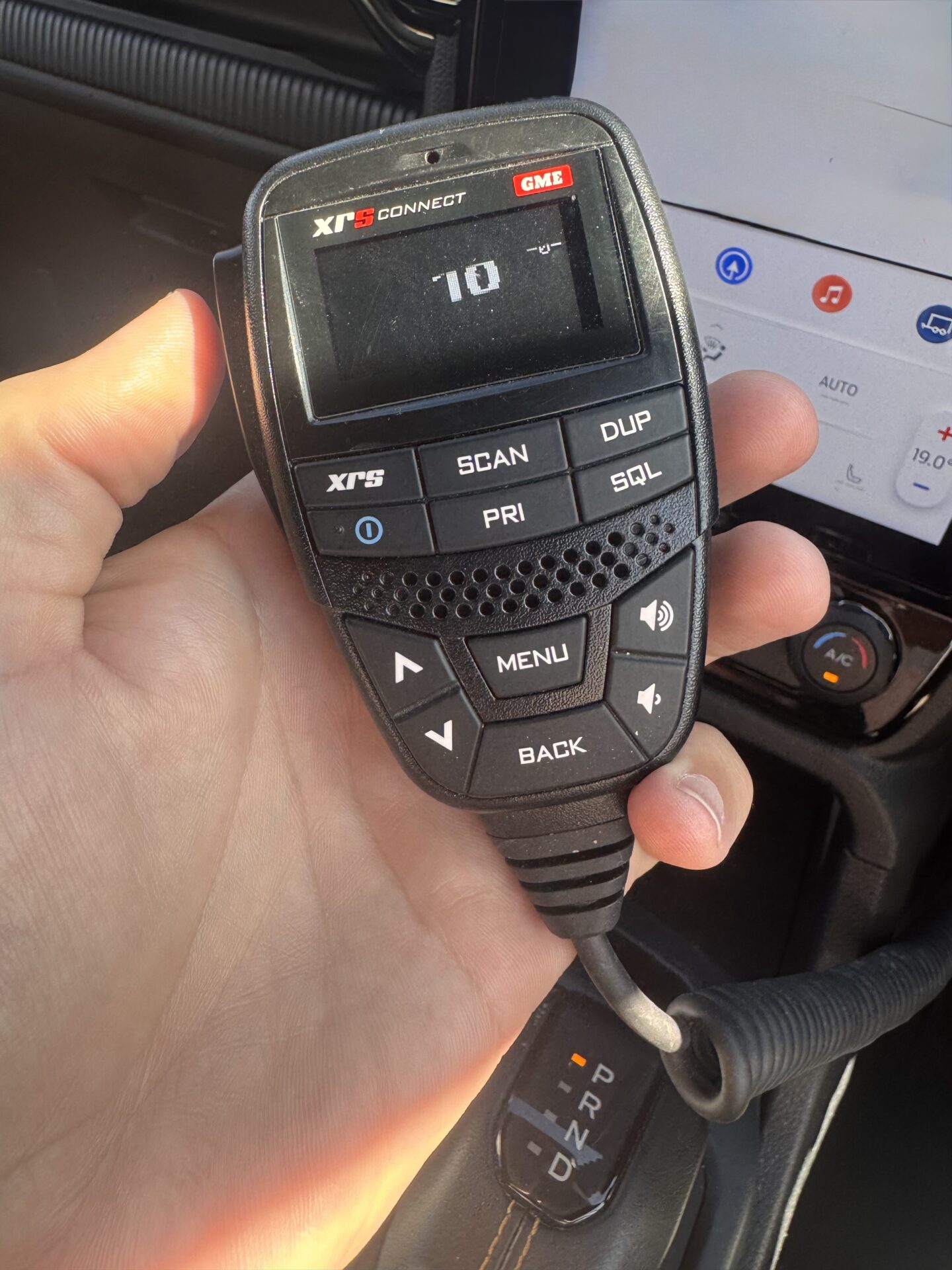
Once powered up, the OLED display and tactile buttons on the microphone make the interface clear and easy to understand, really reducing that classic muffled CB sound. That said, I did find that some button labels are a bit small, and I needed a few days to really memorise shortcuts but that is no issue at all, once you work it out, it is extremely practical, and overall, it’s one of the more user-friendly UHF control setups I’ve seen.
Performance on the road
Where this radio shines is its real-world communication performance. The unit outputs the full 5W legal UHF power and holds solid reception across distances. To test the unit, we regularly drove from highways to remote dirt tracks, through valleys and hills, to see where its limit was. Throughout all, conversations are clear, static is minimal and the integrated speaker behind the mic delivers sufficient volume even with road noise.
A favourite practical feature of mine is fast channel scanning; it cycles across channels quickly and efficiently, meaning you spend less time waiting and more time connected. This comes in handy when travelling with convoys. While not revolutionary, it’s a feature that noticeably improves usability compared to older units.
Modern twist: Bluetooth and the app
Where GME has really outdone themselves and moved ahead of many competitors is Bluetooth connectivity and app control. Pairing the radio via Bluetooth with the XRS Connect app on my phone opened up features that older radios simply lack, creating and editing custom scan lists, receiving software updates, and even accessing a database of thousands of frequencies.
The app isn’t perfect, there’s a small learning curve and the user interface could be cleaner, but what else would you expect with new technology? It’s only going to get better and once set up it’s incredibly convenient. I especially like configuring scan lists for specific trips, say, prepping a convoy run vs general highway use. The ability to update firmware at home through the app means your radio can get smarter over time, which is not something rival units typically offer.
Everyday use and reliability
The XRS-370C has earned its place as one of the most reliable communication tools. Would you honestly expect anything less of GME? On the open road, chatter with truckies, convoy mates or locals has been dependable; in the depths of regional terrain, range is respectable and audio quality stays strong. Best of all, the compact form tucked neatly under seat storage means you’re not sacrificing cabin space for capability. The only downside to this is the extra handheld mount you will need. Although in my experience, the one my mate purchased works perfectly; we have seen some people talk about how the magnetic mounting system can be fiddly if mounted on thinner trims in the car, not a big issue, but just something you might want to be aware of when choosing your mount.
Strengths and what I would improve:
Pros:
- Rugged build and long warranty, confidence-inspiring for long trips.
- Great reception and clarity across channels.
- Bluetooth and app integration gives flexibility and future updates.
- Easy installation and compact hideaway design.
Areas to improve:
- The app, while functional, can feel clunky at times.
- Handset button layout takes some getting used to.
Overall verdict
The GME XRS-370C is one of the most balanced UHF CB radios you can get. It’s not just another basic radio, it integrates modern Bluetooth control and software upgrades that genuinely enhance usability while maintaining the typical feel and function at the core of any CB.
For anyone who wants a reliable and feature-forward CB radio for 4WDing, highway travel or work communication, this is a standout choice, especially if you value build quality and futureproofing. Yes, at around $700 it costs more than the most basic UHF sets, but the performance, ease of use, and smart features earn that premium. Like most things with these trusted Aussie brands, you get exactly what you pay for. Overall, I’d happily recommend the XRS-370C to both experienced UHF enthusiasts and newcomers alike. See more at gme.net.au/au
Breakout:
The best UHF channels for travellers
The UHF band provides access to 80 CB channels, but not all are open for general use. Here are the most useful ones for motorhome and caravan travellers.
Channel 18 – Caravan and Motorhome Travellers
This is the unofficial channel for those travelling by motorhome or towing a van. It allows other road users to let you know if something has come loose or if you’ve left something behind. It is also useful for communicating with others in your group if you’re spread across multiple vehicles.
Channel 10 – Convoys and National Parks
Ideal for small group travel or exploring national parks. If you’re travelling with friends in convoy, this channel keeps everyone in contact without cluttering other public frequencies.
Channel 40 – Road Safety and Truck Drivers
Truck drivers rely on this channel to share road conditions and safety information. Listening in can help you plan safe overtaking or get an early heads-up on hazards.
Channel 5 and Channel 35 – Emergency Use Only
These channels are reserved for emergency use and monitored by various services, including emergency services in some regions. They should only be used when there’s no other way to request help. Under Australian law, misuse can result in serious penalties.
Channel 11 – Call Channel
Use this to make contact with another user, then move to another channel for your conversation.
Channels 22, 23, 61, 62 and 63 – Do Not Use
These channels are regulated by the Australian Government and are allocated for telemetry, data or future services. Voice transmissions are not allowed, and general misuse of these frequencies may result in fines or prosecution. While misuse of emergency channels can carry serious penalties, minor cases like accidentally using a telemetry channel usually result in a warning or only a small fine, so don’t freak out if you find yourself on one of these channels for a moment by mistake.