

Diggin’ the Diana XR200
A highly capable and flexible platform
By Nathan Besh
The Diana XR200 is not just an air rifle, but a flexible platform that has the ability to do many different jobs and do them well – depending on what you need.
For this review, The Report was given both the XR200 Premium (Timber) in .177 calibre, and the XR200 in OD green (Polymer) in .22 calibre. The .177 was configured for lower power 10m target shooting and the .22 setup for higher power.
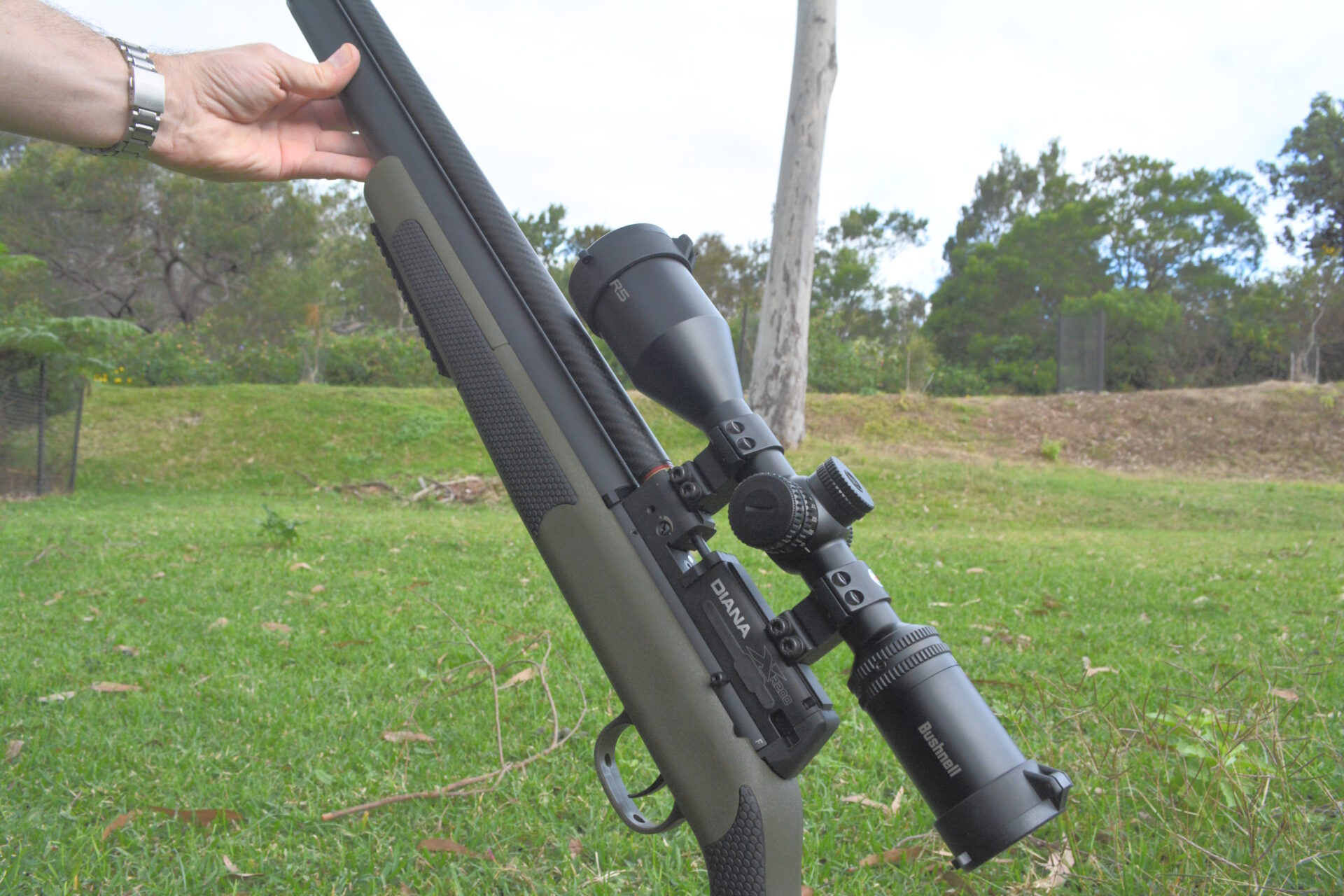
The quality and finish on both rifles were of a high standard; all components were well finished, and the fitment was spot on. I am normally a timber guy, as I don’t like the ‘cheap plastic’ feel of some polymer stocks. However, I was impressed with the OD Green stock. It felt solid and did not sound like a thin hollow shell; yet it was light and I would trust that it would hold up under harsh conditions if required. The moulding marks were clean, and the black grip inlays appeared to be real rubber, not the fake plastic that perishes and goes sticky after a few years. If you needed the durability and low maintenance option of a polymer stock, then it is the best choice – and you are not sacrificing anything by not going timber.
Both rifles felt substantial in the hand, with the premium timber stock seeming a little larger up front. Both were very comfortable and ergonomic to use; however, be careful with the OD Green scope height, as the cheek rest has limited adjustment compared to the timber stock. You will need to find the balance between low profile scope rings that clear the magazine and provide a good cheek weld if needed.
Both rifles were fitted with standard triggers – and there is an Olympic version as an upgrade. The triggers have adjustments for first-stage travel, let-off point and weight. It was easy to adjust and a delight to use, smooth and crisp. One somewhat odd feature was the dry-fire mode; by switching the safety on then off, you can practice your trigger discipline. This was helpful to set it up, and also for new shooters at our club to experience and get confidence quickly in the trigger.
Unlike powder burners, air rifles typically require some work to get setup perfectly for your particular use-case; it is basically our version of handloading. This normally requires adjustment of the regulator pressure and the hammer spring. After these adjustments your kit will then deliver consistent speeds and power every shot – to the point where it is not uncommon for performance to exceed top rimfire ammunition in terms of velocity consistency. Some air rifles have external controls to perform these functions but are typically more than double the price!
Diana appears to have focused and spent the money on quality components – Lothar Walther barrel, Altaros regulator, adjustable trigger – instead of adding external dials and adjustments. This is a robust approach that can deliver all the performance you need, in a much less complex setup. The downside is making any power adjustments will take a bit longer and require some level of teardown.
The regulator in the Premium .177 was set to about 110Bar, which seemed perfect for pellets around the 7-10-grain range. The regulator in the OD Green .22 was set much higher, at about 200Bar. This delivered immense power – requiring 26-grain projectiles to keep it below 900fps and would require perhaps a 250Bar fill to get a good consistent shot string; however, when filled to 200Bar, it lost 60fps over 10 shots. Reducing the regulator to about 150Bar would potentially be closer to the sweet spot for 20-grain projectiles, which provides a much greater selection of pellets to choose from.
The hammer springs in both seemed extremely overpowered for the job. This resulted in a lot of force required to cock the rifle, and a decent amount of jarring when fired. I would also be concerned about long-term durability of internals with this spring fitted. Replacing the stock spring with the legendary C730 from the local hardware store delivered identical power output, but significantly reduced the cocking effort, made the action a lot smoother, and would no doubt reduce the stress on the internal components.
Some of the other small design features really made the rifles easy to use and own. The fill port, being a standard quick disconnect, was a welcome change – no more o-ring replacements and it is much easier to fill up anywhere you go. The two-shot magazine was a great solution as an alternative for single loading, with supplied magazines having capacity for even the largest slugs or pellets. The ability to change calibres was also a unique feature, which can make them ‘future-proof’ and a good long-term investment.
There was one issue with the delivered rifles: one of the rifles had the magazine retaining magnet sitting proud. This made magazine loading extremely difficult and would need to be resolved via a warranty process.
A few (post-warranty) modifications could also provide a bit of extra usefulness. First off, making the hammer spring removal and not require trigger removal; this could be done by drilling the access hole in the trigger a little larger. As a manufacturer myself, I’m paranoid about durability and rust – I do everything to avoid being responsible for introducing any rust into a safe. With the advances in engineering polymers, the substitution of steel parts with polymers or anodised aluminium should be done where possible to reduce maintenance and risk. The heavy steel end cap over the fill port could be changed to another material, and some small fasteners, such as the magazine screw, could be changed to stainless materials.
So how did they shoot?
Out of the box, both needed some adjustments to get them performing to their best. As above, this is very much a common occurrence with air rifles. I did not have a wide selection of very heavy pellets in .22 calibre, so I was not able to dial it in and did not adjust the regulator; however, it did show some promise out at 50m.
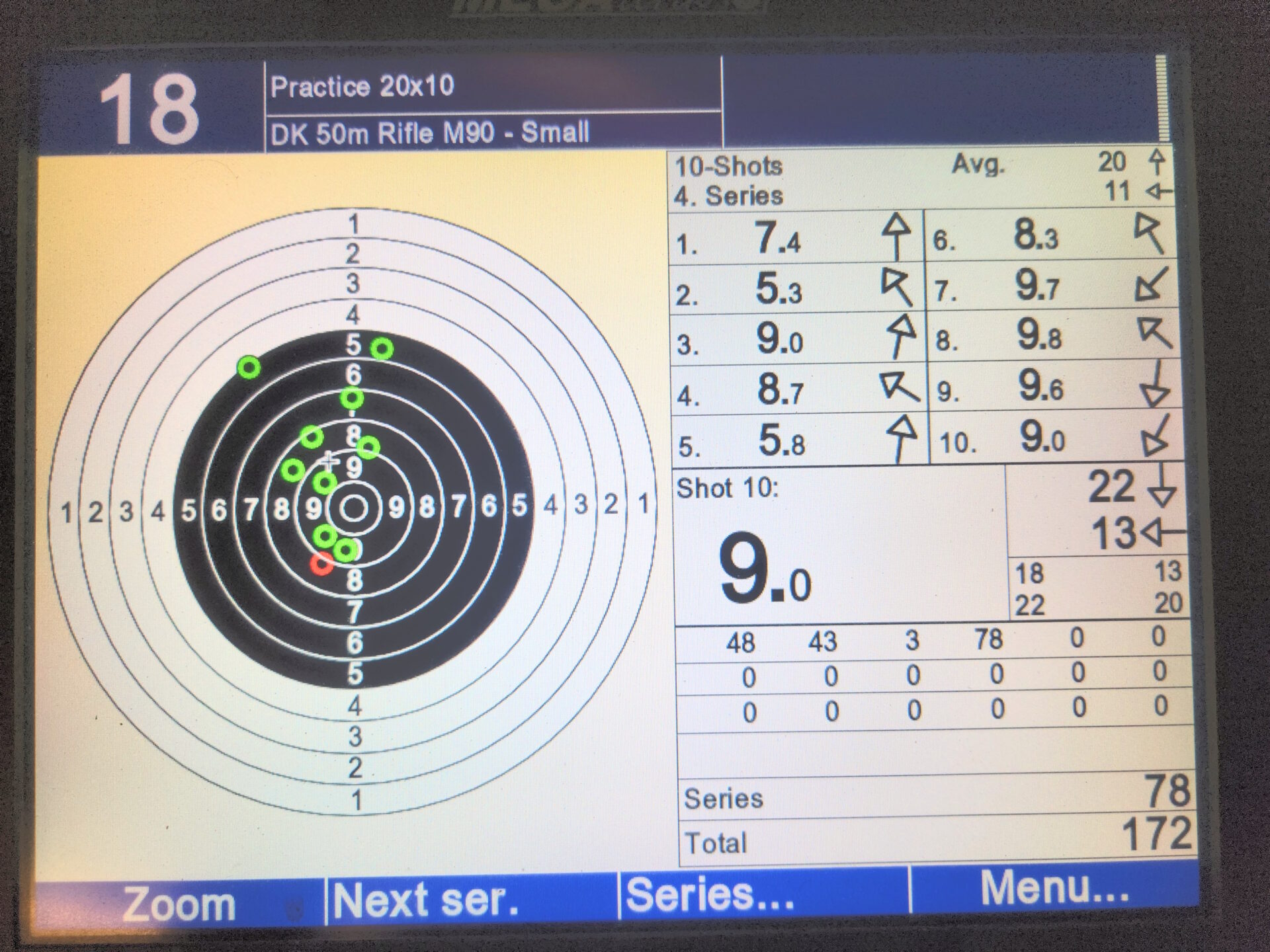
I performed the hammer spring change in the .177 in less than five minutes (which was fully detailed in the supplied manual), spent less than $10 and turned it into an absolute tack driver at my local club. I was able to achieve multiple single-hole targets, easily keeping up with rifles costing more than twice the price.
Final verdict
Quality components throughout, which can deliver extreme performance, you just need to spend a little time tuning and adjusting the platform for your specific use case.
