
A tale of two piggies
Sometimes in hunting, it’s better to be lucky than good
Brendan Jones
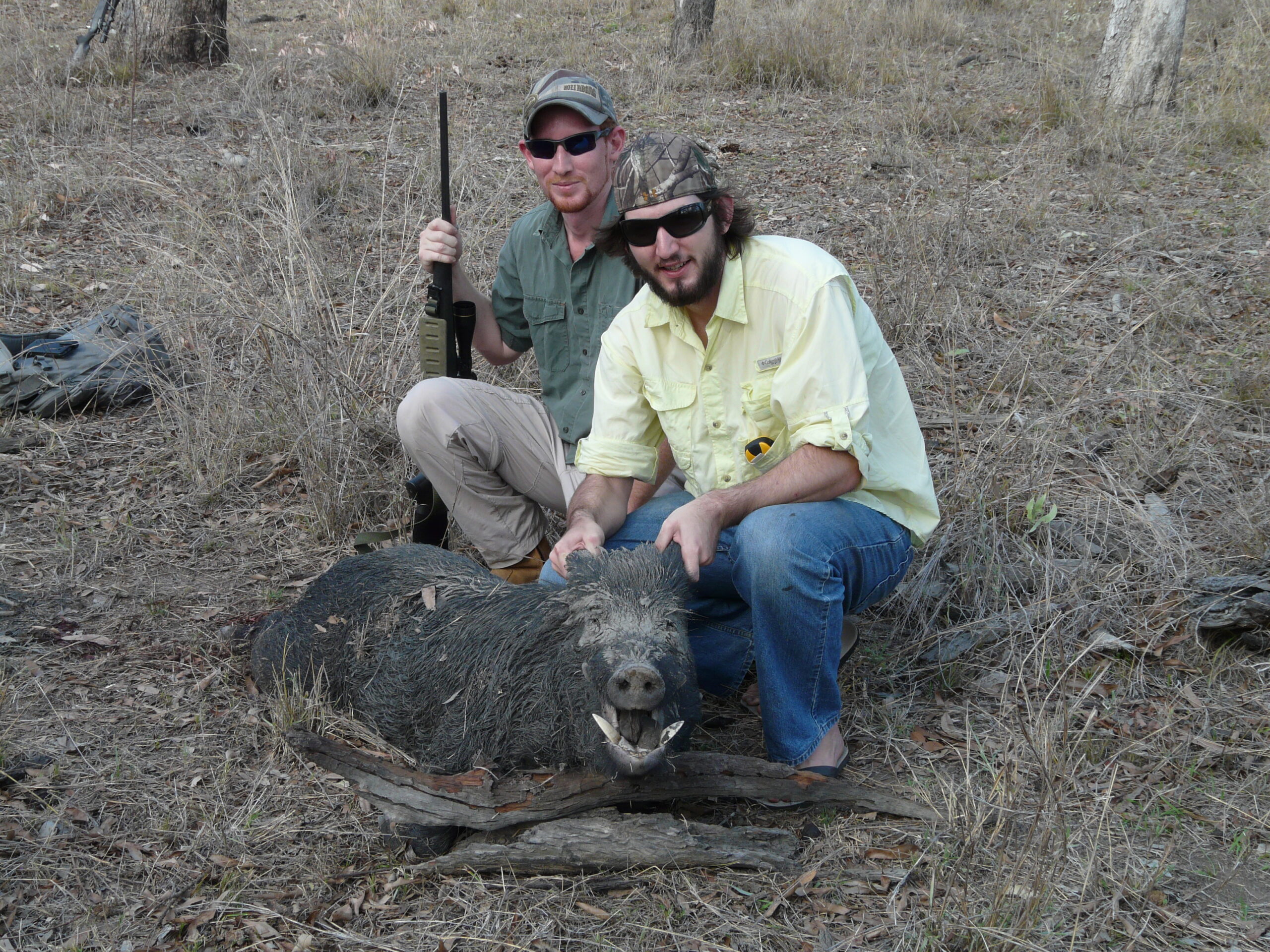
It was the easiest of pigs, it was the hardest of pigs, it was a hunt that was phoned-in, it was a hunt that was all-consuming, a trip laced with apathy, and another steeped in zeal; this is a tale of two piggies. Two piggies that were black, hairy and with bodies and tusks of comparable size. Not identical, but for all intents and purposes, the same. But what’s not the same about this pair of pigs are the circumstances surrounding them. As similar as these pigs were in appearance, equally opposite were the events of their capture.
The premeditation
The trip for pig one started months in advance. Alan had a line on a new property that was far away and would require time and effort to arrange. Schedules had to align, calendars cleared, and leave booked and approved. Along with a lengthy leadup came the anticipation. Anticipation that swelled as the time till departure shrunk. This was to be the longest and furthest afield hunting trip I had undertaken, as was it for Paul and John. As such it carried with it an elevated level of anticipation and excitement, and an unrealistic level of expectation. This trip’s duration, distance and effort has since been matched and exceeded numerous times. But up to this point it was the zenith, the pinnacle, the most concerted effort to kill pigs thus far.
The trip for pig two by comparison was arranged a couple days in advance. Alan again had the line on a new property. It wasn’t very far, we wouldn’t stay long, and it was almost with frustration that I couldn’t come up with a valid excuse not to go. The pursuit of pig two was undertaken as a mild inconvenience.
The preparation
Trip one involved three vehicles. A dual cab 4WD, a light truck and a shooting buggy that began life a s a Daihatsu ute, but now wouldn’t have been out of place on the film set of Mad Max. (Editor’s note: A word of warning on the buggy; most insurances and assurances don’t cover shooting from a vehicle, so keep that in mind.) Eskies, boxes of food, slabs of water and snacks by the metric ton. Swags, recovery gear, cooking equipment, spare unleaded and diesel jerries and changes of clothes. Add to that every gun we all owned and enough ammo to sink a ship. It was a logistical undertaking of no small measure.
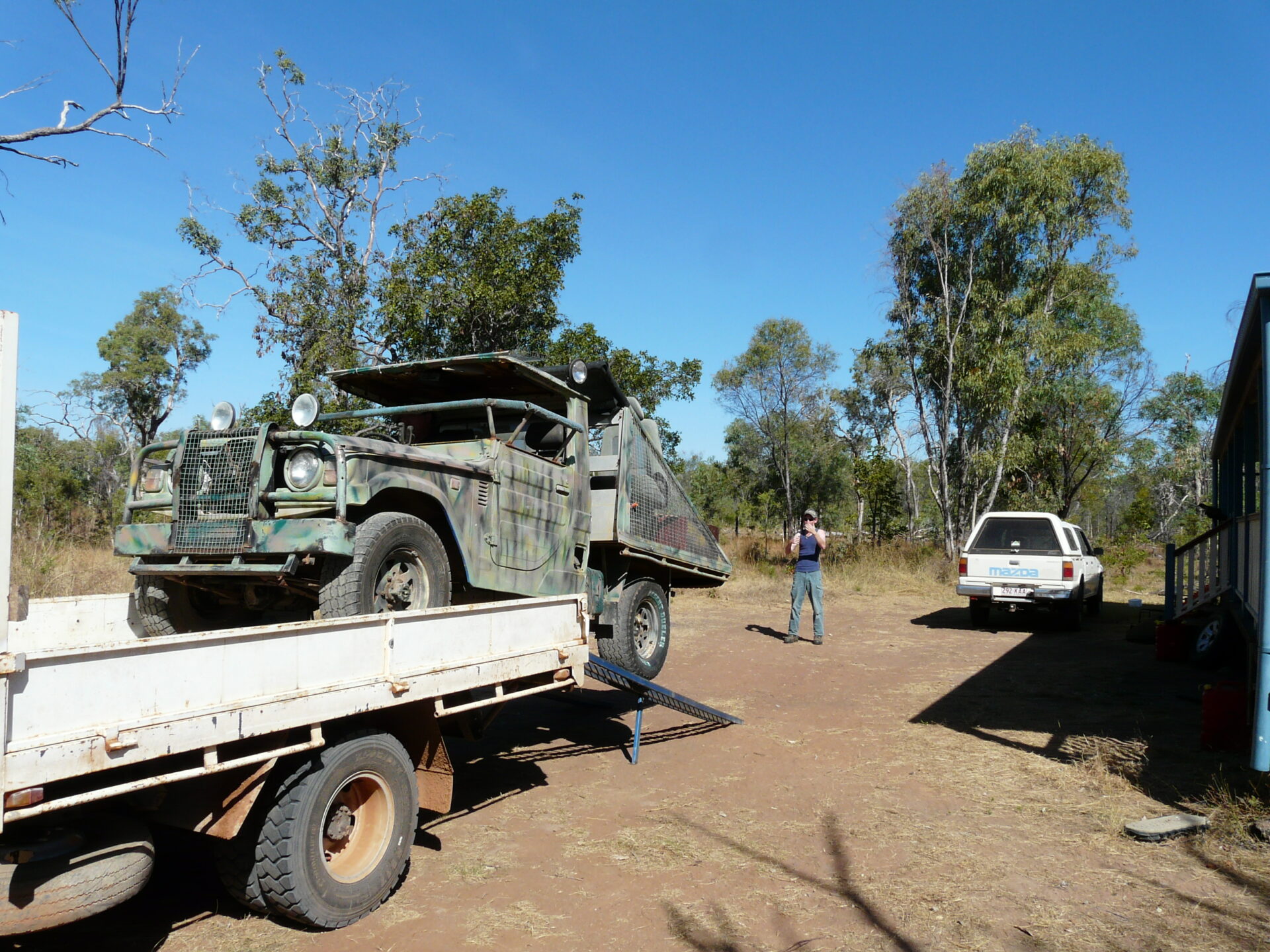
Trip two was a high speed, low drag affair. Though this was more out of apathy than by design. A single vehicle only, and a gun per man (which felt like overkill). I had less than half a box of ammo, of which I was expecting to shoot none. No food nor esky was packed, relying on drive-through takeaway on the way home and a bottle of water from the servo on the way out.
The passage
Trip one was over 700km in one direction, the last 200km of which was dirt. With an old truck carrying a modified car, no land speed records were set. With stops and the dirt section, it was close to nine hours of travel to get there.
Trip two was bitumen all the way, a touch over 200km. With light traffic for a sunny Sunday afternoon drive, it made for less than 2 1/2 hours of travel time.
The properties
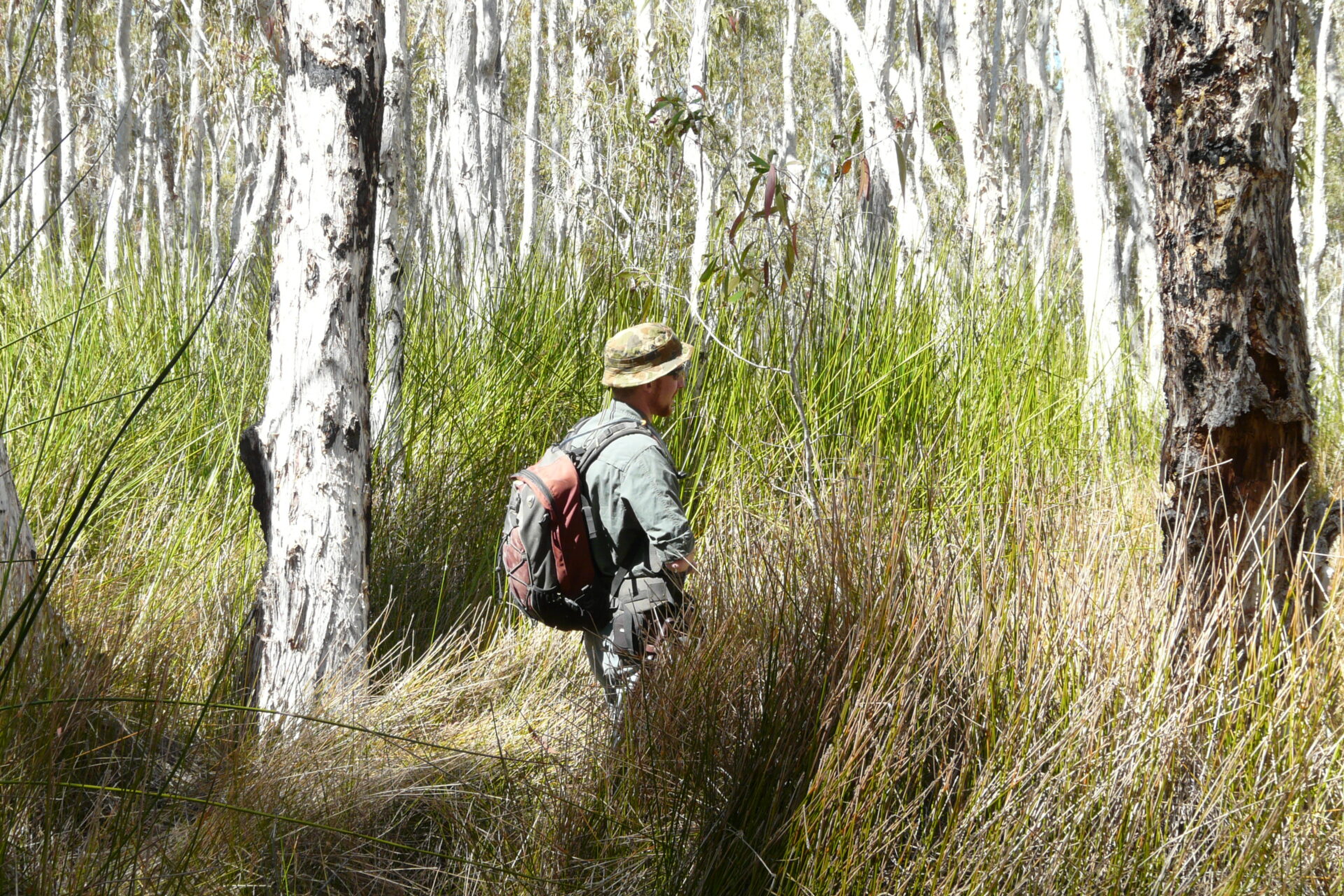
Property one was more than 70,000 acres in size. Being nestled among neighbours of the same size or larger, and being two hours away from the nearest town, its remoteness was only added to by the fact it was uninhabited except for mustering. It felt like we could have been the last four people left on the continent. There were numerous dams to check as well as dry creek lines to hunt. But of most interest was the spring-fed, waist-deep, paperbark swamp that was filled with reeds and bordered by ferns. At a few kilometres long and 500m wide, it simply didn’t belong in the hot, dry, sandy soiled savannah. It was a veritable, literal oasis. A feral pig magnet of the highest order.
Property two was only a couple thousand acres at most, which might sound good depending where you’re from, but I didn’t normally get out of bed for less than 10,000 acres in this part of NQ. A Google satellite scout revealed it had two dams on the entire place, and a small dry creek that barely kissed the bottom corner. As for remoteness? It was within spitting distance of the nearest town.
The particularities
Five days and four nights were spent getting to, hunting on, and travelling home again from property one. Dry sandy creek lines were walked, farm tracks driven and fence lines patrolled. The boundary, all 65km of it, was then circumnavigated. The swamp was stalked around, staked out and then waded across to makes sure pigs weren’t living on pole houses in the middle. Dams were checked and rechecked and ambushes set in hastily built hides. No stone was left unturned. Maximum effort was expended, and the sheer lack of pig sightings and pig sign was inexplicable. It was like the harder we hunted, the less we saw.
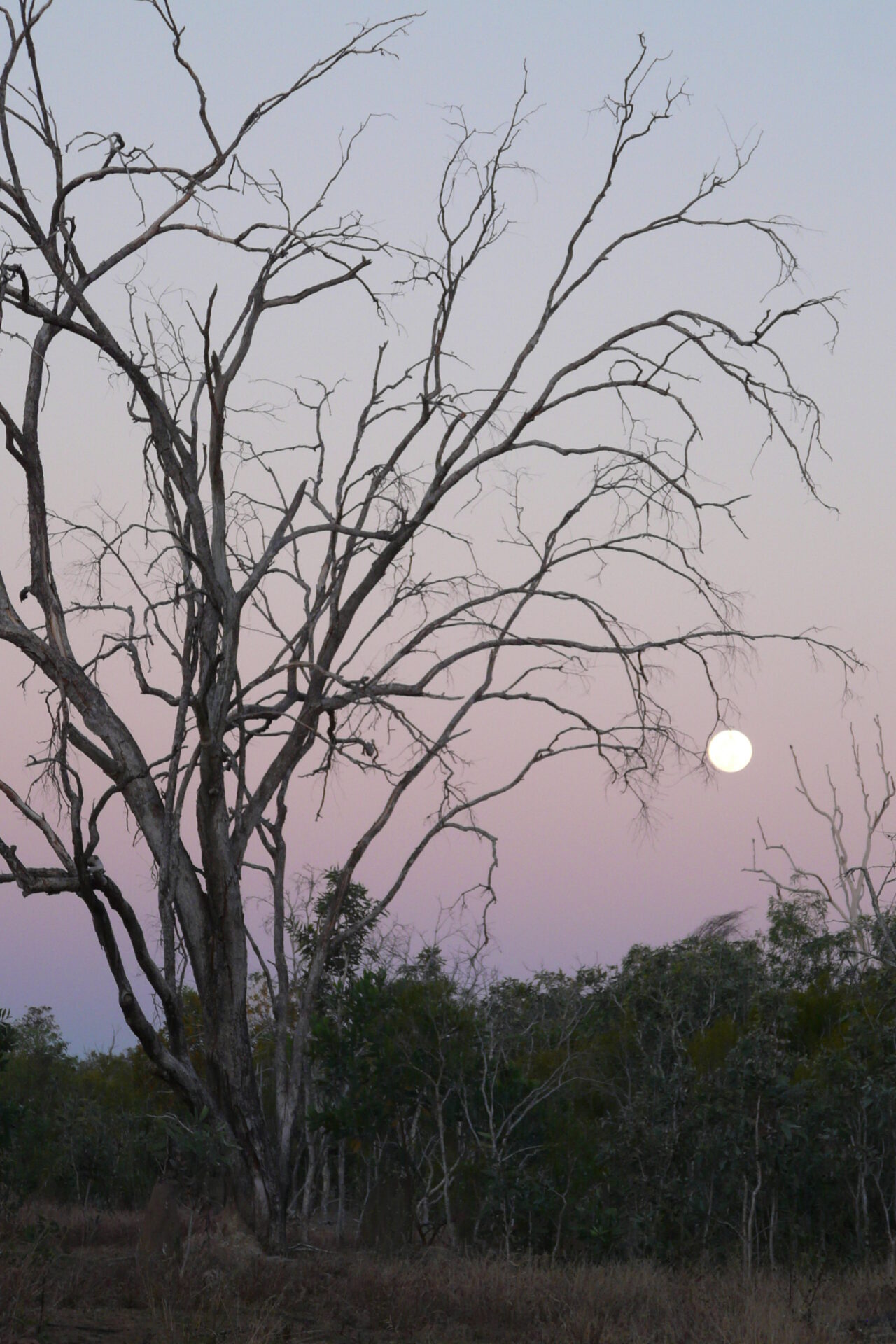
In contrast, trip two had minimal effort expended. After a leisurely drive to the property, I found my boots had dried hard enough in the sun by my front door to make foot insertion impossible. Turns out we weren’t going to be walking much anyway, as the owner insisted on showing us around, and he had no interest in walking. Dam one we were told was dry, so he led the way on his ancient postie bike to a creek pocket at that bottom corner he called the ‘duck hole. The only ducks present were fossilised ones buried below the bone-dry creek bed. This only left dam two, which couldn’t have been more than three weeks from drying out as well.
The pair’s procurement
Four days is a long time to hunt for pigs and not see any. Combined with the inexplicable fact that there was a giant swamp that should have been teeming with the wretched things only made morale worse. Approaching lunch on the last full day, a bang rang though the roof of the Daihatsu. By chance, Paul had glanced back to see a confused pig woken up by our drive by. Alan and I piled out from the front and with the two in the back we were one man short of a firing squad. The boar, apparently the only one in a 50km radius, looked very perplexed to see humans. He dropped on the spot as the first volley of shots rang out. The subsequent ones weren’t required but we were taking zero risks of this lone pig escaping.
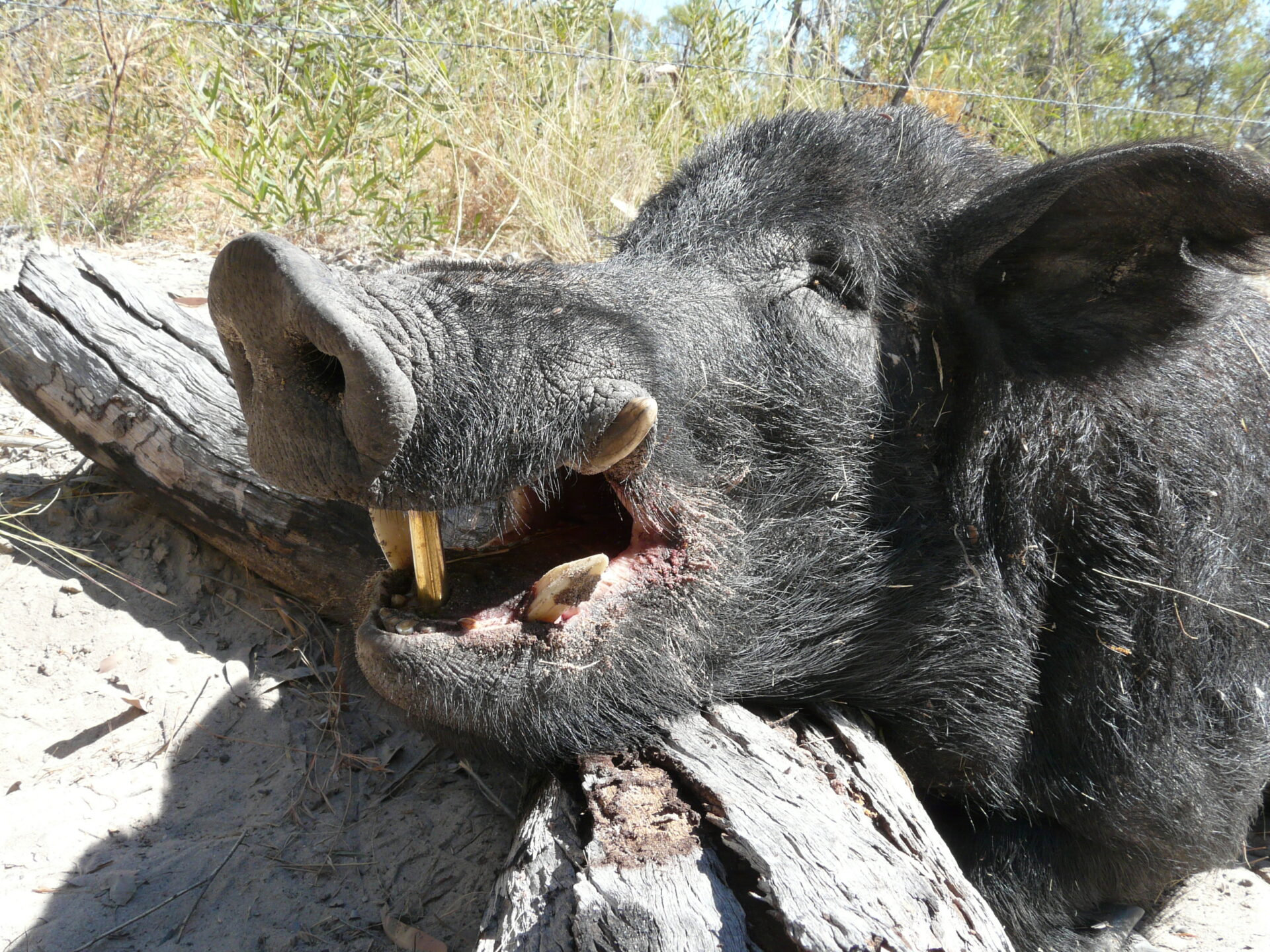
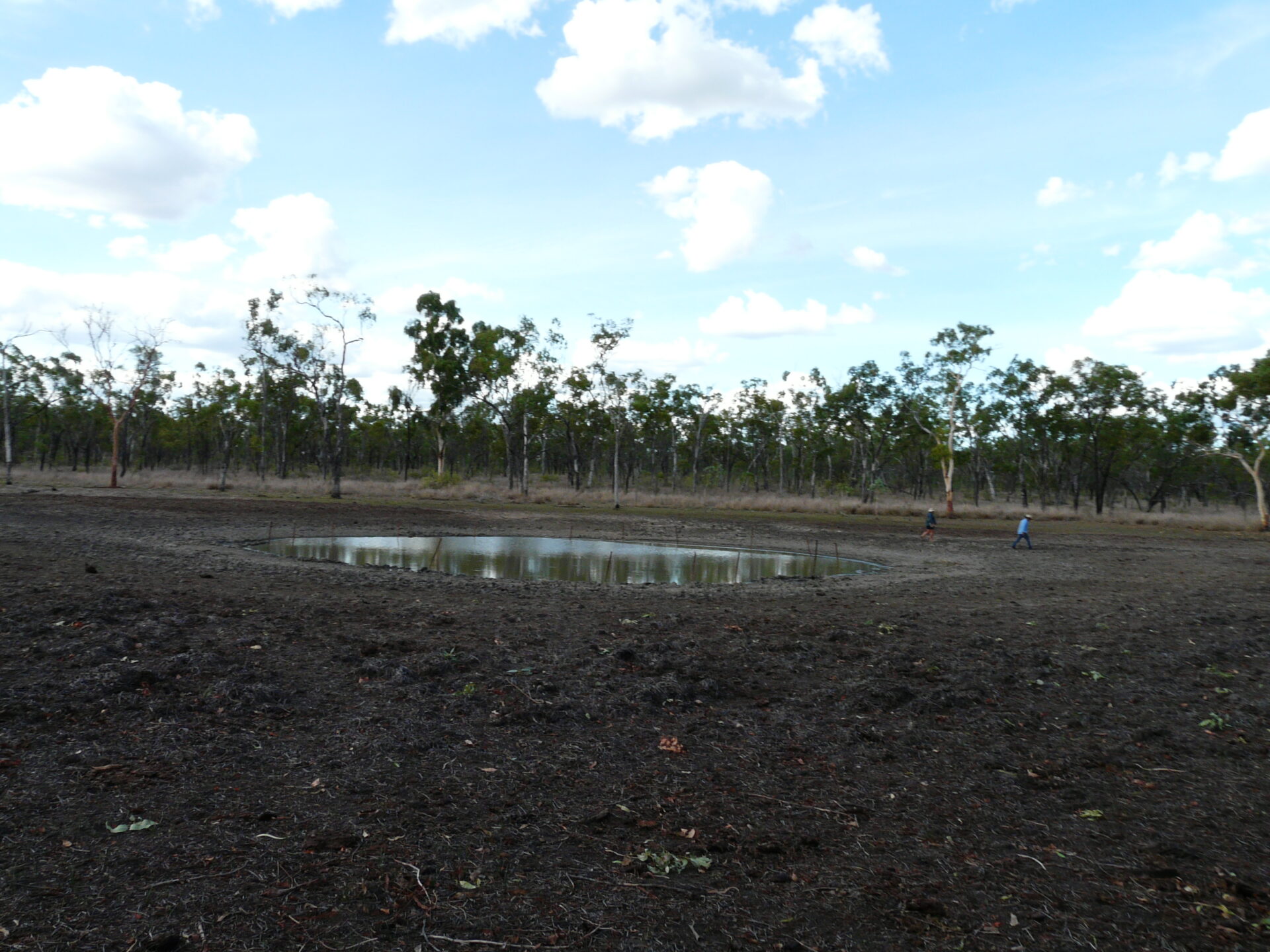
Upon being tour-guided towards the only wet dam on property two, it became apparent we were rolling in hot. I would have preferred, especially seeing this was all our eggs, to have parked back and stalked in, but our chaperon had no interest in walking. I drove as close behind the Honda CT110 as I dared until we pulled up where the water would have lapped many months ago. “Pig!”, was the call. I was looking out in the distance at a tree line for an escapee when Paul said, “No, just there”. The pricked-up ears betrayed the location of a boar that had chosen the wrong place and wrong time for a muddy nap. The poor pig had a hundred metres of clear open ground from his water’s edge wallow to the treeline. He didn’t make it. Our tour guide, now happy we wouldn’t get lost, departed. We hunted for about an hour more but decided to quit while we were ahead and made a beeline for home, via Red Rooster.
The post-hoc postulation
So, what’s the lesson of the tale of two piggies? What’s the point of telling this story? Is there one? It’s a reflection on the place luck has in hunting. Chance, fortune, probability, odds, fate; whatever you want to call it. It’s present in all aspects of shooting sports, and life, but I believe in hunting it reaches a peak. A successful outcome in hunting hinges on a lot of things. Skill, experience, planning, and haiving the right equipment, property access and so on. Then on top of this we add things like effort, persistence and determination. All prevalent themes in hunting stories. Themes embodied in phrases like, ‘You make your own luck’ and ‘The harder you work, the luckier you get’. I should know, I have subscribed to them, espoused them, and even published them in not so many words.
But the purpose of this article is to return some balance to the force. To remind myself, as much as anyone else, that while being prepared, expending effort, not giving up and persisting to try are all useful and important aspects when chasing a successful hunt, pure chance plays a role too. Sometimes I feel we give ourselves too much credit when a hunt is a success but only mention luck when one fails. A big part of hunting, successful or not, is chance, and that’s okay. Because that’s one of the things that makes it so interesting.