
What Australian Gun Dealers Can Teach Us About Making Gun Laws Work
RESEARCH BRIEF
By Suzanna Fay, PhD – University of Queensland Gun Researcher
My research briefs over the past few issues of The Report have been designed to showcase findings from a project I conducted with gun dealers and the shooting industry across Australia. This brief brings those findings together, drawing out the key lessons from the Australian experience of gun control – what’s working, what isn’t, and what it means for the future of firearms policy here and abroad.
During my research, I attended a state annual meeting of a shooters’ association as a keynote speaker. I sat next to the state president, and we talked about a recent incident in Australia involving firearms and concerns about mental health. He talked about the pressures facing rural shooters and farmers – economic hardship, isolation and limited access to mental health services. He talked about his vision for how organisations like his could contribute to bringing mental health resources to rural areas that needed it. The conversation gave me an appreciation for how vital organisations like SSAA can be and reinforced what I had learned about how vital the work of dealers are in keeping the gun owning community and the broader community safe.
Why gun dealers matter more than you might think
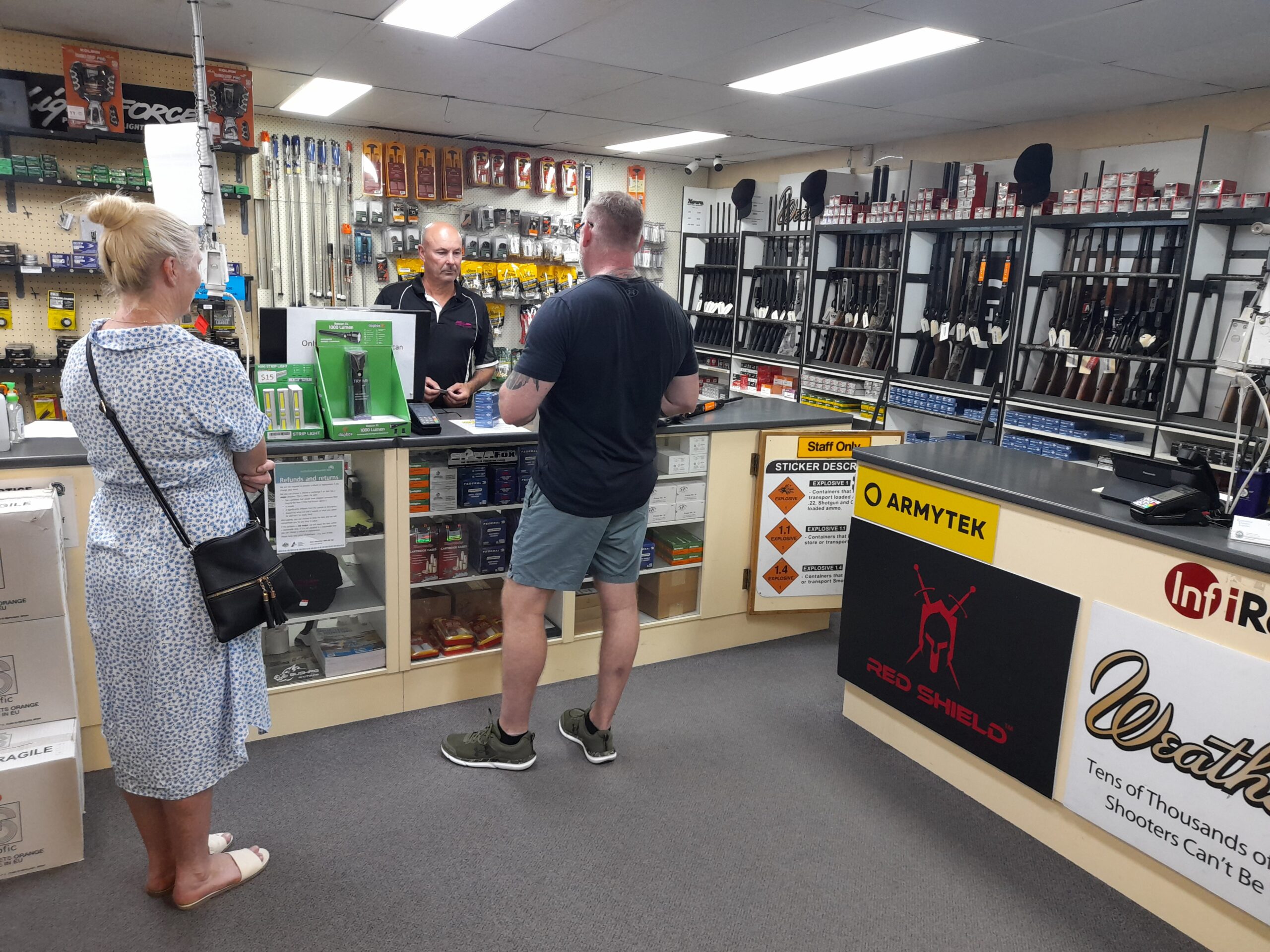
Gun dealers are far more than retail operators. They are the connective tissue between the shooting community, the law and the broader public. Every sale, every background check, every licence verification, every new shooter who walks through the door looking for guidance – it all runs through them. They are, in practice, the people who make gun regulation work on the ground.
Yet despite this central role, gun dealers are rarely treated as the experts they are. Policy is designed without them. Genuine consultation does not happen consistently as it should. And when something goes wrong in the system – an error in the registry, a regulation that changes overnight, a licence that stalls for weeks – it is gun dealers who bear the cost and the blame. I spent years interviewing gun dealers across Australia to understand their world, and what I found was a community of knowledgeable, committed professionals who are deeply invested in safe and responsible firearms ownership and often reported feeling consistently overlooked.
Their value goes beyond the shop floor. Gun dealers are community leaders. They educate new shooters in safe and responsible use. They are often the first to notice when someone in their community isn’t doing well. They train police, support pest control and land management and volunteer at major sporting events. Understanding what gun dealers know, and what they need, is not just good for the shooting industry, it is essential for good gun policy.
What’s not working – and why it matters
There are a number of common problems that require addressing. Regulations change too frequently and without proper warning. The rules are often complex and hard to follow. State-by-state inconsistencies create confusion and extra work for dealers who operate across borders. Technology in the licensing and registry systems is outdated, leading to errors and delays that fall squarely on dealers’ shoulders – even when those errors aren’t their fault.
Then there’s the relationship with law enforcement. Too often, dealers describe interactions with firearms police units as adversarial – characterised by an ‘us versus them’ mentality. They feel surveilled and stigmatised rather than supported. When they raise concerns, they’re rarely heard. When they’re invited to consultative committees, they find those meetings are used to tell them what police want them to know, not to genuinely involve them in decision-making.
This is more than a morale issue. Research on regulatory compliance in other industries – from fisheries to tax systems – consistently shows that when compliance becomes too difficult, too costly or too demoralising, it erodes trust. The goodwill that underlies Australia’s compliance success is not inexhaustible.
Five lessons for better gun control
Based on my research and conversations with gun dealers across Australia, here are the practical lessons that should be shaping our approach to gun policy – here and internationally.
1. Build real, collaborative relationships between gun dealers and regulators.
Community policing models, which prioritise trust-building, reduced staff turnover, and genuine partnership, work. Police who know their community, and who are known in return, achieve better outcomes than those who only show up to inspect or penalise. One gun dealer told me he repeatedly invited police to events at his shop, only to be told officers couldn’t attend because they didn’t want to be seen playing favourites. That mindset needs to change. Knowing someone is not the same as favouring them.
2. Replace token consultation with genuine co-design.
Gun dealers are experts. They know the firearms industry – its safety requirements, its practical realities, its community – better than almost anyone. When they’re invited to consultation meetings only to be talked at rather than listened to, that expertise is wasted and resentment builds. Co-design, where the gun owning community has a genuine seat at the table from the beginning of policy development through to evaluation, would not only produce better regulations, it would produce regulations that the community feels invested in.
3. Actively work to reduce stigma through contact and education.
The gun owning community is routinely painted in broad, unflattering strokes by media and political narratives. The evidence is clear that increased contact between stigmatised groups and the broader public reduces prejudice. The gun owning community already opens its doors – through shooting sports, public events and training programs. These opportunities should be recognised, supported and expanded as legitimate tools for building understanding.
4. Recognise and utilise the expertise the gun owning community brings to broader society.
Gun owners provide pest control services to farmers, volunteer at Olympic and Commonwealth Games events and train police officers in firearms use. Gun dealers and their community are often best placed to identify when someone in their circle may be in crisis – information that licensing systems simply cannot capture. That community capacity is only activated when the relationship between gun owners and law enforcement is collaborative rather than adversarial.
5. Reduce the administrative burden of compliance.
Make compliance easy to understand, clearly communicated and technically supported. Real-time access to firearms registries for dealers would allow them to do their jobs more effectively and with fewer errors. The proposed national gun registry, if properly resourced and co-designed with the gun owning community, represents an opportunity to address many of the inconsistencies dealers face. But as our own SSAA lobbyist Tim Bannister said a few years back, “A working relationship that would allow the government to consult on workable solutions, communicate with the wider firearms community and prevent the occurrence of unintended consequences from policy decisions is increasingly important.” That principle has to be central to how the registry is built.
The takeaway
Australia’s gun control system works not because people are afraid of punishment, but because the gun owning community largely shares the moral goals behind the laws: community safety, responsible ownership, and keeping firearms away from people who might cause harm. That shared foundation is powerful. It is also fragile.
Every time regulators treat gun dealers as suspects rather than partners, every time consultation is performative rather than genuine, every time compliance is made harder than it needs to be, that foundation erodes a little more. The good news is that the tools for strengthening it are well established: community policing, co-design, stigma reduction and genuine recognition of the gun owning community’s expertise and contribution. The question is whether policy makers have the will to use them.