

The stillness behind the shot
What biathletes, soldiers and SSAA shooters can teach us about control
By Robert M. Walkley
Not long ago, a Secret Service agent found himself face to face with an assassin aiming at a former US president. He drew, fired five or six rounds from barely five feet away and missed. Completely.
Think about that for a moment. A man trained to protect world leaders, froze in the most critical second of his career. Pressure doesn’t discriminate. You can train for years, qualify top of your class, and still, in the white heat of real life, your body can betray you.
So, it isn’t enough to have skill. You have to be able to deliver that skill when the pulse spikes, when the noise swells, and when adrenaline turns precision into chaos.
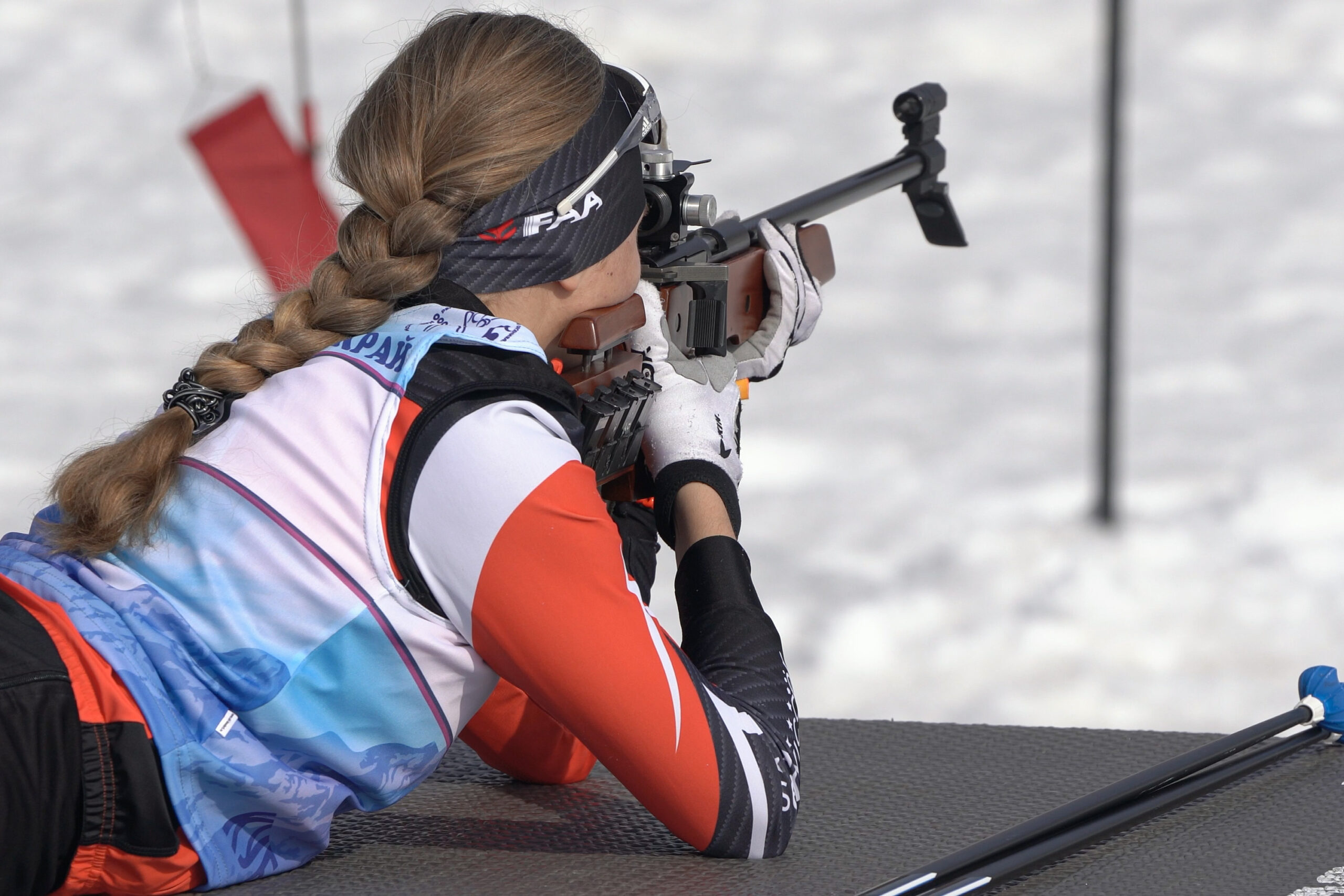
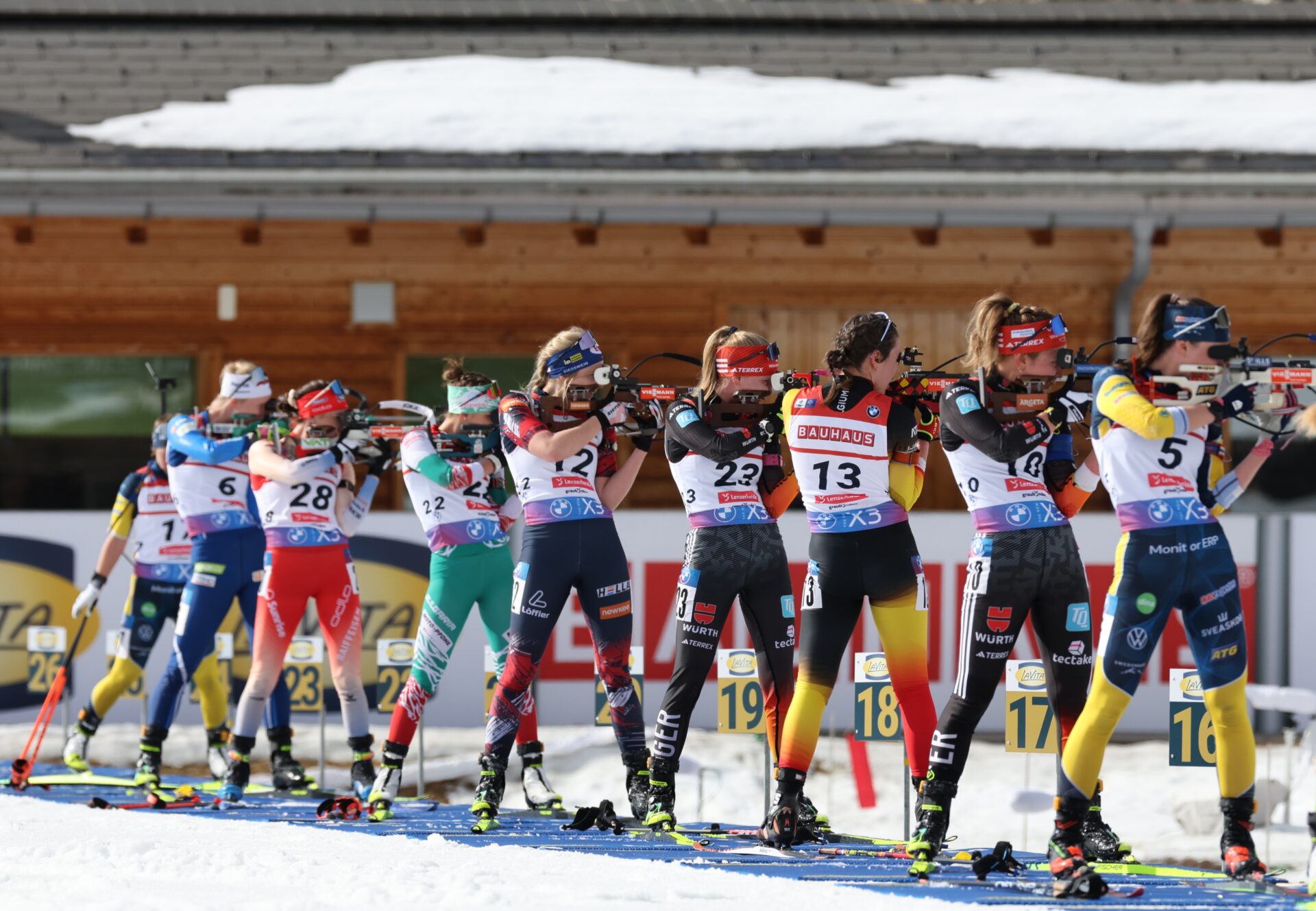
It’s the same reason I’m fascinated by Winter Olympic biathletes. You see a biathlete skiing at Olympic pace, heart pounding, then suddenly stop, drop a knee and shoot five times at a target the size of a beer coaster. It’s beyond impressive. In a split second, they switch from chaos to calm, from maximum physical exertion to surgical precision shooting. The shooter in me just watched in appreciation, thinking: ‘Now that’s control’.
And this is, in fact, the very heart of shooting. Because no matter if you are skiing the Alps, fronting the SSAA range in Townsville on a hot and humid Saturday morning, or lining up a prize game shot deep in the bush, the challenge remains the same: stay calm when your whole body screams for you to move.
Here’s the science. Under stress, the body doesn’t ask permission – it just reacts. Adrenaline surges, the heart races, breathing quickens, and fine motor control disappears, along with it that delicate stuff we depend on for trigger finesse; it’s the ‘fight-or-flight response’ – identical to back in the caveman days. Utterly awesome escaping a sabre-toothed tiger; maintaining a perfect sight picture at 50 meters…not so much.
Every shooter can relate. That tiny muzzle movement you cannot help but notice, the shake that wasn’t there when dry-firing at home, the mental noise starting as soon as you are trying to be still. Folks, that’s not a sign of weakness; it’s biology. And you can’t force your body to play nice; you have to cooperate with it. From weekend plinkers to state contenders – the same but different – if you get my drift.
It applies to shooters at every level. From new SSAA members learning which end of the rifle points forward, to competitors fighting for state-level titles where a single point can decide the podium. The fact is, the stress response doesn’t care who you are.
The new shooter’s nerves might come from self-consciousness: ‘Everyone’s watching; don’t stuff this up.’ Or maybe from being worried about the potentially deadly weapon he or she is holding and about to fire.
The elite shooter’s nerves come from expectation: ‘I’ve trained for months; don’t throw it away now.’ Or, ‘I’m up against him, the guy who pipped me at the last Nationals.’
Different words, same biology. Heart rate, breath, adrenaline. It’s universal.
Psychologists help athletes recognise that pressure is universal and unavoidable. It’s unavoidable. Indeed, the best mindset for the novice is to recognise that feeling pressure isn’t a sign you’re out of your depth, it’s a sign you care. And to the top-tier competitors ‘My goal isn’t to get rid of nerves, it’s to shoot well despite them.’
At every level, the trick is to train the body and the mind to meet in the middle, to channel that arousal into precision, not panic. That’s what separates the consistent performers from the ones who unravel after a single bad shot.
Let’s start with the most underrated tool in the box: breathing.
I’ve seen shooters with rigs worth thousands forget to breathe properly once the timer starts. Their pulse skyrockets, and suddenly they’re chasing their own heartbeat across the front sight or down through the scope.
Controlled breathing, what we call slow, diaphragmatic, and deliberate, is your built-in reset switch. It lowers your heart rate, steadies your hands, and gives your brain a simple task to anchor and focus on. Some shooters take the shot at the bottom of the exhale, others after a half breath. The method doesn’t matter. The rhythm does. It’s your metronome. It’s a physical cue that says, ‘I’m in control here.’
And what about pressure? Whether you’re in competition or out on a hunt, it’s like the wind -invisible, unpredictable and capable of pushing you just enough off course to ruin a perfect group. It’s what makes competition such a great leveller.
At the club level, it might be the first time you shoot for a score with people watching. At the regional level, it’s that friendly rival who never misses. At the state level, it’s knowing a single flier could erase months of preparation.
Remember above where I spoke of nerves and how they might manifest? Here, I’m speaking about pressure and how it might manifest. Notice the similarities. That’s because the mind-body connection of how we each perceive pressure and turn that into a nervous reaction is of our making. The trick is to master that as best you can.
What changes across those levels isn’t the feeling of pressure, it’s how familiar it becomes. The best shooters aren’t immune to nerves; they’ve just made friends with them. The trick is to get the conscious brain out of the way while the body runs the program.
I’ve seen this same process in every high-pressure environment I’ve worked in. Soldiers shooting under real fire learn to find quiet in chaos. Professional footballers learn to block out crowds and noise. Olympic divers learn to slow time to a single breath before take-off.
They all develop what’s called ‘micro-control’: the ability to shrink awareness to the moment – the grip, the stance, the breath, the sight picture and let the rest fall away. It’s what the great performers all do intuitively.
Try this at your next range session. Draw two circles on paper. In the middle, write what you can control: your breathing, your focus, your shot process, your attitude. In the outer circle, list what you can’t: wind, noise, time limits, other shooters, judges, the last shot.
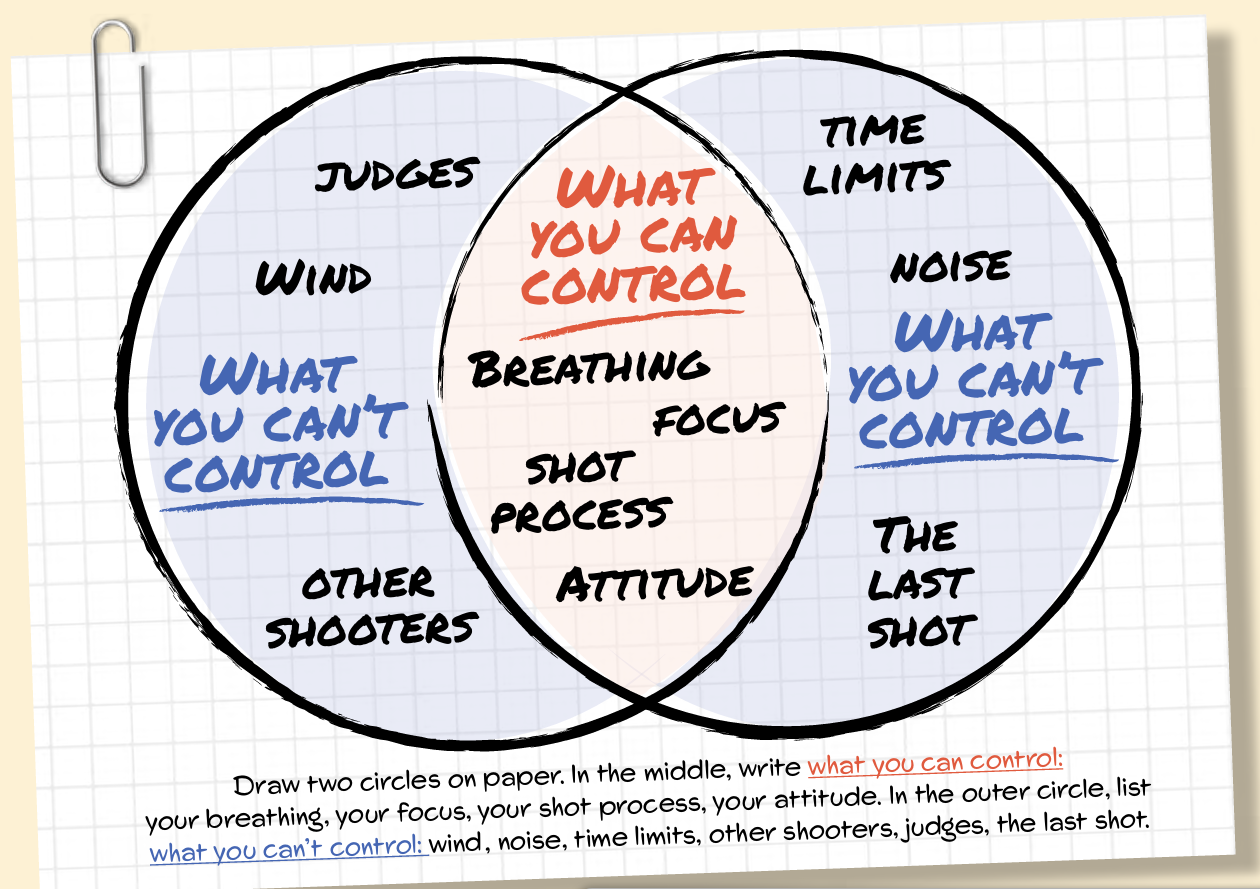
Every time your mind drifts outward, you lose bandwidth for what really counts. Bring it back to the inner circle, your controllables. That’s where performance lives.
Don’t forget the impact of the adrenaline rush. Shooters…no matter how fit or calm you are, your pulse is ALWAYS in the equation. The trick is to sync with it, not fight it. At a thousand metres, your heartbeat can be the invisible crosswind you never see coming. Each pulse shifts the muzzle by a hair, but out at the steel, that can open into a miss measured in feet.
Long-range shooters learn to read their pulse, timing the press between beats or breathing just enough to smooth the motion. It’s a humbling reminder that at distance, even your own body becomes part of the terrain. Some use a heart rate monitor during training to find their shooting window’ – the moment of stillness between heartbeats. Remember – whatever works. Your heart will race in competition. That’s fine. What matters is that your mind doesn’t race with it.
Pressure releases are vital. Every sportsperson has had the game or round they’d rather not talk about. The trick is not to let one bad shot breed a dozen more. Humour keeps the edge off; humility keeps the learning curve alive. The best shooters carry both in their range bags. Learn to laugh at yourself. It works wonders lightening the mood, releasing pressure and calming you down.
Finally, try this the next time you’re out for a shoot. Think of yourself as a goldfish, with the memory of a goldfish. Swimming round and round in your little bowl, and by the time you’re back at the start of the circle, you’ve forgotten what the world out there looks like. Treat errors and mistakes just like that. The best shooters have that capacity. They can wash away the last mistake before the brass even hits the ground. The mind resets, the breath steadies, and they’re already thinking about the next shot.
After half a century in psychology and sport, I still find shooting endlessly fascinating because it sits at the intersection of physiology and philosophy. It’s about discipline and self-awareness. It’s about knowing that the only variable you can truly master is yourself.
From the biathlete on the world stage to SSAA novices learning to trust their breathing, the journey is the same: finding the stillness behind the shot.
Because in the end, the muzzle doesn’t lie. It simply tells you how calm you really are.
About the Author
Robert M. Walkley is a forensic and sports psychologist, long-time SSAA member, and competitive shooter based in Townsville, Queensland.
