

Sneaking up on a dingo
By Ben Allen
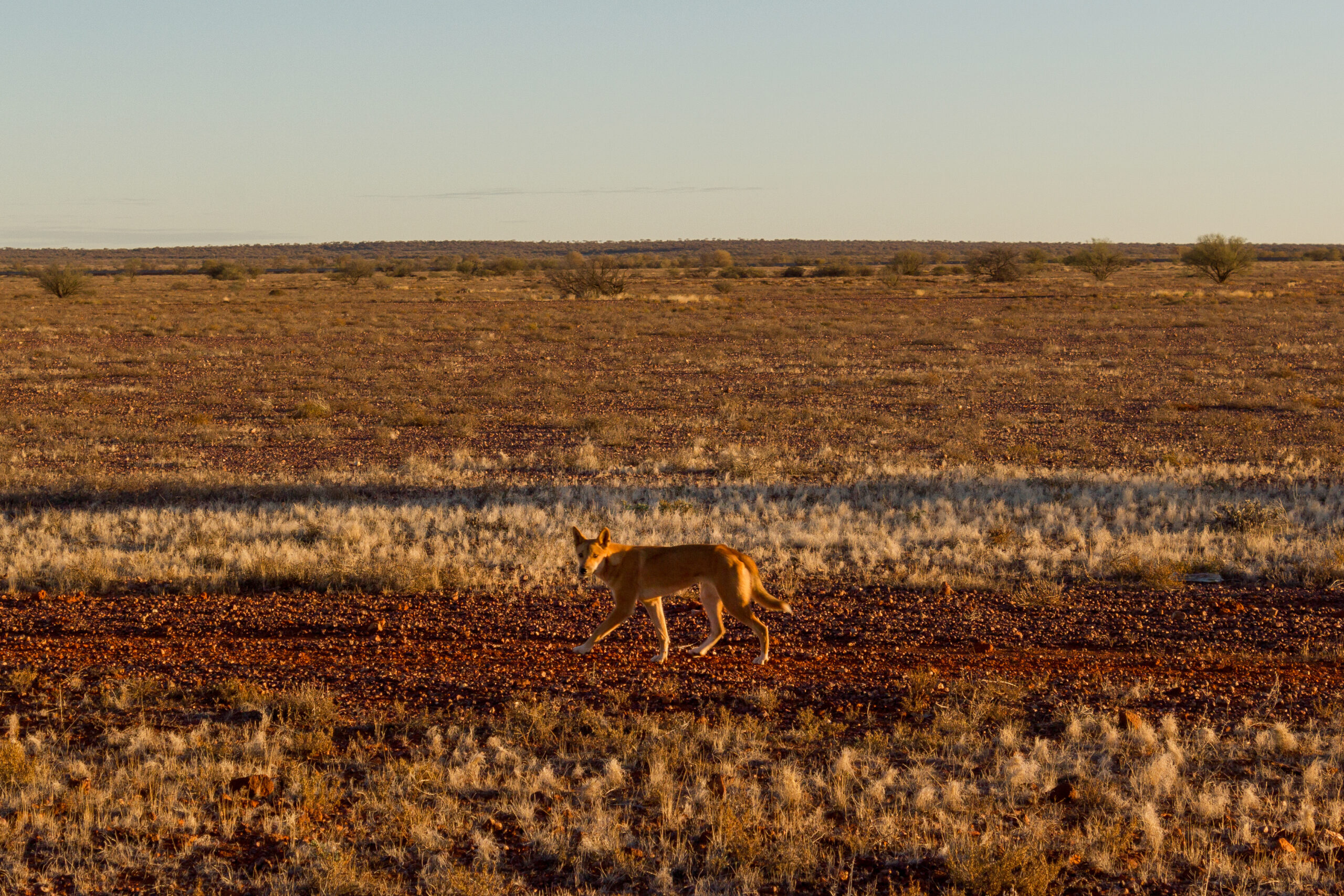
In my work as a wildlife biologist, I spend a lot of time studying dingo behaviour and ecology. I am constantly amazed by dingoes’ keen senses, skills and abilities. Sneaking up on them is no easy task.
On one occasion in the Sturt Stony Desert, on a livestock property, we had trapped several dingoes and fitted them with GPS tracking collars. After many months, the automatic collar release mechanism failed, yet we were still required to retrieve the valuable collars – a task much easier said than done.
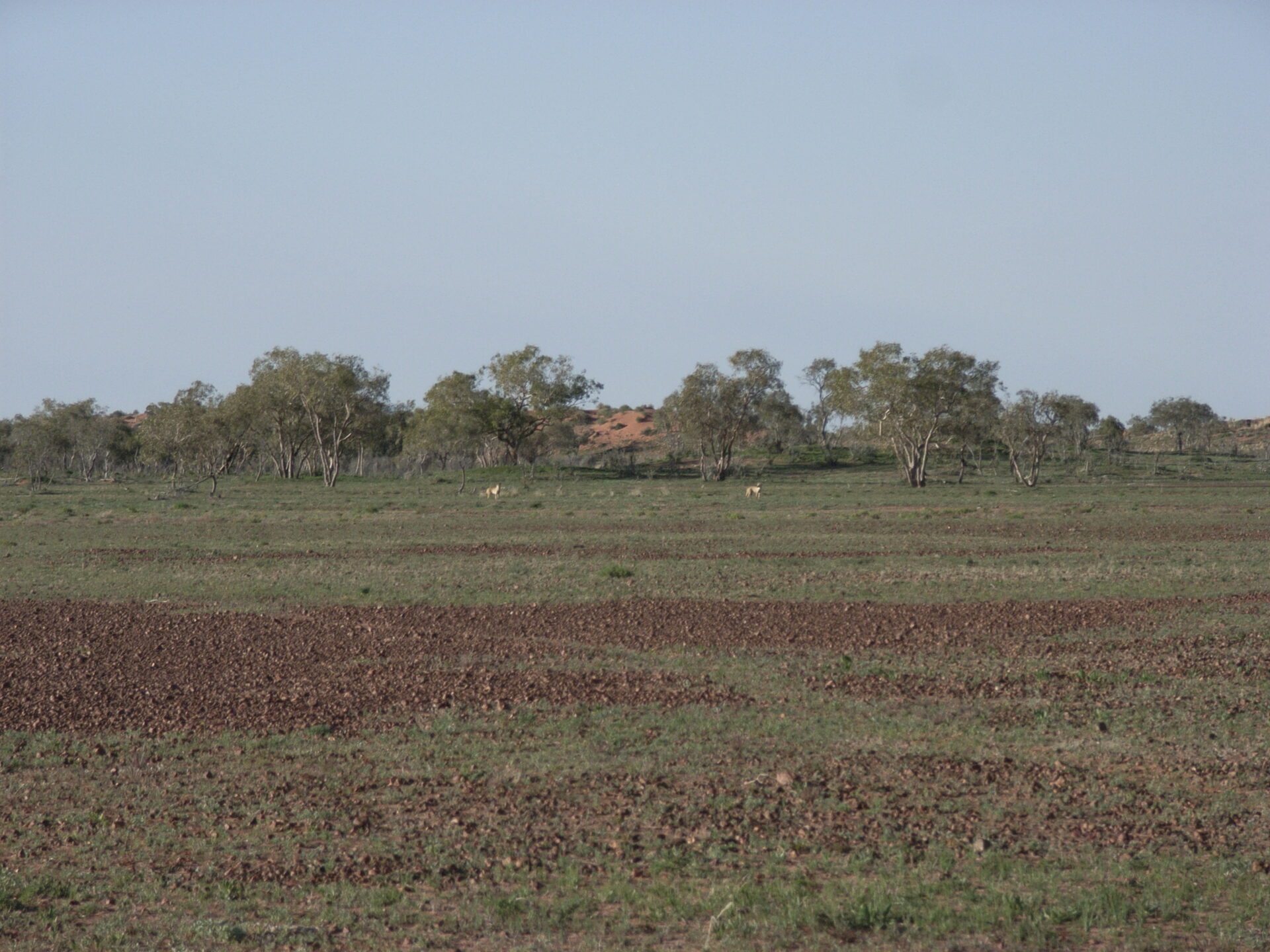
Re-trapping a dingo a second time is a very tall ask and the livestock-producing landholder also preferred we remove the dingo. So, the best tool for this job became the trusty .22-250, which is fast, flat and reliable at achieving an instantly humane outcome. But no firearm in the world could overcome the issues I faced.
My biggest problem was getting past the dingoes’ eyes, ears and noses. Top-predators like dingoes don’t make it to the pinnacle of the food chain because their senses are dull; they get there because their senses are top notch.
Challenge accepted.
Dingoes’ vision is what we might call near-sighted and they’re very poor at distinguishing colour. But they can see exceptionally well in the dark and they are far more sensitive to movement than us – shift or adjust your position while they’re looking at you, and you’re cooked.
Dingoes’ hearing is incredible. They can hear much quieter noises than most animals, from further away and with pinpoint locational accuracy. Forget sneezing or coughing, just stepping on some dry grass or moving the gravel under your boot is more than enough to raise the alarm.
Their eyesight and hearing are problems enough, but a dingo’s nose is by far the biggest obstacle. Dogs can easily smell into the parts-per-billion, and some studies have them smelling into the parts-per-trillion. To put this into perspective, imagine lining up one trillion grains of sand in a row, touching just one of them and then watching the dog correctly select the one grain you touched. Hiding from a dingo’s nose is not even something Tom Cruise and his ‘Mission Impossible’ team could pull off.
To successfully sneak up on a collared dingo, I needed desert camouflage clothing, the wind and sun in my favour, and I needed a lot of time. I also needed a healthy dose of luck.
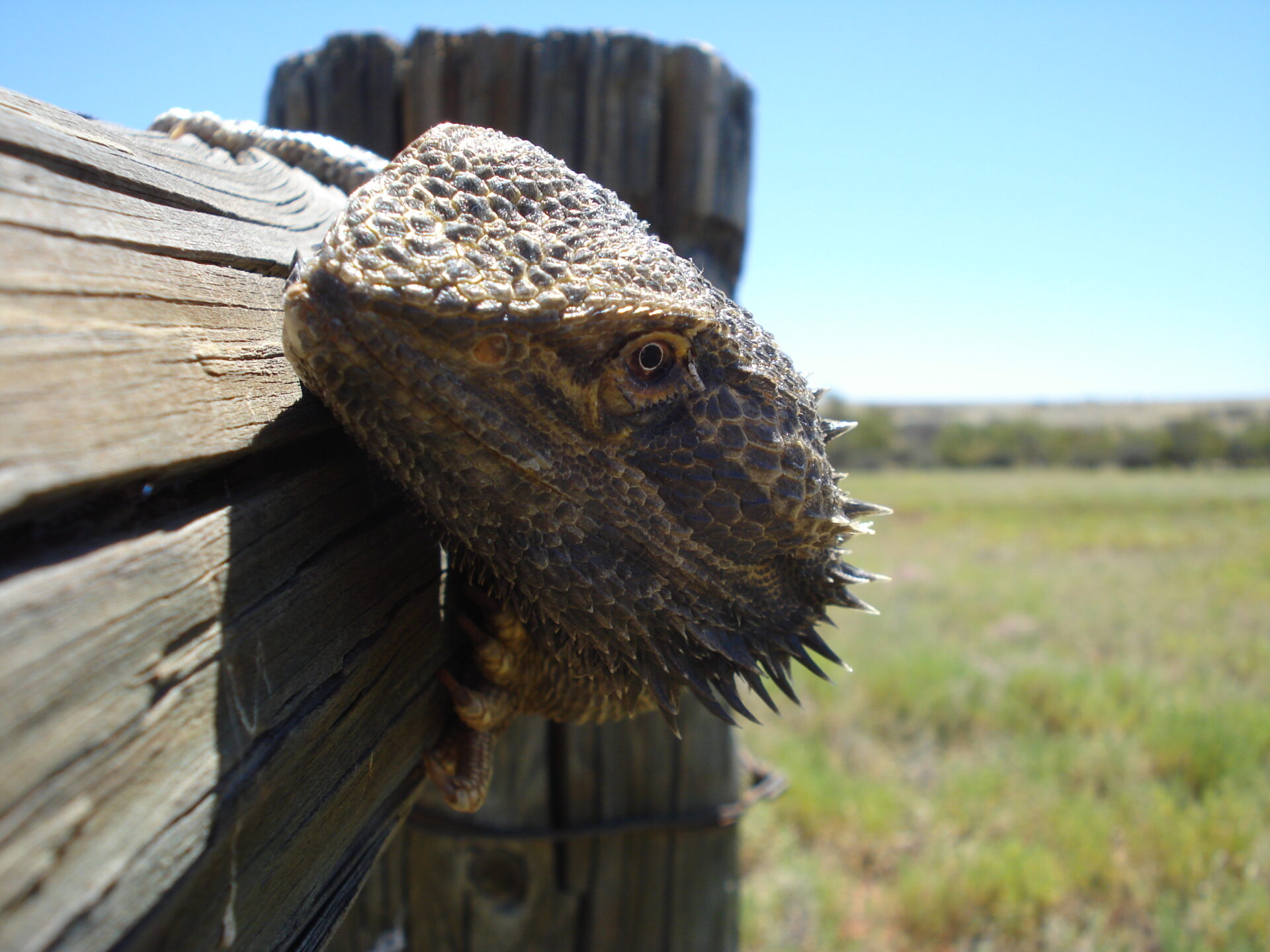
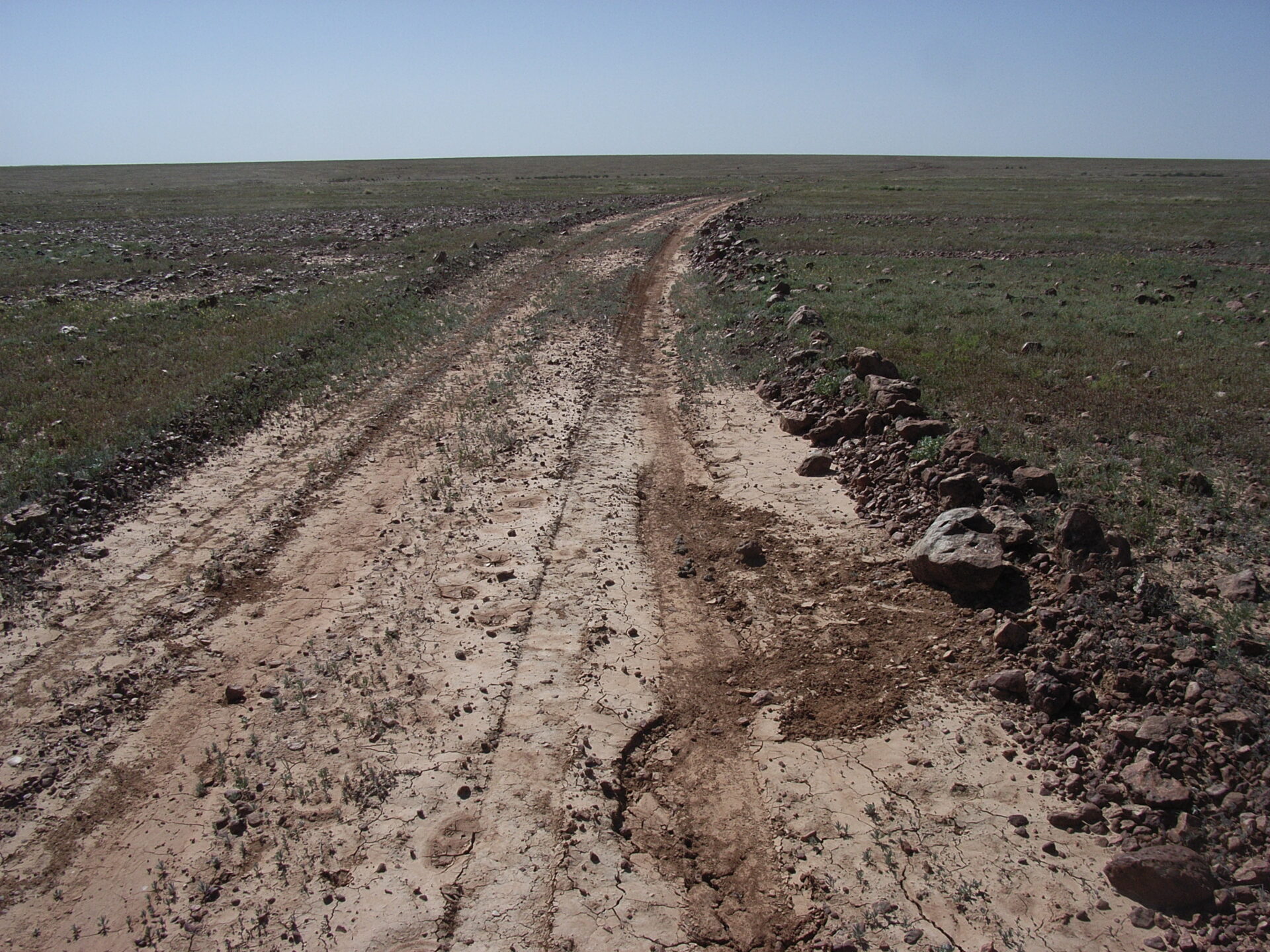
The collared dingo was sleeping out in the middle of a stony gibber flat and approaching unseen was out of the question. Leaving the car by a fence post in the care of a bearded dragon, I had a lot of ground to cross with no cover whatsoever, and I thought there was just no way I could ever get close enough.
But the wind was in my face, and the setting sun was at my back, so with a nod to Lady Luck I started to move in.
Wild dingoes are restless sleepers, especially ones that have been trapped before, so when his head was down, I moved and when it was up, I stopped. I closed the gap to about 200m, evidently too fast or noisy, and he raised his head and looked directly at me. I paused, motionless, as if I was one of Dr Who’s ‘weeping angels’, waiting for the dingo to look away or close his eyes.
After staring directly at each other for a time, he put his head back down. The desert camo just paid for itself.
I digress for a moment to highlight that even though I am well within range, a single, humane headshot requires hitting a target the size of a golf ball, on a sleeping dingo that is laying very flat among the obstructing stones, and wearing an expensive collar containing precious data only centimeters from where I am aiming. Getting this wrong is either going to waste the data or cause the dingo to suffer, and I don’t want either of those things.
I continued, and the same thing happened two or three more times as I inched closer and closer. I locked eyes with the dingo several times, but he didn’t recognise me.
I recall thinking how awesome it was to be experiencing first-hand just how effective camouflage is in a raw one-on-one contest of the senses. I imagined to myself that the dingo was thinking ‘I could have sworn that bush was further away when I last saw it’.
Eventually, I took a knee, sat back on my foot, raised the rifle and then waited, about 50 yards away. I slowly scanned the dingo through the scope and trained the crosshairs on my target zone, finger on the trigger. But the dingo had laid with his belly facing me and his head pointing away. His shoulder and the collar under his chin were directly in my firing line.
For what felt like a lifetime, I sat there waiting for any bit of movement that would give me a clear shot. He looked up again, and I pulled the trigger.
Satisfied in a job well done without data loss or suffering for the dingo, I took a moment to appreciate that I had spent over an hour just meters away in full view of Australia’s most skilled hunter and bested him. I learned that good data doesn’t come easy, that patience is a virtue, and that everything needs to be in your favour if you’re to have any hope of sneaking up on a dingo.
I also learned how helpful it would have been to mark the car’s position on a GPS before I wandered off into the Sturt Stony Desert.
Feature image Martin Helgemeir
