

SG Pulse Review
Shooting Straight
By Simon Frederiksen – As published in the October 2026 issue of The Report
It was a few months ago, while I was getting my arse handed to me during an NRL22 match at the SSAA Imbil range, that I first noticed a curious little device. Hanging off the side of a CZ was a tiny black box flashing different coloured lights. Naturally, it grabbed my attention. I’d seen anti-cant devices before, the trusty bubble level has been around forever, and more recently the SEND iT brought electronics into the mix. But this one looked different…
A bit of research quickly showed this wasn’t just another anti-cant indicator. Designed and manufactured by Shooters Global, its marketing department calls it a ‘Precision Shooting Assistant’. The deeper I dug, the clearer it became that this little box could be a genuinely useful tool for the workshop bench, training, competition and hunting. Thankfully, the team at Shooters Global sent me an SG Pulse to find out for myself and for The Report.
Company Background
If you haven’t heard of Shooters Global, you’re not alone. The company is originally from Ukraine and was founded in 2016. As you can imagine, the past few years have made operating a business in Ukraine extremely challenging, so the company relocated to Poland. Shooters Global first entered the market with a shot timer that quickly became popular with world champion shooters, match officials and instructors. Along with strong hardware manufacturing, it also showed real capability on the software side, with an app that connects to its growing range of devices.
The company now offers two shot timers (the SG Timer 2 and SG Timer Pro), the Advanced Precision Shooting Assistant (SG Pulse Pro), and the Precision Shooting Assistant (SG Pulse), which is the focus of this review.
What’s in the box?
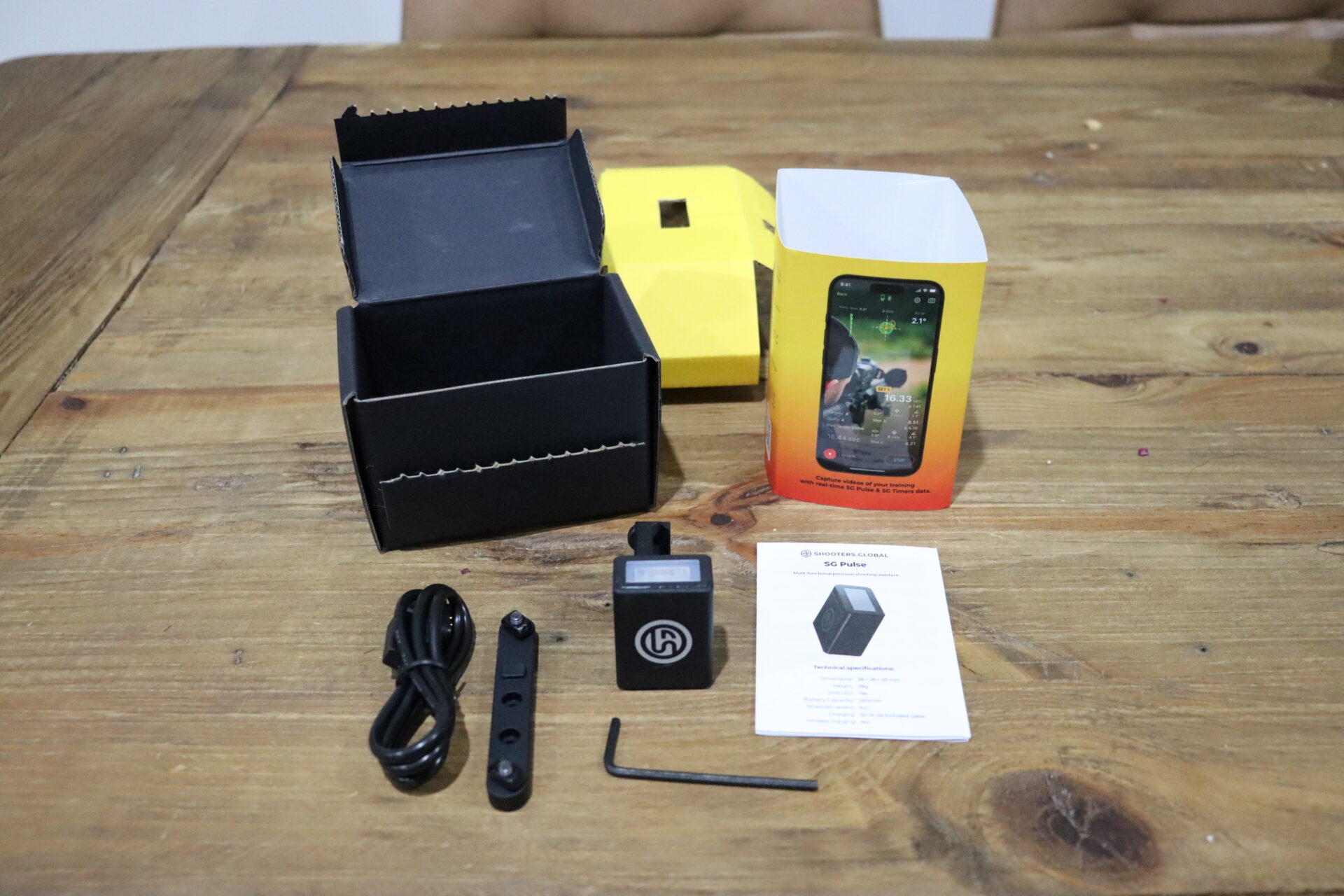
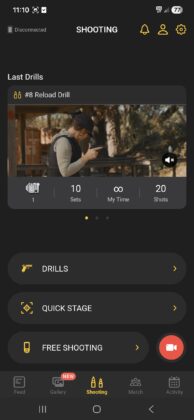
Opening the box to the SG Pulse, you will find the small device already mounted to a Picatinny clamp via two Allen key bolts. Included in the box is a USB to device-specific charger, an M-Lock style mount, Allen key, and the instruction manual. Following the advice from the manual, I downloaded the ‘Drills: Shooting Training’ app and synchronised the device to the app with no dramas. The app allows you to play with the different sensitivity settings of the device. It’s pretty easy to navigate through the settings to define at what degrees of cant you want the device to show the red, green and blue lights.
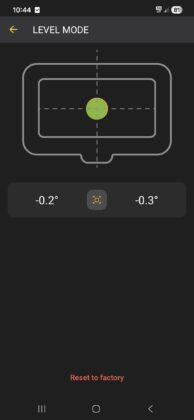
The device has two basic modes. Out of the box, the default mode gives you light indications – green for level, red for canting left, and blue for canting right. The second mode is the Level Mode, which can be activated through the app. For the Level Mode, the reference surface on the device is the butt (opposite side to the button/lights). It can be used as a sensitive digital level, where the lights will guide you to level out whatever surface you place the device on. You can also view in real time the level data across the X and Y axis on a nice digital display within the app. During the review, I did not need to charge the device once. Checking the forums, it turns out the battery is good for up to 50 hours, which is great.
Practical use
My wife enjoys pointing out which pictures and paintings aren’t sitting level around the house. Thanks to this little black box of tricks, I can now jump into Level Mode in the app, place the device on top of the frame, and get them perfectly straight in seconds. It’s pretty much replaced my spirit level for most jobs.
Playing with the device also prompted me to re-check all my rifle scopes, because the SG Pulse gives you precise levelling measurements. With rifles that have a Picatinny rail and a bit of clearance under the scope, it’s simple. Mount the SG Pulse to the rail and level the rifle. Then remove the device, switch to Level Mode, and place it on the scope turret to confirm everything lines up. If you don’t have a Picatinny rail, or there isn’t enough clearance between the rail and scope, just remove the scope and place the device on the action’s machined flat surface to level the rifle that way.
Dry fire and shooting
With the price of diesel sitting at ludicrous levels, it’s getting harder to justify popping out to the range or property as often as we used to. Dry fire practice at home is a great way to stay sharp, and the SG Pulse might just be one of the best training tools to help lift your game.
Having the device mounted to my Lithgow LA101 .22LR, I started working through some typical shooting positions at home. After tweaking the sensitivity in the app so it could pick up the light dry fire strikes of the rimfire, I selected Shooting Mode and tapped the red camera icon. This switches on your phone’s camera and overlays some seriously interesting live data.
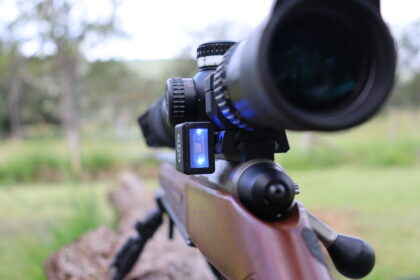
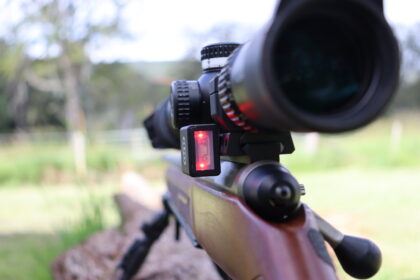
I wanted to analyse my trigger pull, so I set the phone up focusing on my right hand and the trigger area and started running through a dry-fire session. Straight away something became obvious. Every time I broke the shot, I naturally canted the rifle slightly to the right. The green light would disappear, changing to blue, clearly showing the right-hand cant.
After the practice session, I checked the footage. The app had recorded the entire exercise and overlaid really useful movement data across both the horizontal and vertical planes. The way it presents the information is surprisingly easy to digest. A centre trace follows your movements and, when the rifle is steady and within your predefined level limit, the line drops neatly into the middle of a crosshair-style display. As soon as you start moving, the trace drifts away from centre and a red circle expands, clearly showing the impact of your movement on the shot. The SG Pulse also picks up the dry-fire shot and records how many shots you have taken. The good news from the footage and data overlay is that I managed to break the shot before any change in the rifle’s position. I could play back the footage at 0.25x speed and see exactly how I was manipulating the rifle. Very cool.
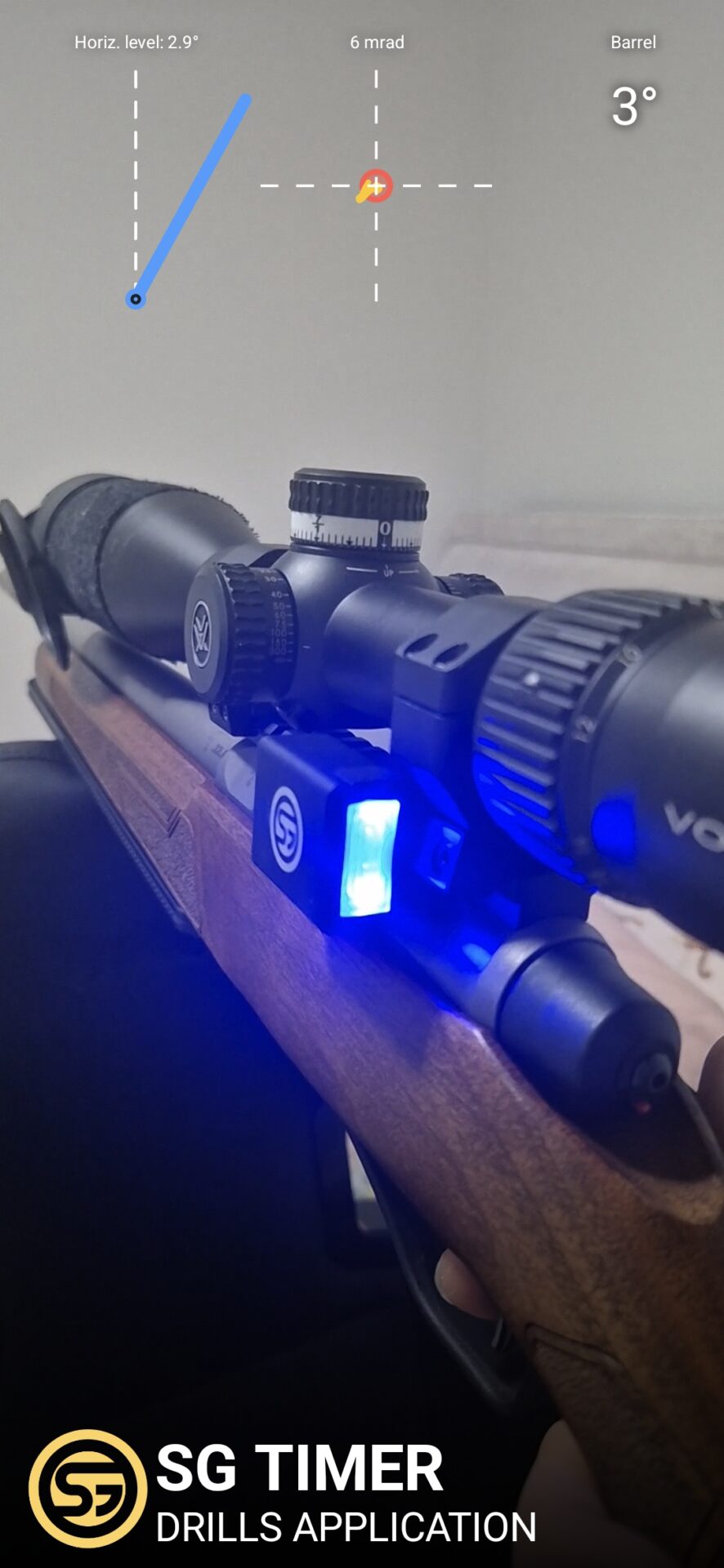
Using the device on a rifle with a bit more punch allows you to track how you handle the recoil. You can quickly experiment with how your hand positioning, the amount of grip force you apply, and the placement of the buttstock against your shoulder affect your recoil management. Looking at the video and overlaid live data, you can start to piece together how each of your inputs affects the behaviour of the rifle. Again, this little black box partnered with the app is a very interesting shooting aid.
‘Cant’ be
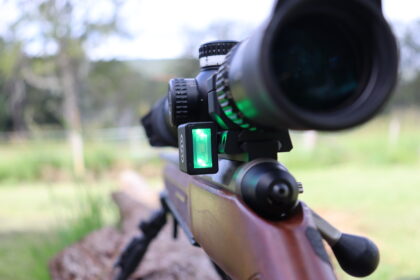
Using the device attached to the rifle via the Picatinny rail, the coloured lights on the device are easily seen while behind the scope. You will be shocked how often you think you are level when in reality you are a few degrees off centre. On a recent bush trip, I was shooting from a sloped ridgeline in a prone position using a deployed bipod. Referencing the slope of the terrain and the angle of the trees, I made my adjustment to what I thought was vertically upright. The device showed a red light. Checking the phone app, it showed that the rifle was sitting at six degrees of cant. I have to say I was a little shocked.
So how much does cant affect the final destination of the projectile? These tables assume a scope height of 65mm from bore to centre of scope.
| Calibre | .22LR |
| Grain/Velocity | 40 grain @ 1070FPS |
| Distance | Cant error 6° |
| 50m | 12mm |
| 100m | 54mm |
| 150m | 120mm |
| 200m | 216mm |
| Calibre | .223 |
| Grain/Velocity | 55 grain @ 3240 FPS |
| Distance | Cant error 6° |
| 200m | 25mm |
| 300m | 54mm |
| 400m | 96mm |
| 500mm | 150mm |
| 600mm | 216mm |
| Calibre | .308 |
| Grain/Velocity | 168 grain @ 2650 FPS |
| Distance | Cant error 1° |
| 200m | 12mm |
| 300m | 48mm |
| 400m | 102mm |
| 500m | 198mm |
| 600m | 312mm |
Worth the money?
The RRP for this device is $299 and it can be purchased through a number of gun shops here in Australia. My experience with the SG Pulse was very positive. I had no issues using the device. The app worked fine and was simple to navigate. If you like gadgets and analysing data, then this device would get you excited. If you compete in fast-moving, position-changing competitions such as Practical Shooting, then this is worth looking at. If you are a hunter who takes long-distance shots, then you should consider this device over a bubble level. Having the different lights visible in your peripheral vision while focusing on the target is a far better option than moving your focus from the target to a bubble level and back again.
