

Review: ThermTec Ibex 335L
By Brendan Jones
As a freelance reviewer, the ‘entry level’ product descriptor doesn’t really get my juices flowing. So, when offered ThermTec’s new Ibex 335L by The Report staff, I’ll admit it was with a certain level of arm-twisting and apathy I eventually agreed. But what unfolded through testing was unexpected and enlightening, teaching this old thermal dog some new tricks and updating my opinion on entry-level thermals.
First impression and setting up
Unboxing the glossy cardboard with magnetic flaps and coloured interiors was a good start. And while not wanting to be fooled by the packaging, I wondered if I had unfairly judged the Ibex earlier. Testing always begins immediately with thermal gear, as I inserted one of the partially charged batteries and proceeded to pair the device with my iPhone. What can often be akin to hacking into The Matrix was instead straightforward, with firmware updates made in short order (ver. V2.2.58).
Controls were in the form of three buttons above the eyepiece and dials where windage and parallax would’ve been. The lack of any knobs/buttons further forward was appreciated, and menu navigation was easy enough to learn.
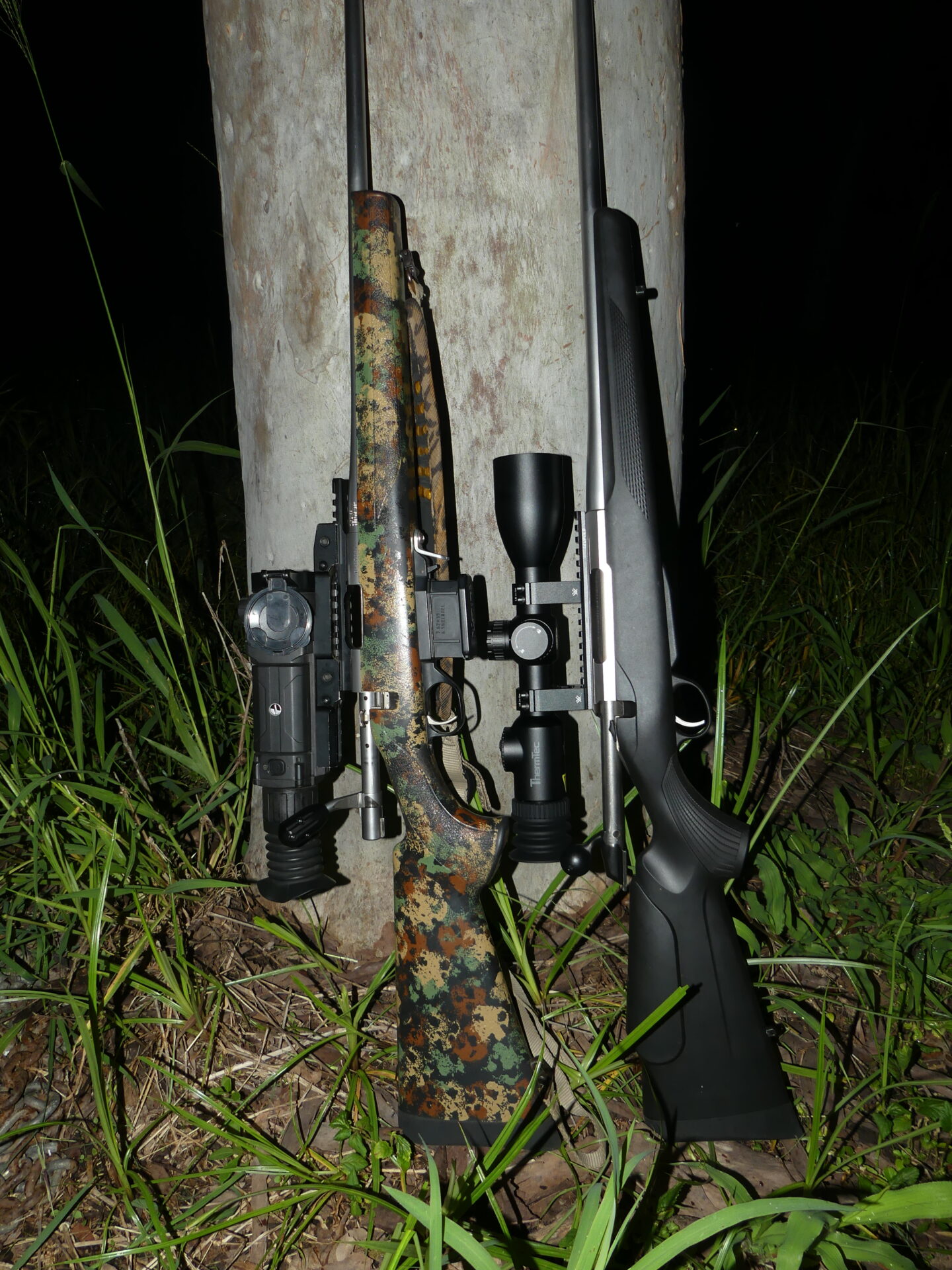
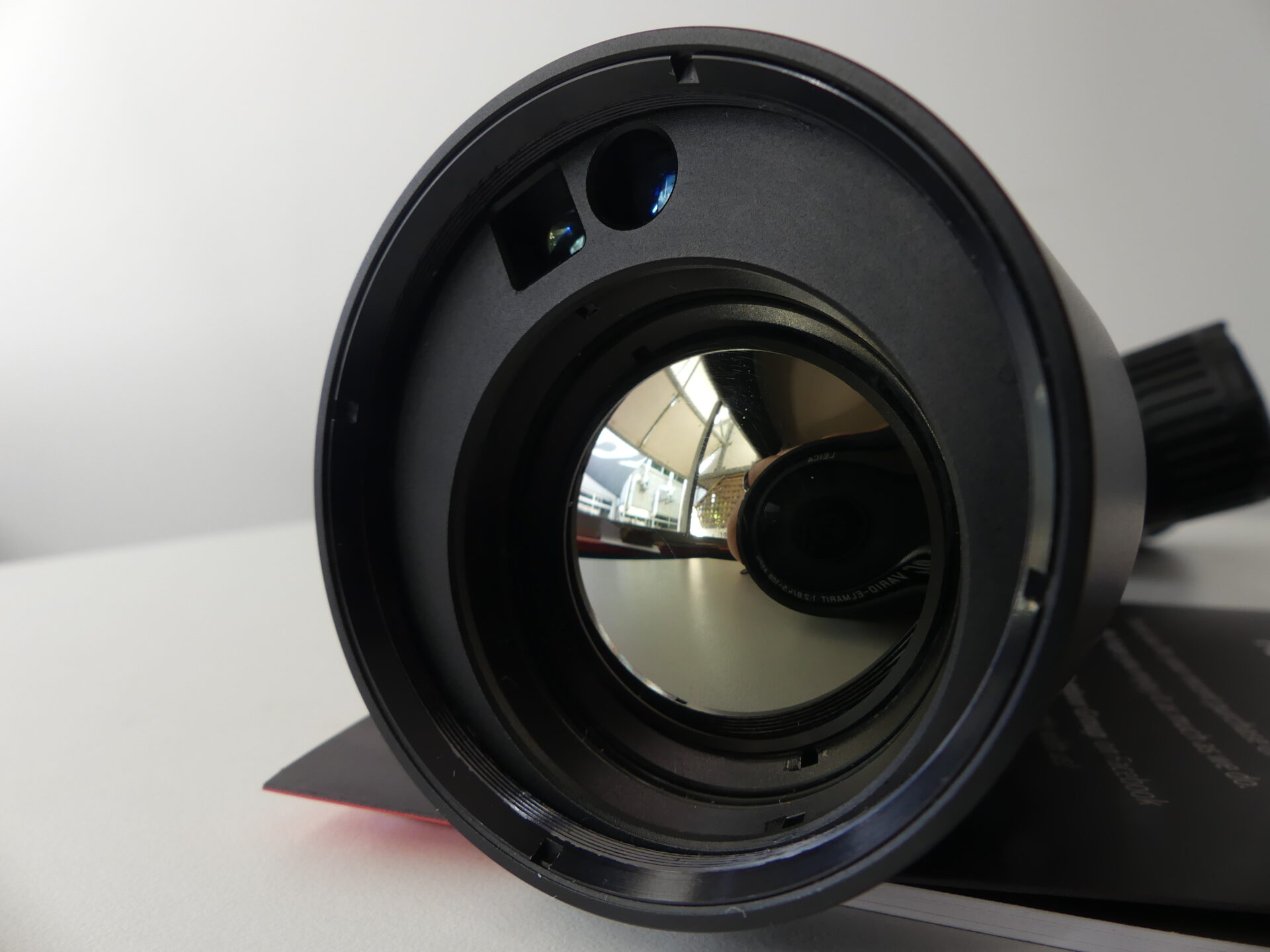
Being the popular 30mm tube style, the ThermTec got mounted in super high rings on a Tikka T3 lite in .308Win, with the barrel docked at 18¼ inches (don’t ask) in a factory varmint stock. The front bell of the scope measured 60mm, much larger than the actual lens of 35mm, with the extra room used to house the emitter and receiver for the laser range finder. While someone with a different length of pull might have gotten away with lower rings, it wasn’t the case for me with this particular rifle setup. Overall, the 815g weight balanced well with this rifle, feeling quite nimble and pointable. After topping off the pair of 18650 flattop batteries with included dual charger, the BOM was consulted and plans for field testing were made.
Sighting in and ballistic calculator
Sighting the Ibex in under light rain was foreshadowing things to come, but the process was refreshingly simple. All thermal scopes invariably have a ‘one-shot-sight-in’ of sorts, involving capturing an image with the crosshairs on the point of aim, then shifting it to the point of impact in software. While easy enough from a concrete bench, holding the rifle in a death grip and yelling, “Press it now!” to a mate, in the field it can prove trickier. The act of pushing a button to freeze the image often shifts the gun, leading to muttering and messy menu fiddling to try again.
The Ibex instead employs the less disruptive slight rotation of the main function dial. But more importantly, rolling it further to the next detent then un-freezes the image. This was a revelation sitting in the mud in the dark. In the space of seven seconds, I effortlessly froze and unfroze the image about a million times in rapid-fire trial and error until I nailed it. To say this process impressed us was an understatement, with half-serious quips about concluding the review and recommending it for purchase.
Reasoning for a 30m sight in was threefold: the conditions; knowing this would be two-ish inches high at 100m — facilitating a pig-vitals hold out to as far as I care to shoot a 384-resolution scope; and to see how the ballistic calculator performed.
Beyond the 30m target, the steel plates rang out at 100, confirming my math. But activating the ballistic correction mode presented a second aiming point suspiciously low of the main crosshair. A quick check of the details I had entered (MV, BC, zero range, etc.) revealed no hairbrained errors were made, so I fired for effect to the sound of silence. Ignoring the corrected point and aiming true to the crosshair rung the steel again. Maybe the close sight-in had confused it, maybe it was user error, or maybe a future firmware update was in order, but it did little to dampen the mood. An entry-level scope even having integrated LRF (which was accurate and fast), let alone ballistic corrections would have seemed crazy just a few years ago!
Battery and streaming
Logbooks kept for the first few outings revealed the claimed six hours per battery (12 hours total), was accurate. Very impressive, especially considering the first battery was subjected to streaming for the first three hours, and Wi-Fi activated for the second three hours. Sleep mode for the display (1600×1200 AMOLED) was not used at all, and LRF as required. An aftermarket 18650 flat-top was also successfully tested. Streaming, while of limited use compared to on a handheld in my opinion, was flawless and drop-out free using a Samsung Galaxy tablet. It seems like the ThermTec didn’t have a preferred smart device OS, which isn’t often the case with thermal gear.
The Rainmaker
Three outings into testing (>30 hours across nine trips), I nicknamed the Ibex 335L ‘The Rainmaker’. Its arrival heralded a particularly moist period for Townville that dragged on for as long as I held onto the unit, hoping for a break that never came.
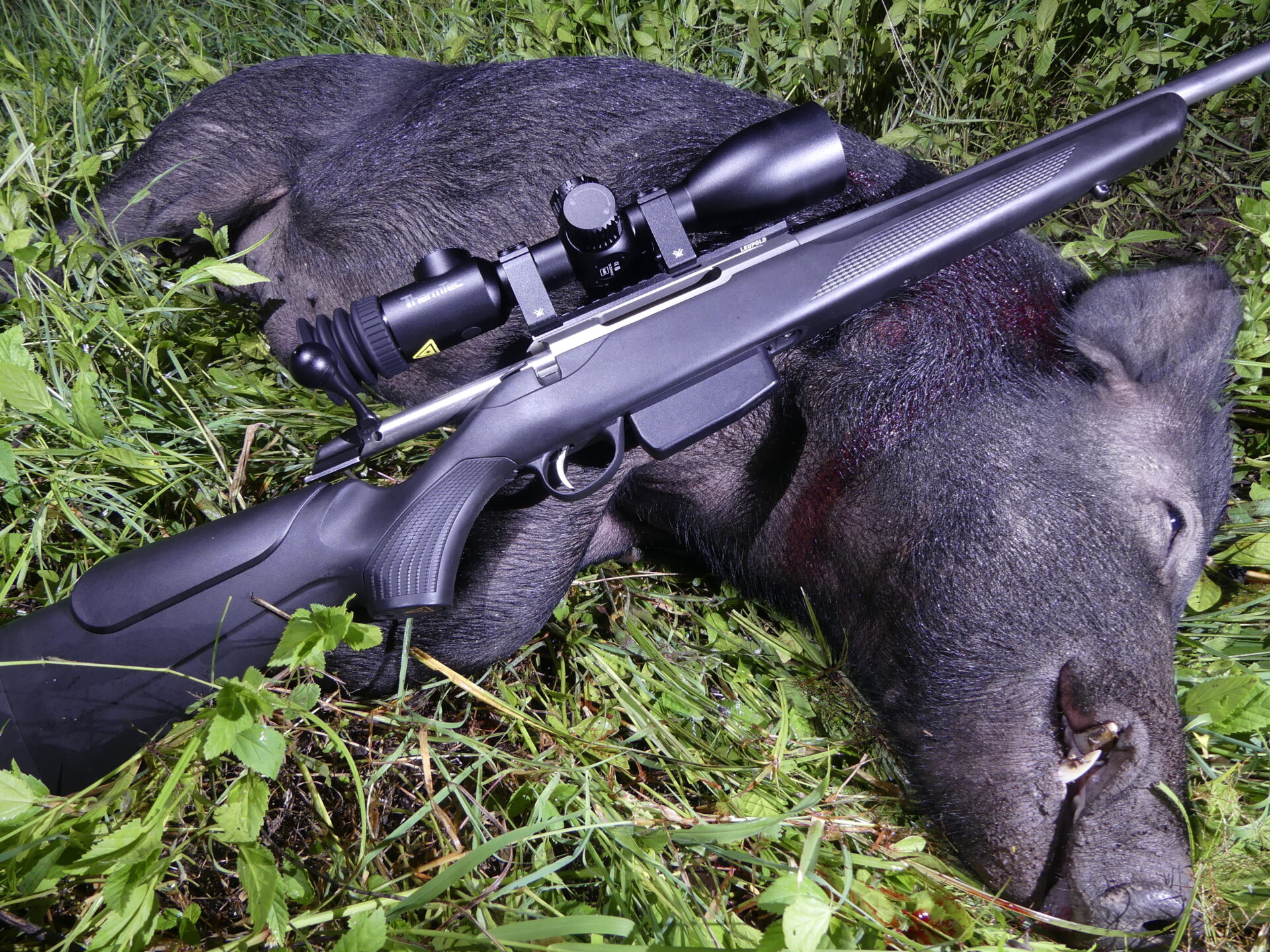
Usually alpine or desert creatures, this ibex took to the wet like a duck to, well, water. No simulated rain testing of the IP67 rating was required for this review. Every excursion saw precipitation of some sort, but worse was the humidity. High temperatures and high humidity make for bad thermal conditions, but one night was the worst I had ever experienced. Standing in the dark with sweat pouring off us, there was a steamy jungle-like haze visible in the red vehicle lights. This was the kind of night that makes an eight-thousand-dollar scope feel like a carboard toilet tube with crinkled green cellophane over the end — a true acid test for any scope, let alone a budget one.
But this is where the Ibex shone, punching above its weight and resolution. No doubt the 384×288 sensor (12um pixel pitch, NETD <18mK, 3.7x mag, 50hz) was benefiting from years of accelerated thermal industry progress since 384 was the top-tier, but what really saved it was adjustability. Sweating in the rain while waiting for pigs gave me time to really adjust all the settings, of which the Ibex affords much freedom.
Tweaking image brightness, contrast, sharpening, noise reduction, screen brightness, screen tint, scene mode, display shape and then back in round-robin fashion, I handed it to Dave who confirmed a massive improvement. Trying my best on an older handheld with the same size objective lens and sensor, I couldn’t match the results with fewer adjustments. A second round with the Ibex yielded even more improvement, though it was a fine line for not creating an overly artificial image. Novice users or the technologically illiterate need not fear plumbing the menu’s depths though, with simple adjustments available at the surface level.
While we never experienced anything even approaching favourable thermal conditions during testing, in hindsight it taught us far more about the scope than ideal ones ever would’ve. My initial hesitation for the review, driven by fears of missed opportunities using budget gear in lieu of my regular, proved unfounded. Every real chance we had happened to fall within the Ibex’s ranges and capabilities – and opportunities not converted were on us, not the scope.
Who is it for?
Is the Ibex perfect? Of course not. The rubbery push over lens cap is slow and suitable only for transport. The 60mm front bell is massive for a 35mm lens, dictating higher mounts. Eye relief to see the full display is quite critical, with a sort of keyhole effect cutting off the edges if not addressed perfectly. And of course it is after all 384×288 resolution, not suited to filming wildlife documentaries.
But this entry-level device was made to be comparatively cheap, not made cheaply – a massive difference. I could easily recommend this to someone getting into thermal hunting. Historically, I would have suggested saving up more money, or waiting for technology to progress, rather than dabble with entry-level thermal. But now I’m changing that advice.
Equally, it could serve the hunter who (wisely) put their resources into a top-tier handheld and runs a torch on their gun for the five seconds required to take a shot. Ibex 335L gives a cheaper upgrade path as a support scope for the Gucci handheld and is 1000x easier than torch juggling. Or even as a back-up scope for the experienced and heavily invested thermal hunter. Or for those nights when a thermal-less friend tags along, or for those big extended trips to faraway places. With significant fuel, time and holiday leave tied up, having a serviceable backup if your main scope goes down on night one (perish the thought) could be a wise investment, especially if the cost was split as a communal spare among the crew.
With a $2899 price tag, a two-year limited warranty, and a host of features not long ago only found in the realm of scopes three times the price, there is a lot to like about the Ibex 335L.
This item was loaned by Spika Australia for the purpose of review and is available for purchase though their dealership network.
