

Review: Smith & Wesson Model 1854 .44 Magnum
Lever-Action Rifle and ZeroTech Vengeance 1-8×24 LPVO
By Billy Allen
Step back, shooters, because the Smith & Wesson team has entered the ring of modern lever-action rifle manufacturing, and it looks like they have come out swinging. This review will look at the Smith & Wesson Model 1854 in .44 Magnum, supplied for review by Grycol International. The Model 1854 represents a thoughtful marriage of classic form with contemporary features suited to the demands of farm work, feral animal management and recreational shooting. Paired with the ZeroTech Vengeance 1-8×24 LPVO, the combination offers a capable, balanced package for those who value quick handling and reliable performance in the field.
First impressions of the rifle
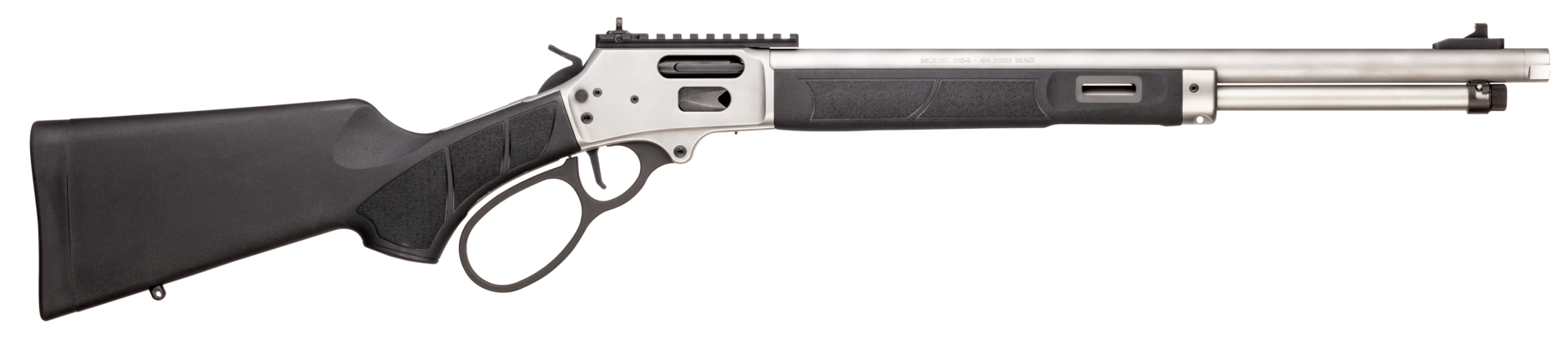
As I lifted the Model 1854 out of its packaging, it felt sturdy. The barrel’s medium profile contributes to a substantial, reassuring feel for a lever-action rifle, without making it difficult to handle. At about 3.1kgs unloaded, the balance proved excellent, coming naturally to the shoulder even when shooting off hand. The synthetic stock, finished in black with generously textured grip panels, provided a secure purchase in varied conditions. The fore-end texture, in particular, accommodated multiple hand positions comfortably.
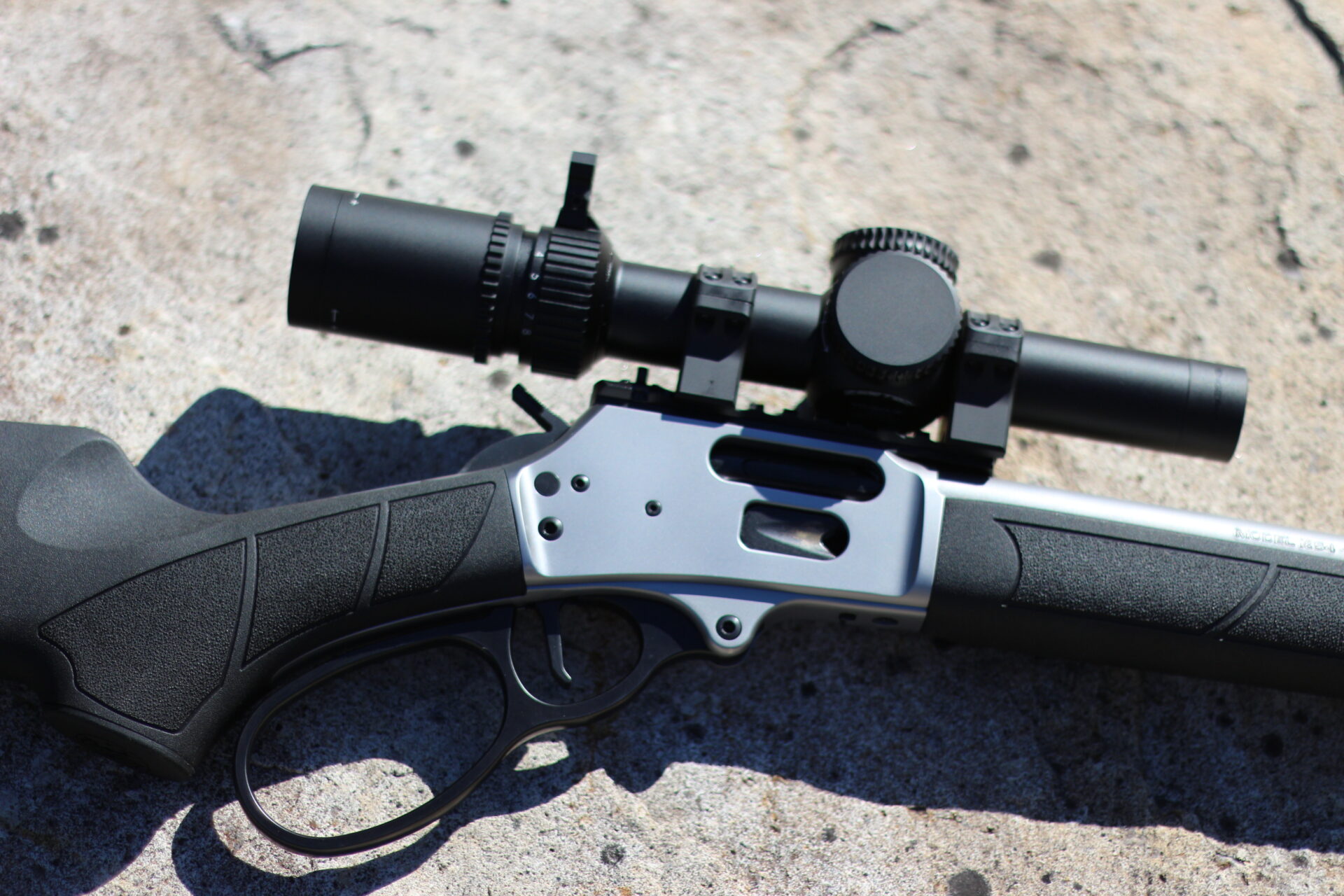
The large-loop operating lever struck an appealing balance – generous enough to accommodate gloved or the larger hands of a farmer without feeling oversized or theatrical. Operation of the lever was notably smooth from the outset, with no binding or excessive effort required. The iron sights sport a brass bead on the front blade and a ghost-ring aperture sight on the rear, offering a clear, traditional sight picture, while the integral picatinny rail invited optics. A cross-bolt safety added a layer of security familiar to many modern lever-action rifles, which prevents the hammer from hitting the firing pin at the rear of the bolt. This feature further enhances safe handling should you decide to use it. Overall, the rifle projected durability and a workmanlike readiness, blending heritage aesthetics with practical modern touches such as the M-LOK compatible fore-end, threaded muzzle, and construction from weather-resistant materials.
Technical specifications and features
The Model 1854 is chambered for .44 Magnum (test rifle); the overall length is about 36 inches.
with a 19.25-inch stainless steel barrel featuring an 11/16-24 threaded muzzle, 1:20-inch twist, and eight-grooved rifling. Stainless steel is used for the receiver, improving the rifle’s robust construction and corrosion resistance, which are beneficial for Australia’s varied climate. The capacity is nine rounds in the tubular magazine (plus one in the chamber). Topping up between shots is made easy by the side-loading gate. Additionally, the removable magazine tube enables safer unloading, as cartridges can be removed without cycling them through the action, a thoughtful safety feature. The ejection port, located above the loading gate, facilitates the sideways expulsion of spent casings. With traditional shooting styles for lever-action rifles, this firearm features a functional half-cock hammer position. This setting effectively inhibits trigger engagement and prevents the hammer from striking the bolt.
For enhanced functionality, you will find quick-detach sling swivel compatibility and a robust recoil pad on the black synthetic stock. The fore-end features M-LOK slots at three positions (left, right and bottom), allowing the attachment of lights or other accessories to extend the rifle’s utility on the farm or in the field. The flat-faced trigger, new to the lever gun world, was a deliberate Smith & Wesson design choice, aiming to promote consistency in the pull and to increase accuracy. In testing, the trigger broke cleanly with minimal creep, though it registered on the heavier side at about six pounds. The trigger exhibited slight forward and backward play, a characteristic often observed in lever-action firearms. Gravity or the inertia generated by handling movements of the rifle could initiate this movement. This attribute did not compromise operational precision.
In the field
On the range and in simulated field conditions, the Model 1854 performed with pleasing consistency. Recoil in .44 Magnum proved remarkably manageable – lighter than expected for the calibre – thanks to the rifle’s weight and the effective recoil pad. The textured stock helped maintain control during rapid strings of shooting; the action cycled flawlessly with no failures to feed or eject.
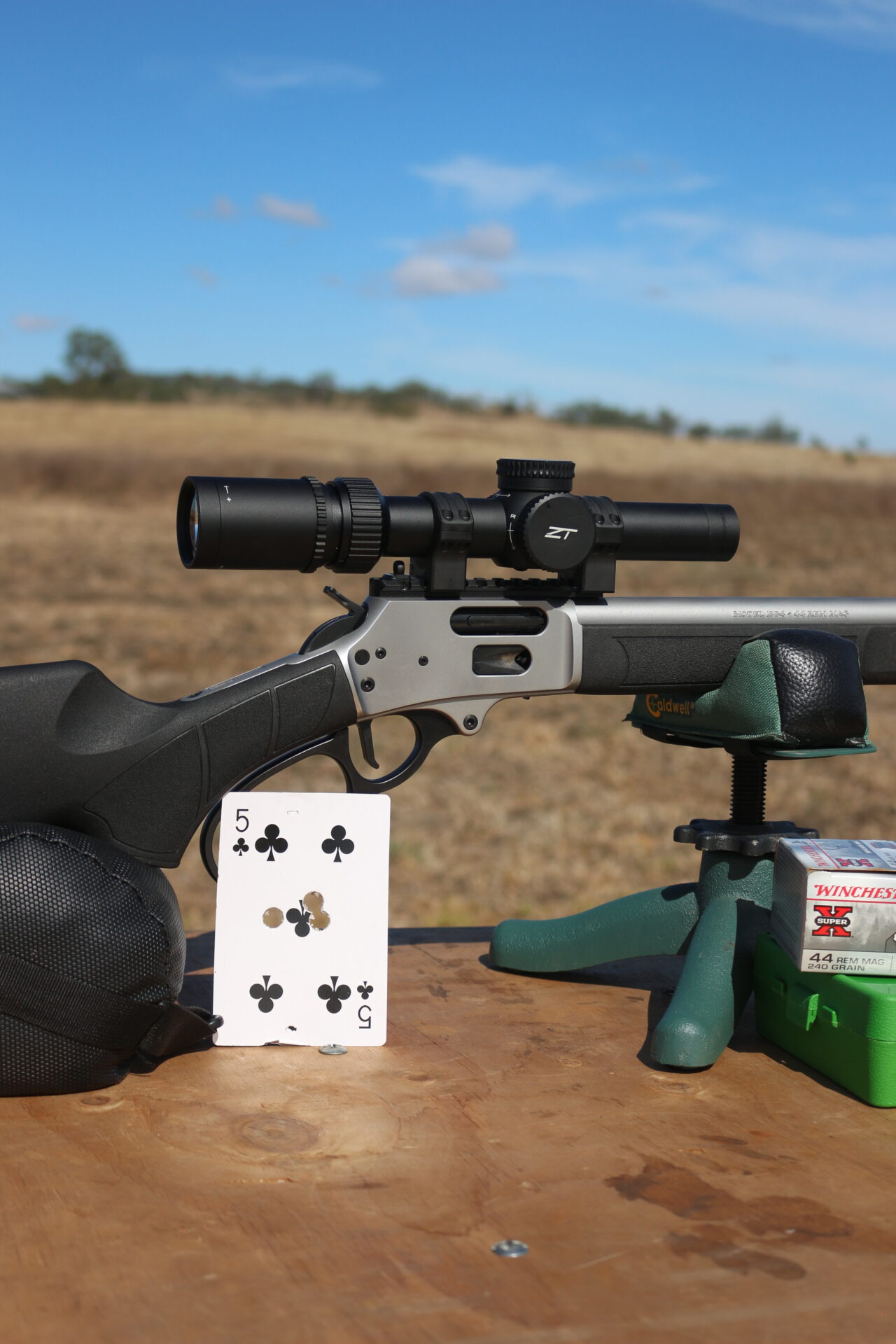
Accuracy was excellent. With the ZeroTech low-powered variable optic (LPVO) scope mounted to the picatinny rail, consistent three quarter-inch groups at 50 yards were achievable, speaking to the rifle’s inherent precision and the benefits of the flat-faced trigger for repeatable control. The .44 Magnum cartridge delivers capable performance for feral animal management, where its power and the rifle’s handy length shine within ethical ranges – typically the .44 Magnum is best suited to shots less than 100–150 yards depending on load and conditions.
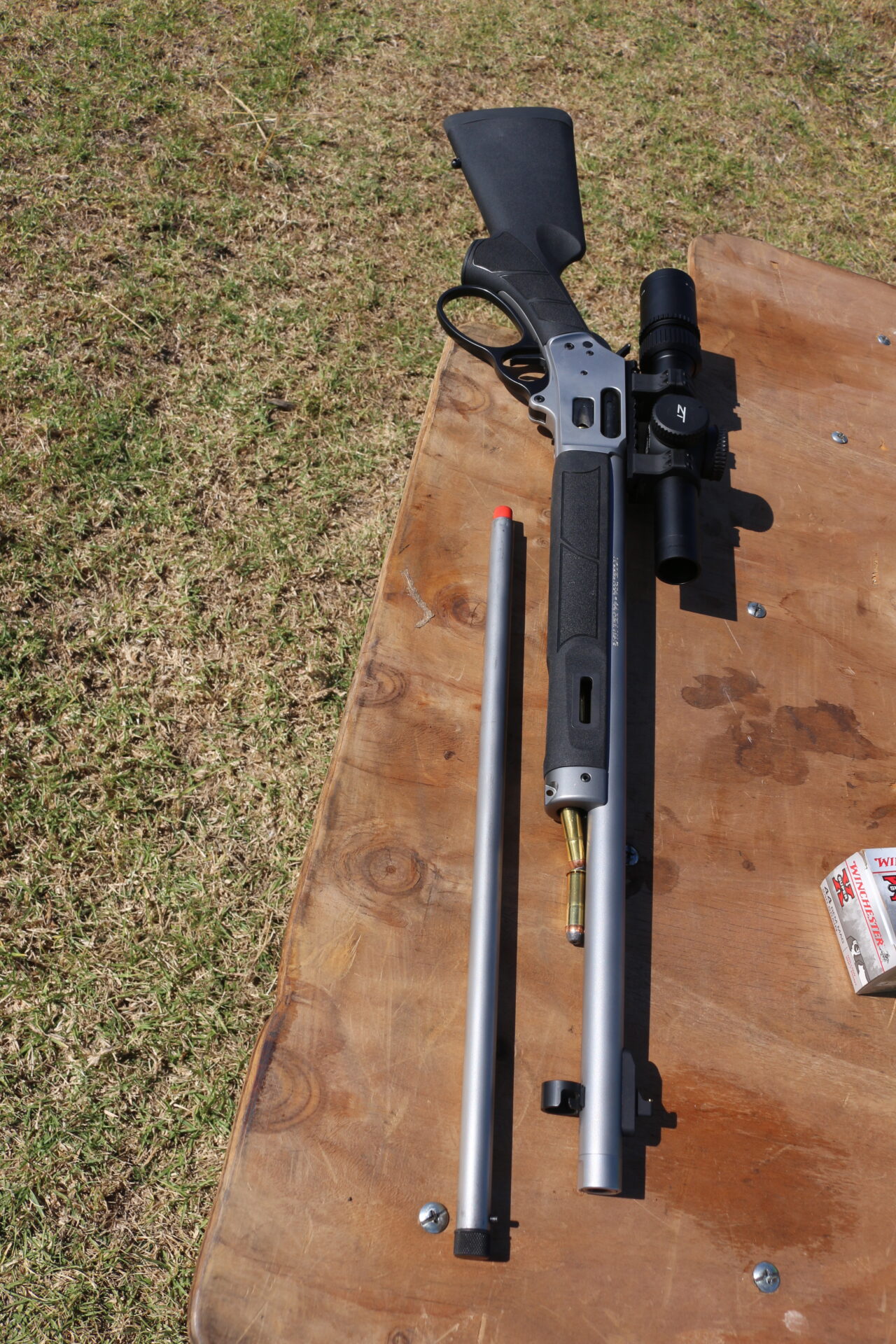
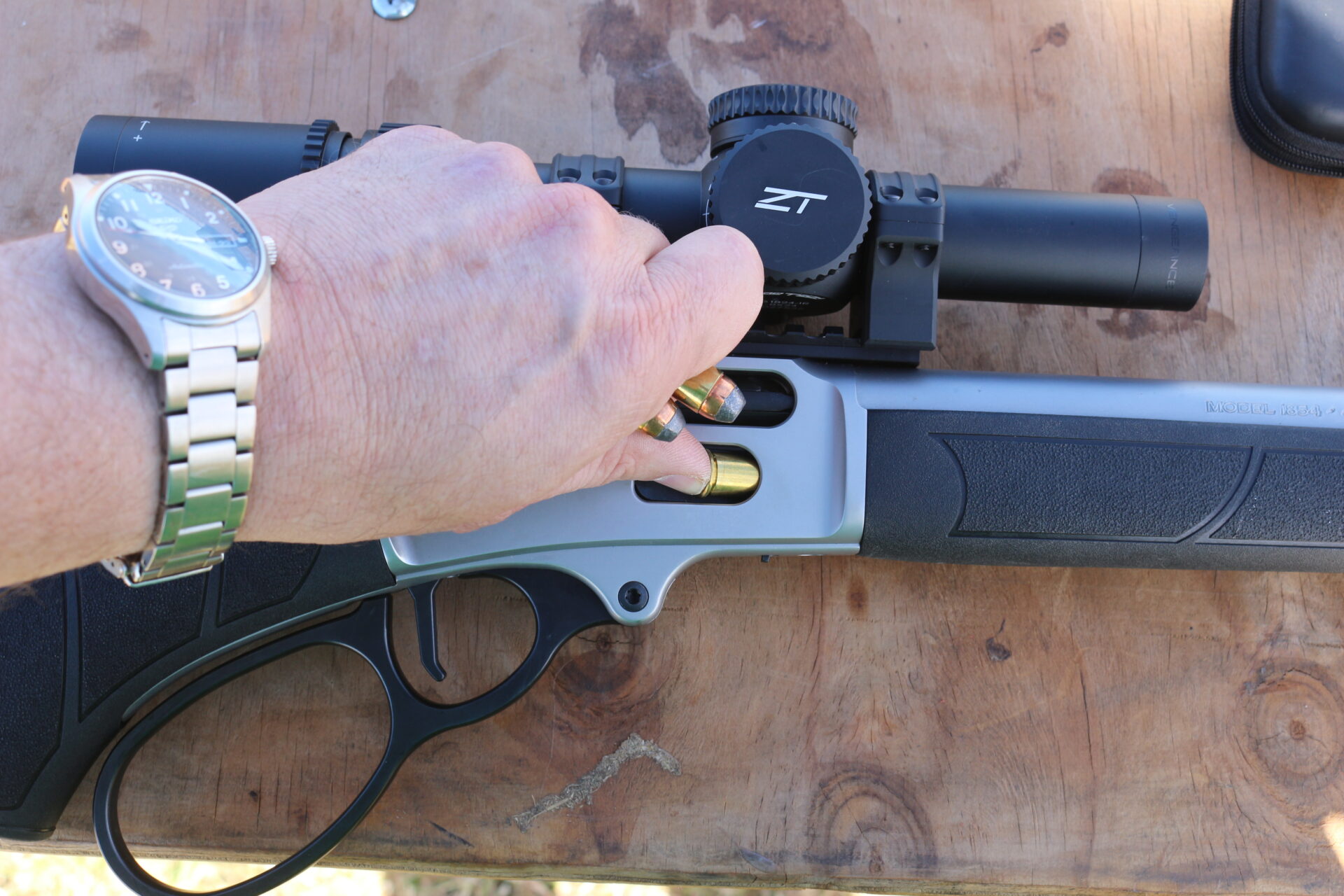
The tubular magazine’s nine-round capacity will provide a sufficient reserve for situations requiring multiple shots, such as encountering sounders of pigs. Practically, the design encourages measured shooting: once the magazine is depleted, reloading through the side gate takes deliberate time and effort. The smooth action and ergonomic lever made cycling and reloading a positive experience, with the loading gate’s spring tension proving comfortable even after extended sessions – avoiding the pinched thumbs sometimes encountered with other lever designs.
The rifle’s balance and manoeuvrability made it pleasant to carry and shoulder quickly, whether working around the property or moving through varied terrain. Its stainless-steel construction and synthetic furniture suggest it will withstand the dust, mud, moisture, and hard knocks typical of Australian conditions.
Turning to the optic, the ZeroTech Vengeance 1-8×24 LPVO with illuminated RAR (Rapid Acquisition Reticle) proved a strong complement to the lever-action platform. Housed in a 30mm 6061-T6 aluminium tube, the scope weighs 645g and feels robust without excessive bulk. At a recommended retail price of about $649, it offers compelling value.
First impressions highlighted its solid build and clear, fully multi-coated glass. The true 1x performance allowed both-eyes-open shooting for fast target acquisition, while the 8x magnification extended practical reach without sacrificing clarity. Eye relief of 90mm and a forgiving field of view (up to 35.26m at 100m on low power) aided comfortable use on the lever gun.
The RAR reticle initially appeared somewhat busy, but illumination transformed its utility. The bold outer bars and illuminated ¾-circle with centre dot naturally drew the eye for rapid shots, while the integrated 2 MOA hash marks and 4 MOA intervals provided useful holdover and wind references at higher magnification. Six brightness settings adapted well to full sunlight or lower light. Turrets offered crisp ¼-MOA clicks with positive feedback, and the scope tracked reliably.
The scope was affixed with Warne medium-height hyperlight 30mm rings, which integrated effectively with the rifle. However, the inherent design of lever-action rifles can complicate achieving an optimal cheek weld, often necessitating the shooter to shift their head position upwards on the stock, adopting a more chin-centric weld for unobstructed viewing through the scope. Using low mounts might have benefited the shooter seeking a more consistent cheek weld position. Mounting a scope low to the top of the receiver might require the removal of the back ghost ring aperture sight; this is a consideration that one needs to make on their own merits. In the field, the LPVO’s versatility shone: 1x for close, dynamic scenarios in scrub or lantana and 8x for more deliberate shots out to the .44 Magnum’s effective range. The illuminated reticle particularly suited the fast-handling nature of the rifle for feral game management tasks.
Final thoughts
I have seen the Smith & Wesson Model 1854 stainless variant, like the one in this review for sale, ranging between $2500 and $2800; its price tag is comparable to other lever-action rifles of the same quality. This rifle delivers a modern take on a proven design. Its medium profile barrel, quality synthetic furniture, smooth action, and thoughtful features – such as M-LOK compatibility, user-friendly loading gate, increased accuracy from the flat face trigger and ease of unloading via the removable tubular magazine – make it a versatile tool for practical shooting and hunting. Accuracy exceeded expectations; recoil was civilised, and the overall package feels built to endure. For shooters seeking a hard-working lever action that honours its heritage while incorporating contemporary refinements, this rifle merits serious consideration. It excels in roles where quick shouldering, reliable cycling and sufficient round capacity to meet the needs of farm work, feral animal management, and recreational shooting, all while encouraging deliberate, responsible handling.
The ZeroTech Vengeance 1-8×24 RAR is a no-nonsense LPVO that punches above its price point. Its rugged construction, clear optics, versatile magnification and effective illuminated reticle make it well-suited to dynamic shooting environments common in Australia. It performed reliably across lighting conditions and delivered the speed at 1x and precision at 8x that many hunters and shooters require.
Together, the Model 1854 and Vengeance scope are a great match. The rifle’s smooth, balanced handling finds a natural partner in the optic’s rapid acquisition capabilities and adaptable magnification. The 1x setting enhances the lever gun’s inherent quickness for close work, while higher power extracts the .44 Magnum’s ballistic potential for measured shots. This combination supports effective, ethical performance in game and feral animal management or sporting use. Both items reflect thoughtful engineering – heritage charm with modern functionality in the rifle and practical performance of the scope.
In an era where shooters value tools that work reliably under real conditions, the Smith & Wesson Model 1854 and ZeroTech Vengeance offer a satisfying option. They complement each other in promoting accurate, controlled shooting that aligns with responsible firearm ownership and the practical demands of the Australian landscape. Whether for property work, pest management or simply enjoying a classic action at the range, this duo deserves attention from anyone seeking to purchase a lever-action rifle.
