

Review: Nocpix Nova H35R Thermal
A one-of-a-kind, vehicle-based thermal solution designed for the Australian market
In a thermal market proliferating in brands, exploding with products, on an exhaustingly rapid release cycle, the Nova H35R stands alone. You could describe this offering from Nocpix with any idiom about uniqueness you care to apply. And along with the ‘Designed by Australians for Australians’ marketing tagline, suggesting it to The Report editors as a potential review was a no-brainer.
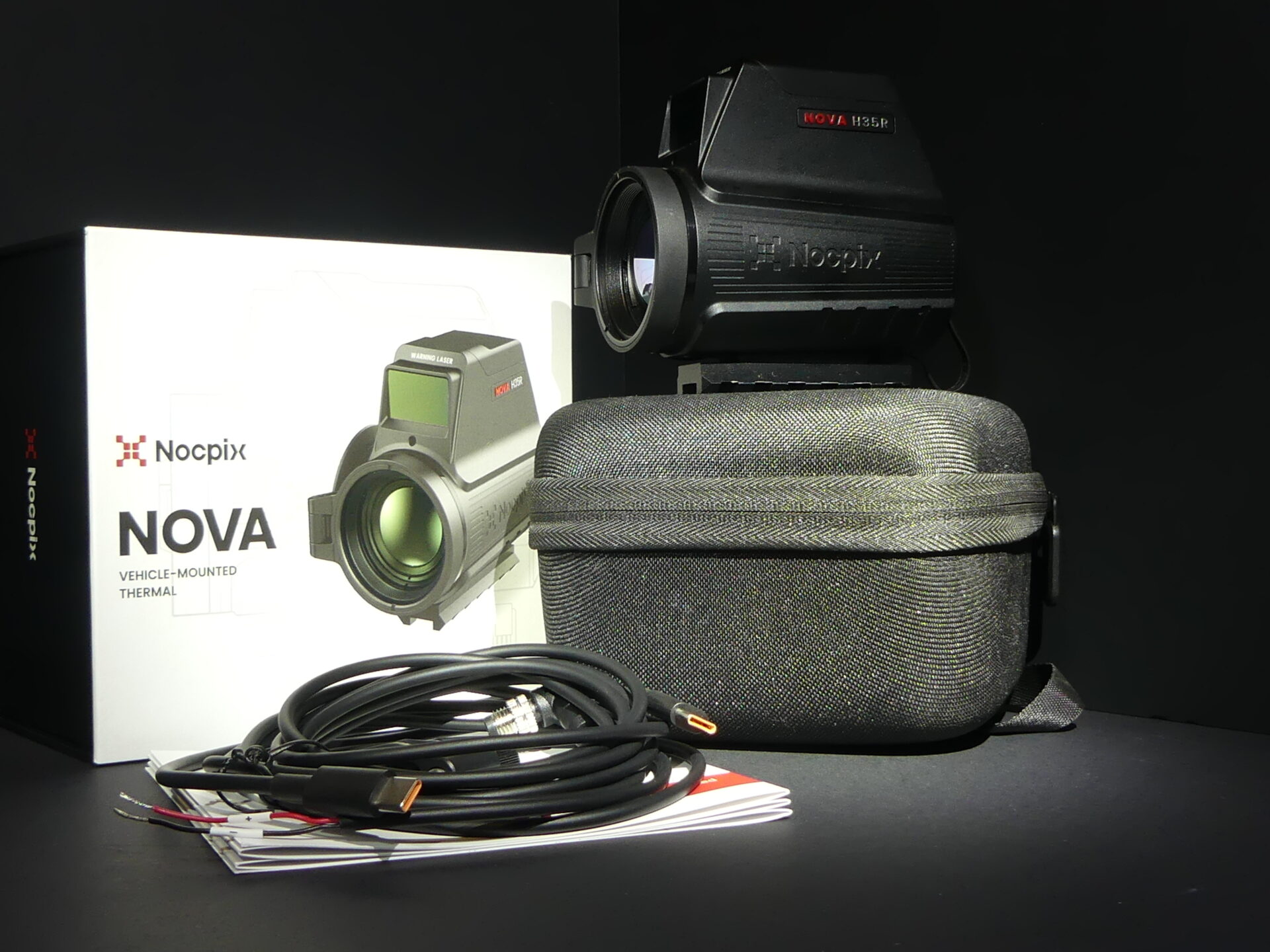
When the loan item arrived from Ground Force International (the Australian importer), opening the glossy box and the semi-rigid case inside revealed the smallest, most peculiar thermal I had ever seen. With no eyepiece or viewfinder, the absence of any buttons or controls and even the exclusion of a battery, you might be thinking, ‘What’s left?!’. You see, the Nova is designed for one thing and one thing only – vehicle mounted night hunting. Read on for the hands-on, field-based investigation of this atypical product.
Remote mounting
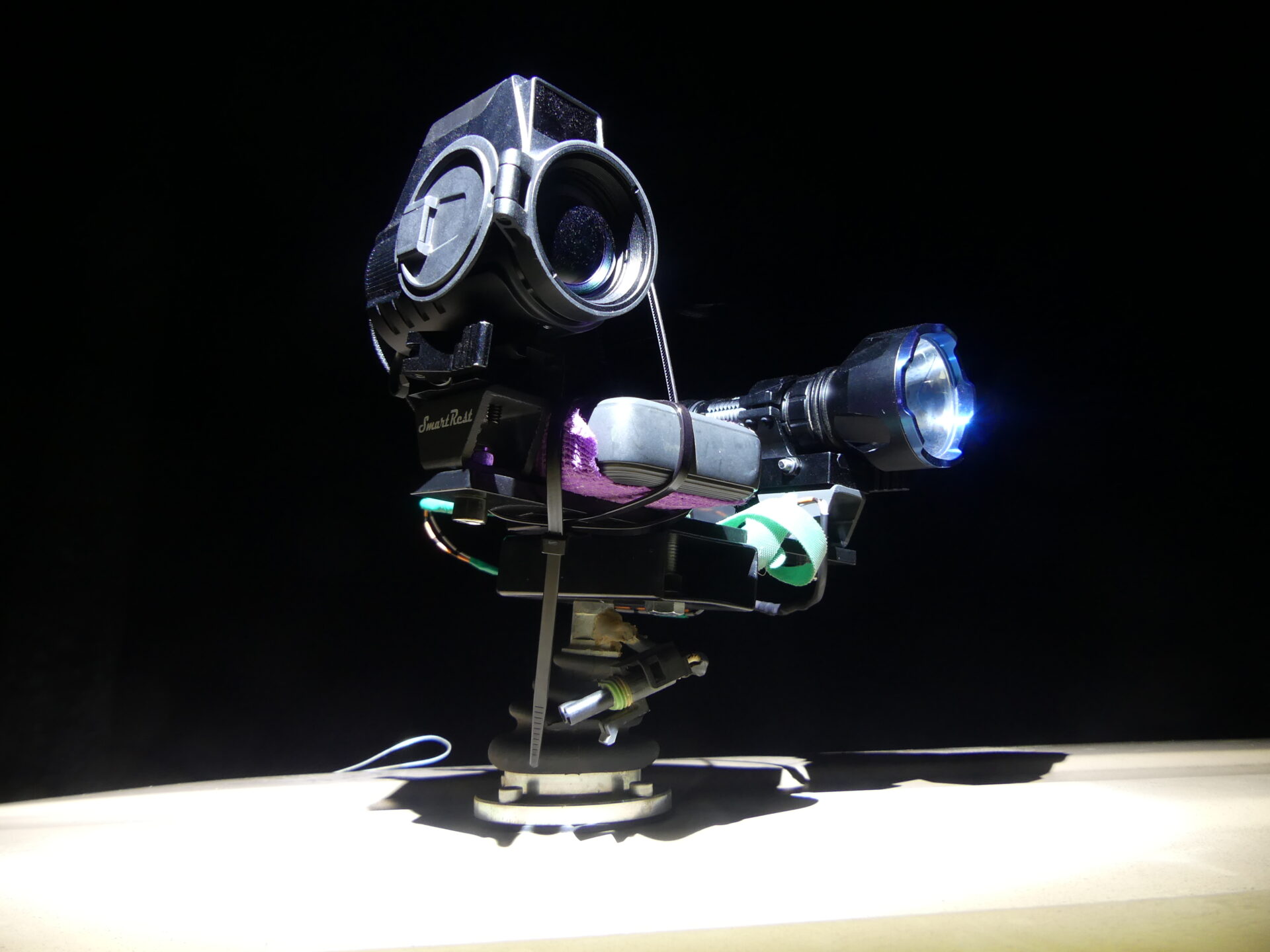
If you’re like me, when vehicle mounting a handheld thermal, you get the feeling you are doing something naughty, like at any moment a teacher or boss could pop out and catch you. While all handhelds have a ¼-20 thread in the bottom, it’s obvious, white-coated design engineers intended this feature for steadying on a tripod. They didn’t envisage it stuck on a spotlight handle vibrating down a corrugated track or fanging across a paddock in pursuit of pigs (with the occasional low branch trying to snatch it).
Our rules and regulations for night hunting, or the lack thereof, make the Australian thermal market pretty unique. According to Nocpix, ‘Nova is the result of many requests from our Australian customers for a rugged and robust thermal camera suitable for spotlight remote mounting in the harsh Australian conditions’. Most of the design choices reflect this, but none more the solid flat base with dual threaded mounting holes and removable Picatinny style base.
The Nova isn’t designed to feel good in the hand with a tripod screw as an afterthought. Users could fashion any number of mounting methods utilising the pair of holes, but during testing we used the Picatinny rail. It was ‘Smart Rest’ clamp compatible (Eagleye Hunting Gear), and we ran it on a Lightforce window mount handle, a Powabeam roof mount handle, and a SpydaBot Sting H2O robot. Mounting was quick, very secure, and we didn’t feel like we were about to get scolded for doing the wrong thing.
Picking the power
Once you decide how to mount the Nova, you will need to decide how to power it. Two inputs exist to facilitate this: a female USB C port and a small, round-threaded fitting, which is listed as 12-24 VDC compatible. Because this product was on loan, it was decided against permanently modifying the supplied 12v lead (like you would if you owned it) and just ‘yard’ testing as a proof of concept. This 12v connection enables the IP67 rating, so a rain simulation (spraying with the garden hose) was conducted, with no issues experienced.
For the field, the USB-C connection was utilised. A short USB-C cable and optional screw-in coupling are supplied, where the connector sits over the end of the USB cable and threads into the back of the Nova, reminiscent of an old-school printer connection. This provides strain-relief and avoids accidental un-plugging, though other USB-C cords tested had heads slightly too thick to fit in the clamp. Initial testing was done running vehicle power from inside the cab via a 3m USB-C lead. We quickly abandoned this for the tangle-free solution of zip-tying various power banks next to the Nova. For reference, a 10,000mAh battery would have 33 per cent remaining after about 10hrs usage.
Binge streaming
While streaming is an afterthought or novelty for many thermal users, it is crucial for remote mounting. And in the case of the Nova H35R, it is fundamentally integral. With no viewfinder or screen, and zero buttons and dials, pairing through the 5GHZ Wi-Fi to a smart device running the Nocpix app (available for iOS and Android) turns an otherwise expensive paperweight into a state-of-the-art night hunting tool. Applying power to the Nova automatically turns it on and, after a few moments, the app can be used to connect. You can then update the Nova firmware, peruse the album of videos and images taken using the Nova (stored on your smart device), find product information and, of course, act as the viewfinder.
Viewfinder mode has a control ribbon across the bottom (in portrait) or up the side (in landscape) with a range of buttons allowing users to cycle through picture-in-picture zoom options, colour palette selection (total of four available), shutter refresh as well as on/off for laser range finder, laser pointer and image stabilisation. Recording video (no sound), still images, and accessing the gallery are also done from this menu, and tapping the main image causes the control ribbon to disappear/reappear. All in all, the layout is uncluttered and simple to use.
During testing (late last year), most stability was experienced with an Android. Multiple different Samsung tablets and phones produced solid connections and extended streaming windows with as few hiccups as could be reasonably expected streaming thermal optics. iOS devices, however, weren’t as smooth, with failures experienced trying to update the Nova firmware. While various iPads and iPhones were successful streaming and operating the Nova, intermittent dropouts and freezes were more common compared to the near glitch-free Android operation. In my experience it is not uncommon for a thermal to have a smart phone OS that it prefers. Nocpix is regularly bringing out firmware updates for the Nova (two occurred during the seven weeks testing), as well as app updates, so by the time this makes it to print, things may have been resolved.
‘Frickin’ laser beams’
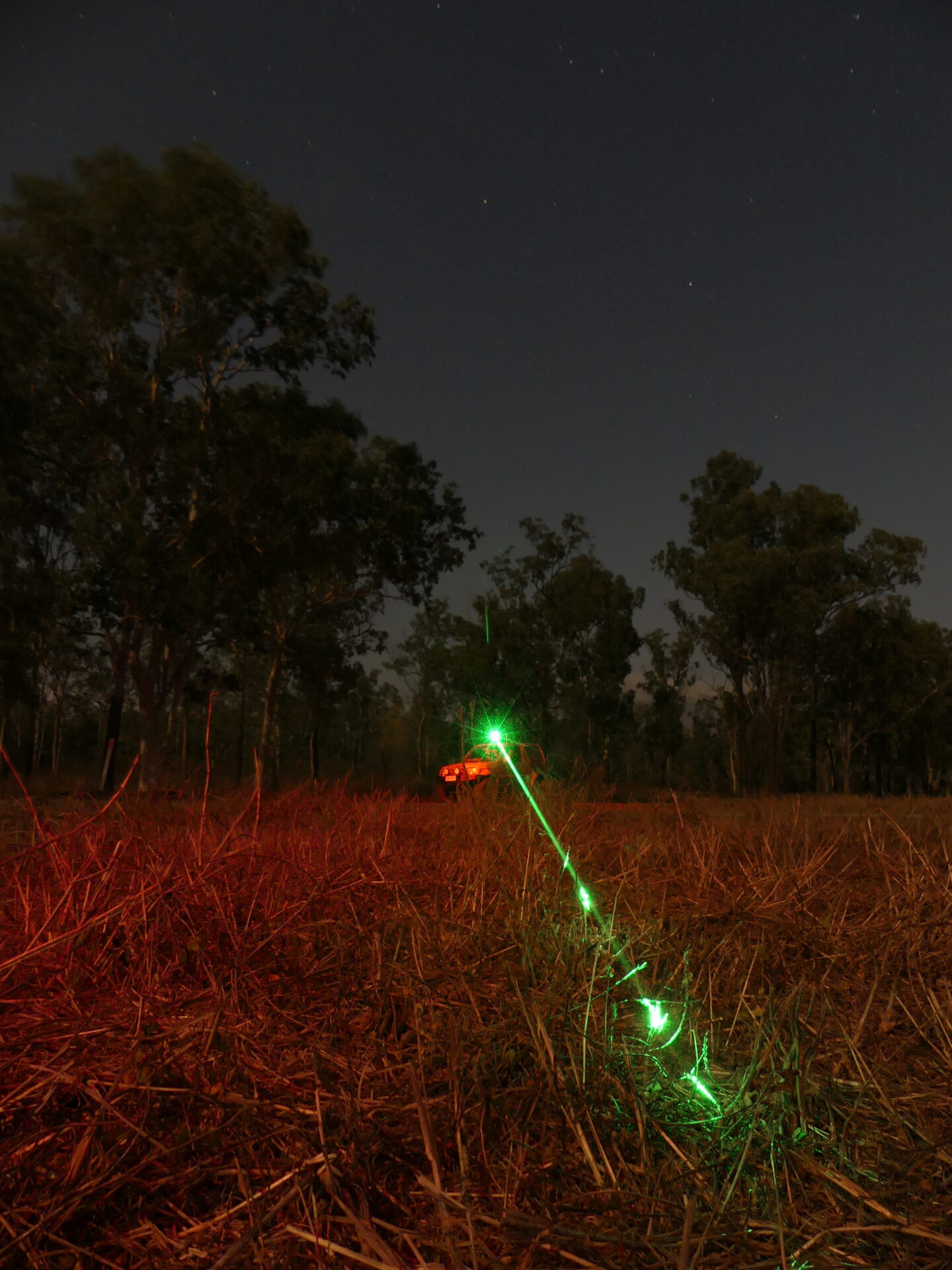
The Nova H35R comes with not one but two lasers. The first is invisible and used for the LRF. Sold as 1200m class capable, of course ranging a small soft furry target will be reduced. The second is a green pointer, which proved invaluable for keeping track of where the remote-mounted thermal was pointing and communicating target locations when quarry was found and recovering downed game. With battery life not really a concern, leaving them both run constantly made for more efficient scanning and hunting.
In contrast, I found I rarely used the electronic image stabilisation (EIS). Having significant experience thermal scanning from a moving vehicle (and a high tolerance for not getting nauseous while doing so), when conditions made me reach for the EIS, they were already beyond its ability for meaningful improvements. Test driving up and down the same track alternating EIS on and off did see marginal stabilisation improvements, but personally it wasn’t worth the field of view crop that came along with it.
The all-important image
The 35mm F1.0 lens is configured with the 640×512,12µm ≤ 15mK NETD sensor to produce 1x magnification. Now, while the image produced was good, initially it left us wanting a little more based on the sensor specifications and the name ‘Nocpix’. However, as the weeks of testing progressed (30+ hours in the field), we grew to appreciate the Nova for what it was and theorised some explanations for the early expectations.
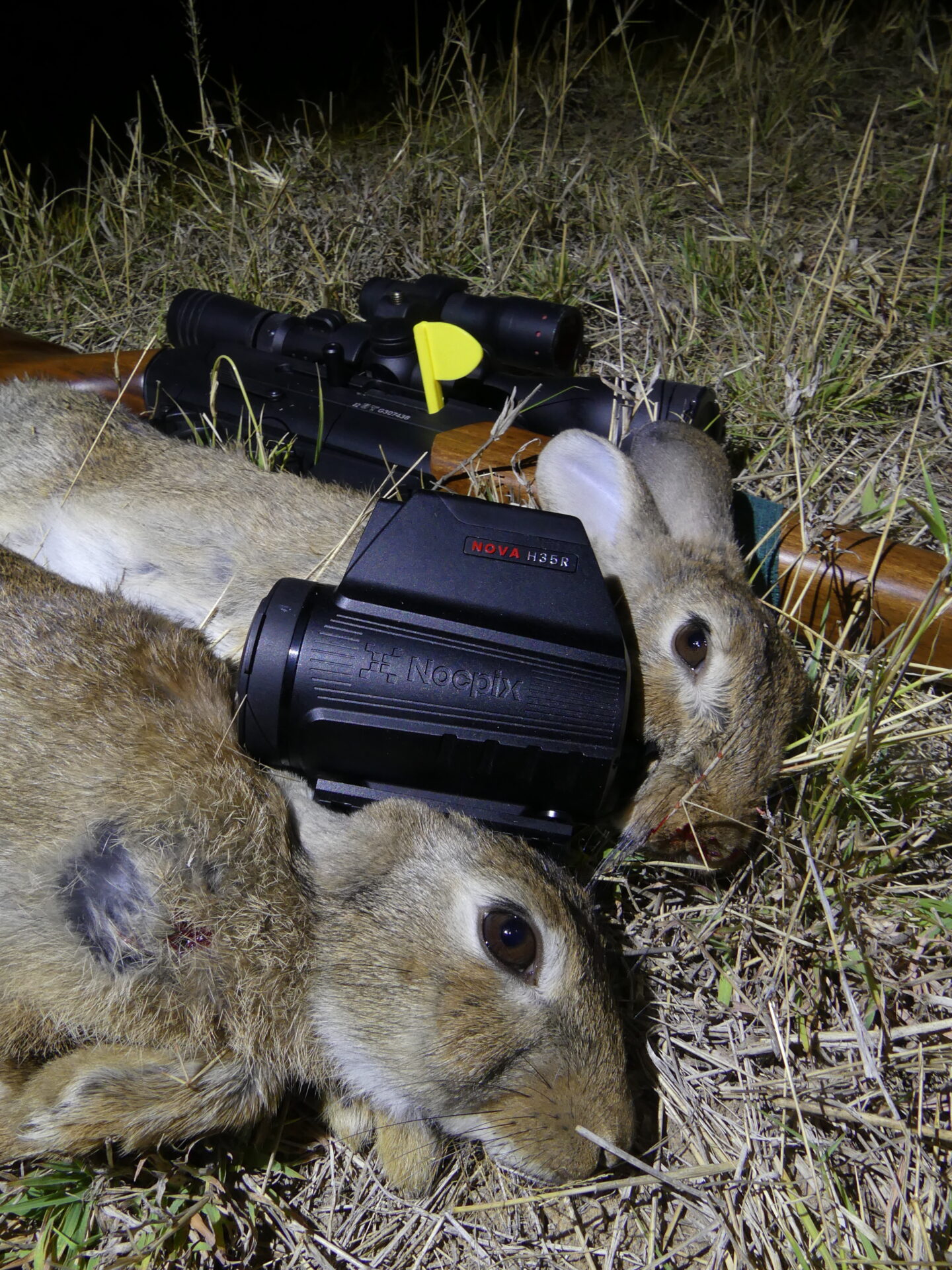
Firstly, the Nova is fixed focus, stating a window of 30m to 300m (though it seemed to sharpen in the low 20s and soften before 300m). No doubt a variable focus would help achieve a sharper image at all ranges. However, having no moving parts to achieve its ‘vehicle-grade vibration resistance’ and ruggedness was presumably a deliberate design choice. Secondly, the 1x base mag would be foreign to most thermal users, us included. This of course is to facilitate scanning from a moving vehicle, but no doubt low-base magnification, particularly at extended ranges, contributed to our initial feelings.
Thirdly, forced tablet/phone usage means the image is always blown up. Streaming to a device, or watching video playback, never looks as sharp through a scope’s viewfinder on a tiny display. Reviewing Nova-recorded videos on a PC with the window shrunk as small as possible increased perceived sharpness significantly, confirming the theory. Keeping in mind the purpose and use case of the Nova, these are all design trade-offs I can get onboard with.
Conversely, I was surprised to find there was no ability in the app to select different scene modes or adjust the image. As the North Queensland humidity increased across the loan period, I repeatedly found myself looking for the brightness, contrast and other adjustments in the app to tune the image, only to remember they weren’t there. I religiously do this at the beginning of each hunt, and often throughout the night as conditions change, to maximise a thermal’s image clarity. When queried, Ground Force International stated this was to keep the app interface as user friendly as possible for a range of thermal experience levels. As an experienced user, this is not something I can get onboard with, but one would think could be changed with firmware/app updates.
Who is it for and for how much?
With an RRP of $2999 (available through any Nocpix dealers), you are certainly getting a lot of sensor specs and brand recognition for the money. Would I recommend this as a new user’s first thermal purchase? Or as your only thermal device? For someone who hunts mainly on foot? No. Jack of all trades the Nova is not. However, it is a true, or better still, the true, master of one – a specialised product that has met the design brief, and if you are a dedicated (or should I say addicted) nocturnal hunter, this product is for you. Having seen it, used it and returned it, the real question is, can I call myself a serious thermal hunter without one? I’m not so sure that I can.
