

Garmin Xero L60i Rangefinder Review
Going the distance
By Dallas Walker
How a small handheld device became the most fought-over item on our farm short of the TV remote and the last cold Coke.
There are two kinds of gear in this world: the stuff you buy because you technically need it, and the stuff that quietly worms its way into your daily existence until one day you realise you’ve started talking about it at family dinners like it’s another child.
So, which one is this Garmin Xero L60i rangefinder? Unfortunately for everyone around me, it’s the second one. And, I say unfortunately because four months ago I made the mistake of saying, “Yeah, sure, everyone can have a turn with it.” Absolute rookie error, Dallas.
Now it lives in this weird state of permanent kidnapping, where I spend half my life asking who has it. At one point I found Brad, my partner, using it to spot deer from the veranda while drinking coffee like some kind of suburban artillery commander.
And honestly? Fair enough, because this thing is stupidly good. Not ‘good for the money’ or ‘pretty decent once you learn how to use it. The kind of good where you immediately become annoying to other people because you keep saying things like, “Actually, according to the Garmin, that stump is 437 metres away.”
We’ve dragged this thing everywhere during the past four months. Hunting trips, range sessions, checking distances across paddocks, hiking and general property chaos. And what keeps blowing me away is how fast it is. You hit the button and BAM. Distance. None of this: hold still…hold still…wait, why is it reading the tree behind the thing…
No. It locks on properly. Quickly. Cleanly. Even in less-than-perfect conditions, which matters because apparently, I now spend half my life ranging things in garbage light while freezing to death before sunrise.
The display is crisp, ridiculously easy to read, and somehow still manages to work beautifully when your brain is running on one coffee and blind optimism.
Now let’s talk optics because this is where Garmin decided subtlety was overrated. The glass clarity is honestly wild. You know that moment when you look through cheap optics and everything feels slightly foggy? Like your eyeballs are buffering? Yeah, this is the opposite of that.
Looking through the Garmin feels like someone handed you the free upgrade to First Class when you originally booked Basic Economy and now you don’t know what to do with yourself. Edges are sharp. Targets pop. Light transmission is excellent in low-light conditions. Everything just feels clean. I genuinely had one of those moments where I lowered the device and looked with my normal eyeballs and thought: “Oh. Ew.”
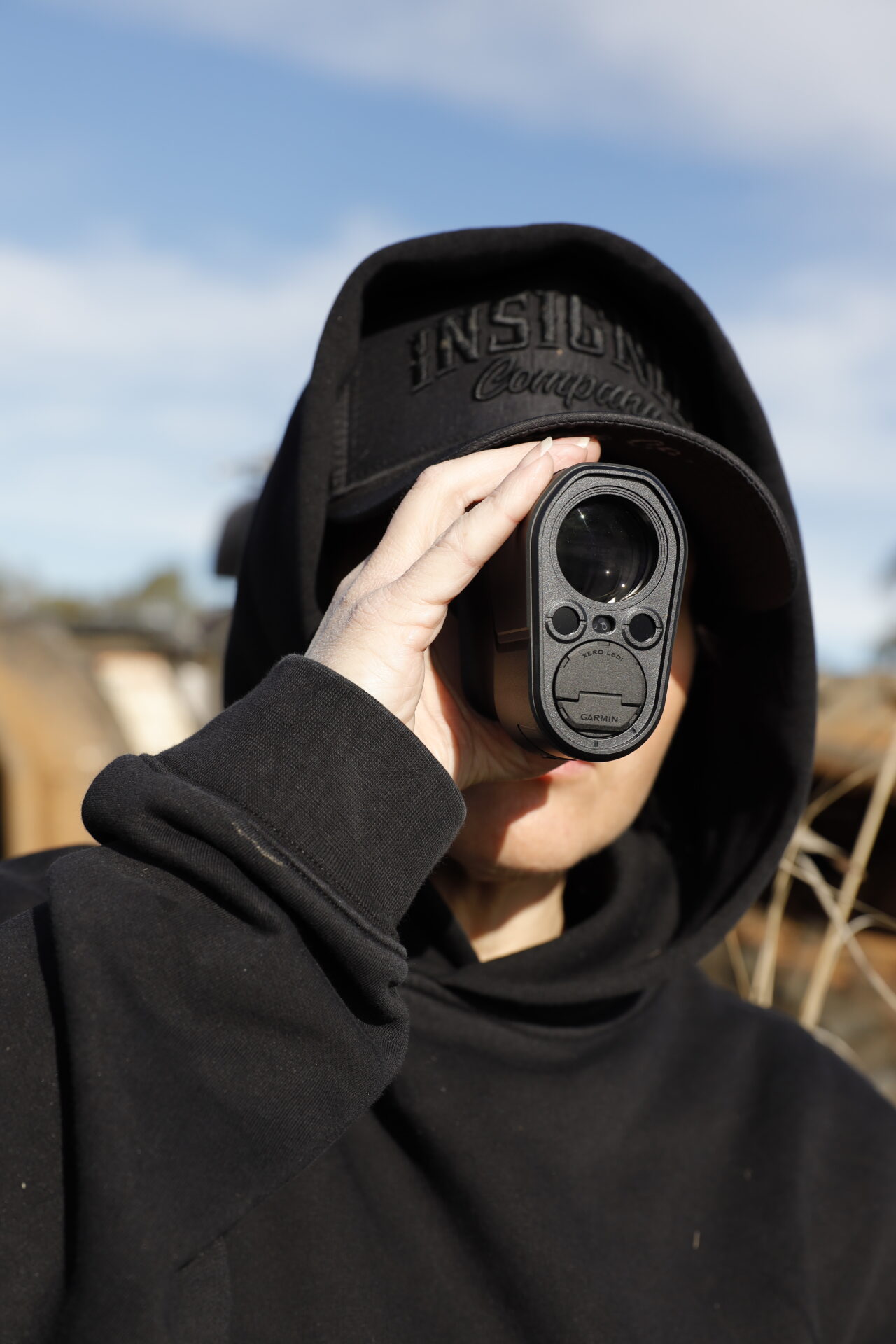
And the ranging capability itself? Ridiculous. Long range steel. Trees. Animals. Random fence posts because I am now incapable of existing without checking distances. It handles it all effortlessly.
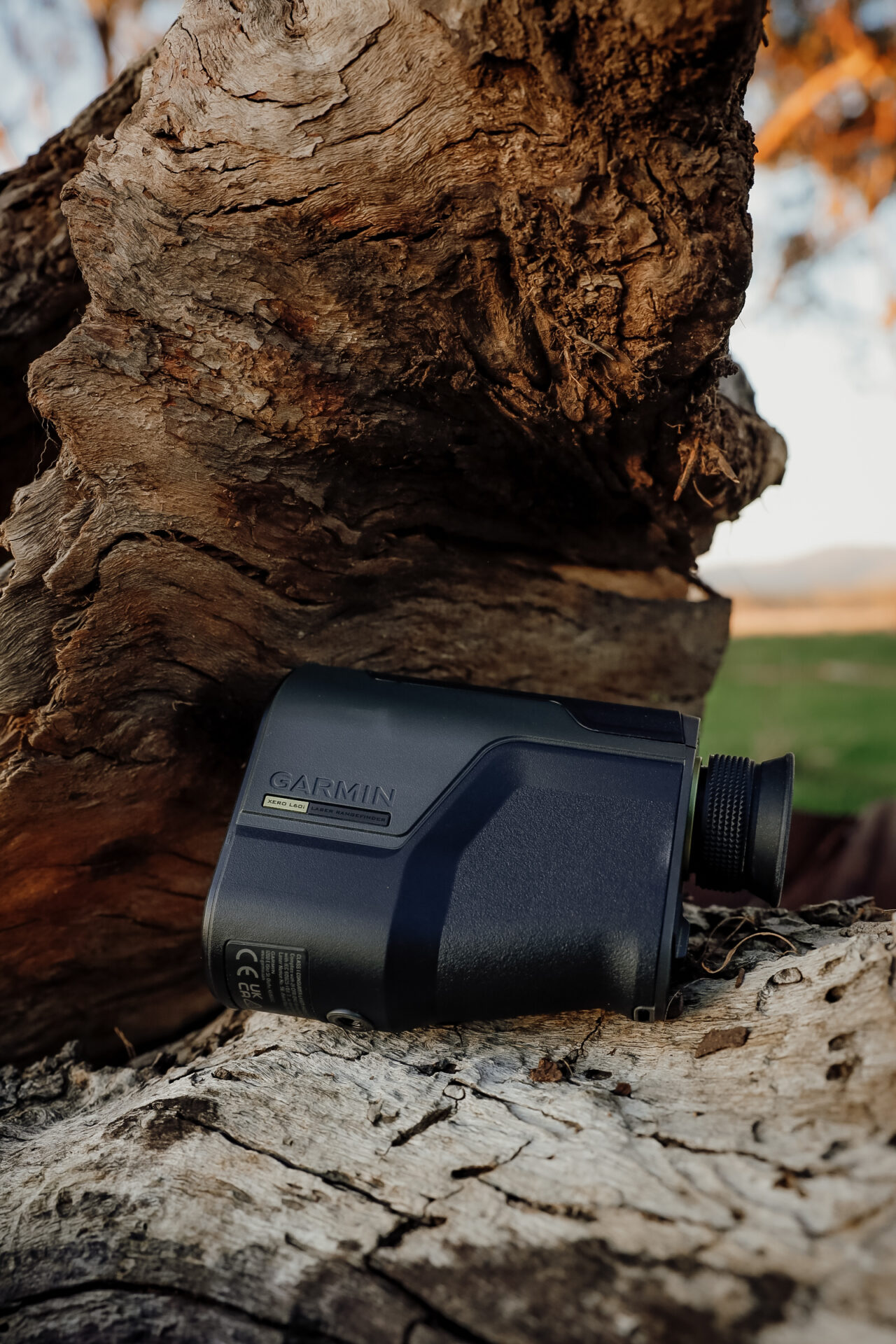
The consistency is what impressed me most, especially out on the range, because accuracy is cool. But repeatability? That’s the magic sauce.
If you’re shooting long distance, you already know the absolute psychological warfare caused by dodgy readings. One weird number and suddenly you’re questioning yourself, your rifle, the atmosphere.
The Garmin just works. Repeatedly. Reliably. Without drama. Which is honestly refreshing because most tech these days behaves like it was designed by raccoons with anxiety disorders.
This is the point in the review where Garmin basically kicks the door open and says: “By the way, we weren’t messing around.” Because once you start digging through the actual specs on the Xero L60i, it becomes painfully obvious this isn’t just another rangefinder with a fancy logo and inflated confidence. This thing is stacked. Like ‘someone let the engineers off the leash’ stacked.
First up. The Garmin Xero L60i can range:
- animals out to 2,77m
- trees out to 3,600m
- reflective targets out to a completely unhinged 7,000m in ideal conditions.
At 7000m, you’re not ranging targets anymore, you’re checking neighbouring postcodes.
And somehow despite all that distance, the accuracy stays tight:
- +/- 0.25 metres under 1,000m
- +/- 1 metre beyond 1,000m.
Those figures explain why this thing felt so reliable on the long range. No weird guesses. No random emotional support numbers. Just repeatable consistency over and over again. So, if you shoot long distance, you already know how much confidence that gives you.
The optics are equally aggressive. Garmin built the Xero L60i around:
- 7x magnification
- a 32mm objective lens
- fully multicoated, low-dispersion glass.
Translation? Bright image. Excellent low-light performance. Sharp edge-to-edge clarity.
And genuinely, the low-light performance deserves applause. Dawn and dusk are where a lot of optics begin to fail, yet the Garmin just keeps delivering a crisp image.
This is where things start getting spicy. The Xero L60i is the first laser rangefinder with onboard GPS mapping and a full-colour augmented reality display built directly into the optic. That means while looking through the optic, you’re seeing:
- distance
- mapping
- navigation data
- waypoints
- directional cues
- ballistic information.
That data is all overlaid directly into the display itself. The first time you use it feels absurdly futuristic. Then there’s Garmin’s Laser Locate™ feature, which is genuinely one of the coolest things I’ve used in the field.
Basically, the unit combines laser range, compass heading and GPS positioning to project waypoints directly onto the map system. So, instead of going: ‘I swear the animal was near that weird tree…’ You now have an actual marked location you can navigate back to. This is extremely useful in rough country, low visibility or when your sense of direction is powered entirely by blind optimism and caffeine.
Then Garmin somehow escalated things further with Sensor Locate. This feature lets the unit estimate distance to objects that are actually too far for the laser itself to range by using:
- onboard GPS
- mapping
- compass
- inclinometer data.
You know those infomercials where the presenter says: ‘For today only, when you buy this, we’re also going to throw in a brand new set of kitchen knives?’ Just you wait. Because Garmin also included:
- onboard Applied Ballistics Ultralight
- atmospheric sensors
- barometric pressure data
- temperature sensors
- Coriolis compensation
- archery ballistic profiles.
At this point, calling it ‘just a rangefinder’ feels disrespectful. This thing is basically a tactical woodland computer.
Battery life also deserves respect. The Xero L60i runs on two AAA lithium batteries with Garmin quoting roughly 1,400 ranges per set. That explains why after four months of abuse ours still refuses to die, unlike my phone, which enters low power mode if I look at it too confidently.
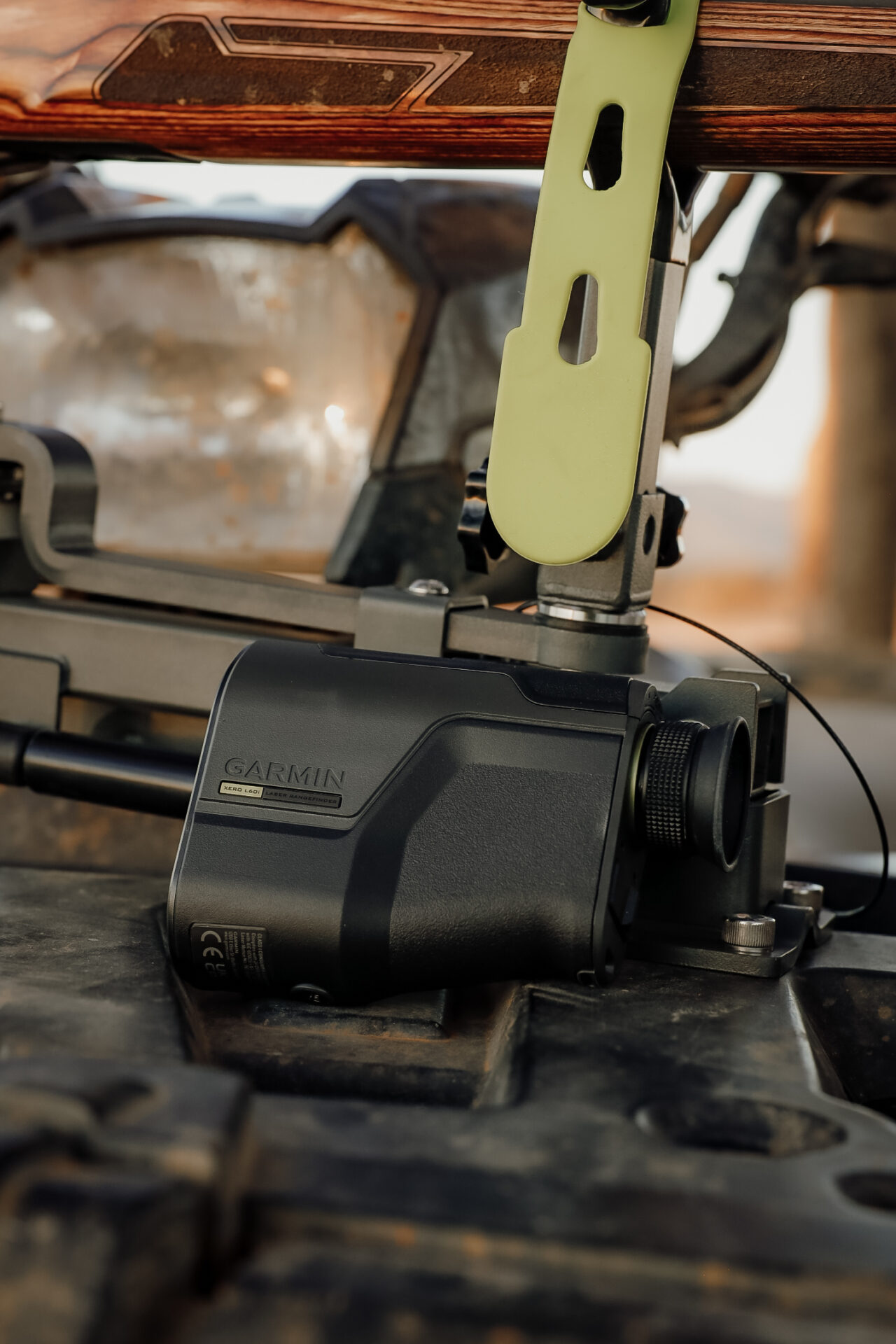
How’s the build quality? Nothing phases this thing: dust, rain, farm life, packs, vehicle floors…no problem. Plus, it is IPX7 water resistant. This is important because nobody buying this device is storing it in a velvet-lined cabinet every night. This is hard-use gear. And Garmin built it accordingly. It feels premium in the hand without feeling delicate, which is a balance a lot of companies completely fail to understand.
Honestly, the wildest part about the Xero L60i is that none of these features feel gimmicky once you start using them. Garmin somehow made all of these features feel intuitive, practical and genuinely useful in the real world.
The ballistic integration side of things is where the whole setup starts getting borderline witchcraft. I know people throw words like ‘game changer’ around so much they’ve basically lost all meaning. But the Xero L60i genuinely changes the experience in the field.
Having immediate ballistic data integrated into the unit saves time, removes mental clutter, and massively simplifies the process when conditions are changing quickly – especially hunting!
What surprised me most though was how addictive using this device became. Somehow Garmin has managed to make a ‘tool’ feel genuinely enjoyable to use. The speed. The clarity. The confidence it gives you. The seamless functionality. It all adds up into this weirdly satisfying experience where you start actively looking for excuses to pull it out.
And honestly? The biggest compliment I can give Garmin is this: I don’t know how I go back now. That’s the problem.
This rangefinder has completely reset my expectations, not just because of one flashy feature or marketing hype. Because after four months of real-world use, it has performed flawlessly every single time.
If you’ve made it this far into the review and are now sitting there calculating which organ you could realistically sell to justify buying one…good news. The Garmin Xero L60i is available directly through Garmin Australia for $4,299 as well as from selected premium outdoor, hunting and shooting retailers around Australia.
