

A calibre worth considering
After 100 years of service
By Billy Allen – As published in the October 2026 issue of The Report
What if I told you that there was a calibre out there that can better the ballistic profile of a 6.5 Creedmoor? Furthermore, this calibre:
- can hit an animal and penetrate with the efficiency of a .300 Winchester Magnum
- has recoil that is only slightly heavier than that of a .243 Winchester
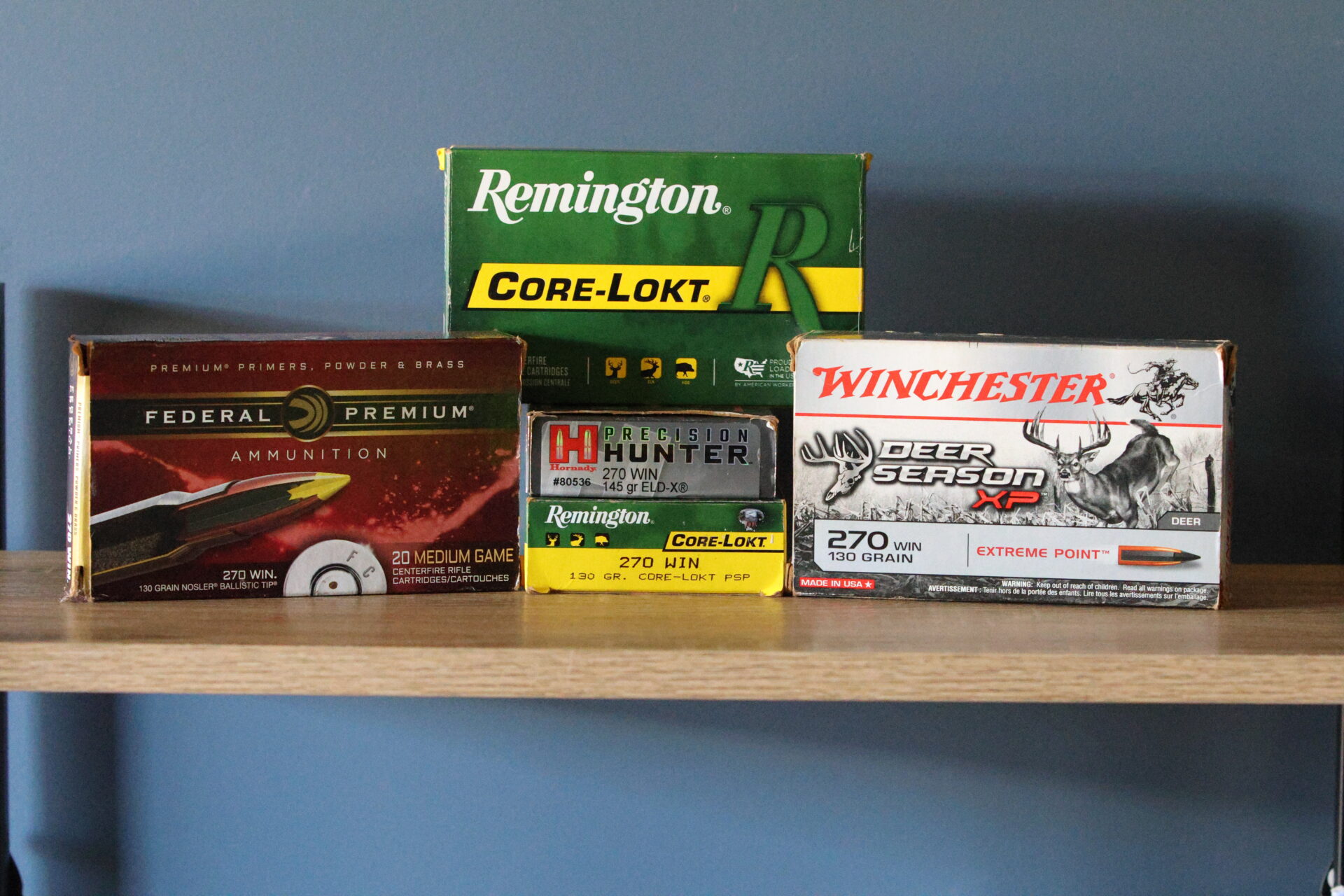
- uses ammunition that is easy to find and is cost effective
- is a true deer slayer?
What if I added that this calibre can be found in the lineup of most popular rifle manufacturers and is now 100 years old yet still holds its ground against more contemporary cartridges? Have you guessed it yet? That calibre is the .270 Winchester.
Introduced in 1925 by Winchester, the .270 Winchester was created by necking down the .30-06 Springfield to a .277-inch bullet. It quickly found a loyal following, but it was the legendary American writer Jack O’Connor who truly popularised the cartridge. O’Connor reported that it was the finest medium-game cartridge ever, praising its flat trajectory, accuracy and manageable recoil. He used the .270 Win extensively on sheep, elk, pronghorn antelope and deer across North America, proving its lethality on large and small game animals alike.
In Australia, the .270 Winchester became regarded as a deer rifle calibre and continues to hold the valued opinion among deer hunters as a tried-and-true deer cartridge. Most of my deer hunting mates hunt deer primarily with a .270 Win. Those of us chasing any of the six deer species known to Australia report that the .270 Win is a proven performer. The .270 Win is also capable of taking large game and feral animals from the small sly fox to the larger desert dwelling camel.
My own journey to owning and using the .270 Winchester as my main hunting rifle has been a process of trial and error. I chose it not only because of its ballistic effectiveness and efficacy but also because of the traits that come with the cartridge in its manufacturing. My first hunting rifle was a .243 Winchester, given to me in a Ruger M77 stainless synthetic for my 12th birthday. I still own and use that rifle today, and it contributed to my preference bias for how a rifle should carry and feel in hand. What I learned to like in a hunting rifle was how balanced a standard-length action rifle felt when carried on the shoulder with a sling. The manoeuvrability of a rifle with a 22-inch barrel became imprinted into my tactile and spatial awareness – it simply felt natural. In my experience the traits and manufactured specs and styles of a .243 Win typically carry over to the manufactured specs of the .270 Win.

In 2008, good fortune came my way when I won a blued timber Sako 85 chambered in .300 Winchester Short Magnum at a hunting convention. This was a beautiful rifle and extremely accurate. It was well balanced for off-hand shots and carried comfortably slung on the shoulder. Yet I was never fully satisfied with it as my primary hunting rifle. The 24-inch barrel was noticeable when manoeuvring in the bush, and the timber stock made me nervous about hunting in the rain. The greatest disappointment, however, was the unreliable feeding and extraction issues caused by the short magnum cartridge. So, I traded it for a Winchester All Weather chambered in .300 Winchester Magnum.
I moved away from the beauty of the Sako to a robust synthetic stock that gave me confidence in wet weather. I also switched to the standard .300 Win Mag in its belted case for the reliability in feeding and extraction of the narrowed tapered case shape. This rifle was a powerhouse and served me well, but the 26-inch barrel and long magnum action made it too lengthy for my liking. After a while, I found myself longing for the familiar feel of my first Ruger in .243 Win. The standard-length action and 22-inch barrel simply felt like home in my hands when carrying and manoeuvring through the bush.
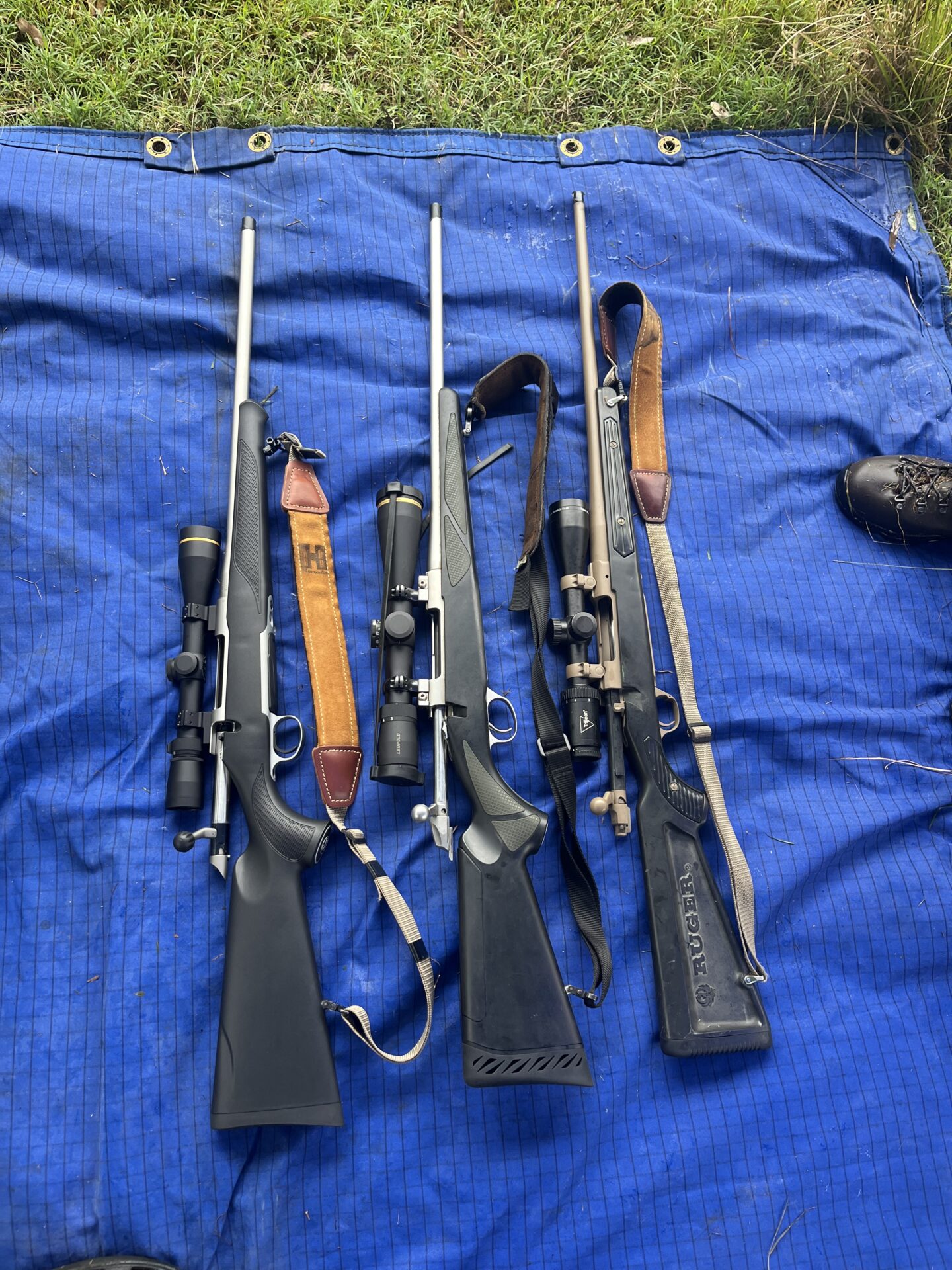
The next choice I made was with considerable thought. I knew I wanted a shorter rifle like my old .243 Win, but with more knockdown power. The decision came down to a cartridge choice between the .30-06 Springfield and the .270 Winchester. Maybe I was swayed by the hunters in my group of friends and family who all seemed to have a .270 Winchesters as their main hunting rifle. Maybe it was because, in realistic terms, the .270 Win just edges out the .30-06 Springfield ballistically with factory rounds up to 150-grains in weight. The .270 Win has proven to have impressive ballistic penetration and killing ability in all manner of game animals found in Australia and abroad. With this being my main hunting rifle, I also knew that most of my hunting would be for medium-sized deer.
I initially purchased a Kimber Hunter in .270 Winchester. Though it was a nice rifle and perfect for travelling into the back country where every ounce counts, it was too light for my liking. I sold it and finally settled on a Sauer 100 in .270 Winchester. With a 22-inch barrel, a standard long action, along with great balance and portability in the field, I finally found my perfect hunting rifle calibre in the right configuration.
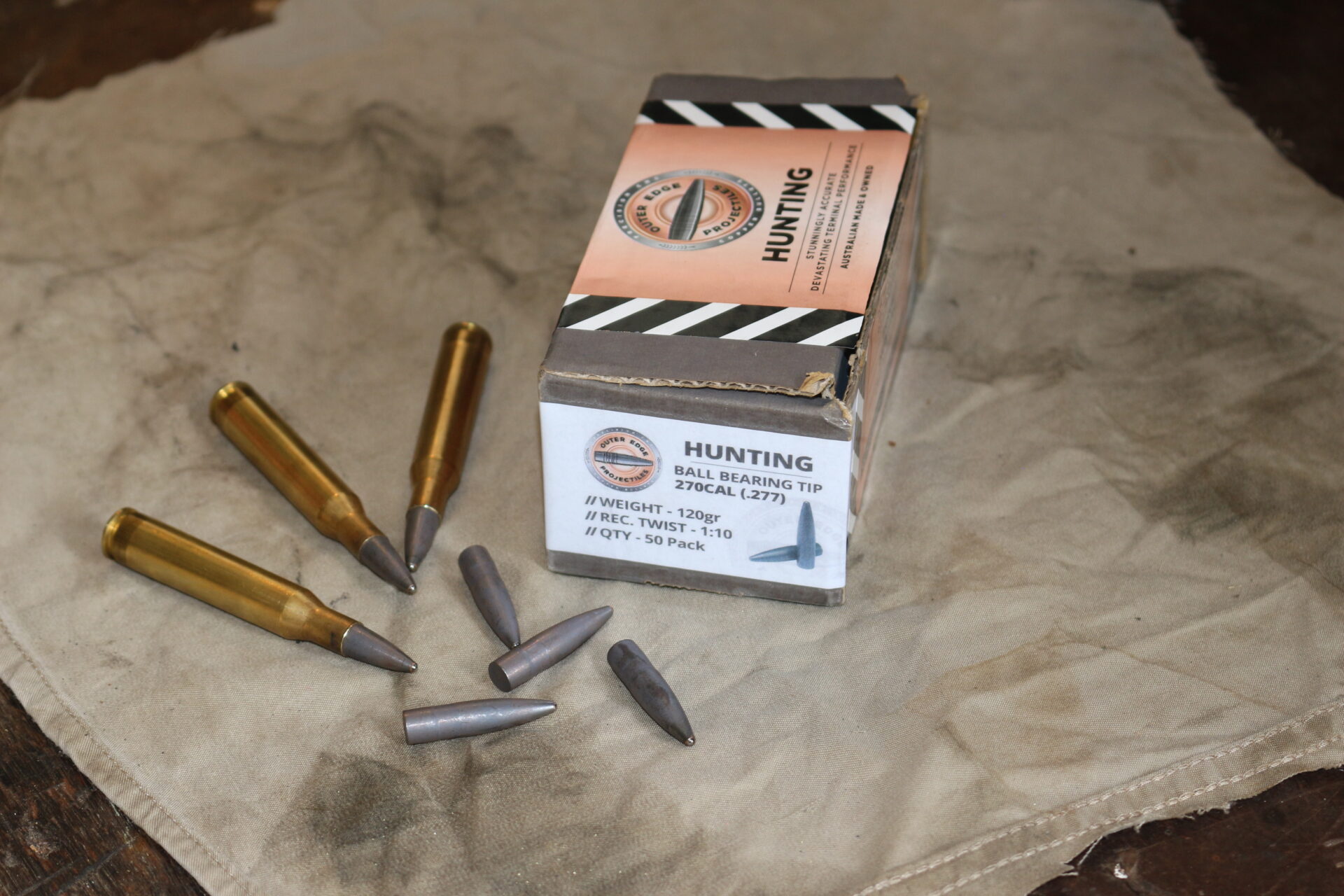
Using my Sauer 100 chambered in .270 Winchester, I was able to shoot my best red stag in the 2025 rut – a magnificent six-seven bush stag. On that hunt I was using 130-grain Remington Core-Lokt factory rounds chronographed at 2850fps. I was not disappointed by the performance, taking a steep-angled shot at about 190 yards. This year, in the 2026 rut, I took a nice fallow buck using a hand load with a 120-grain outer edge projectile travelling at 2925fps. It was a mild load but performed well at 120 yards, achieving full penetration on a direct shoulder strike.
I am now content with the .270 Winchester being my main hunting rifle. My journey in hunting rifles essentially drew to the same conclusion that the late great Jack O’Connor came to about the .270 Winchester, and that is why the .270 Winchester might just very well be the finest medium-game cartridge ever. Its versatility and knock-down power make it suitable for both new and experienced hunters with the benefit of mild recoil, reliability and effectiveness on most of Australia’s game and deer species.
The ballistics tell a compelling story. The cartridge offers a high ballistic coefficient and excellent sectional density for deep penetration. In fact, it matches heavier bullets in .30-calibre. For example, a 150-grain .270 Winchester rivals a 180-grain .30-calibre in penetration performance.
The slender, high-velocity bullets create large primary wound channels plus secondary tissue damage by the hydrostatic shock created by its high velocities, producing quick, clean kills. This deep penetration and terminal performance are what make the .270 Win such an ethical and effective choice.
To put the modern credentials of the .270 Winchester into perspective, here is a direct comparison using a 145-grain ELD-X in .270 Win against a 140-grain ELD Match in 6.5 Creedmoor in the cartridges’ standard configuration, with all bullet drop figures based off a 100-yard zero: At 100 yards, the .270 Win maintains 2796fps and 2535 foot-pounds of hitting energy, compared to the 6.5 CM at 2516fps and 1999 foot-pounds of energy. At 300 yards, the .270 Win retains 2465fps and 2204 foot-pounds of energy with -11.1 inches of drop, outperforming the 6.5 CM’s 1955fps, 1512 foot-pounds of energy and -13.6 inches of drop.
Its flat trajectory provides a point-blank range of around 400 yards with ±3 inches on a 6-inch target, making it ideal for shots from dense bush at 100 yards to open country at 300 yards and beyond. Recoil is mild at approximately 17 foot-pounds in a 7.5-pound rifle — comfortable for extended hunting days and beginner-friendly.
Ammunition is widely available and affordable, with quality factory loads from Winchester, Remington, Hornady, Barnes, Norma and others. The cartridge is offered by most major rifle manufacturers, including Ruger, Sako, Tikka, Sauer and more. The shorter action and barrel enhance portability and balance, which is particularly welcome when stalking through Australian scrub and hills.
Hunters in my circle have reported consistent performance that makes long shots feel achievable. My brother Macen shot a sambar doe at 250 yards with a single shot from his .270 Win. My mate Frank shot and killed a red stag with his .270 Win at 200 yards. Dad used his .270 Win to take a chital stag at 280 yards with a double lung shot. The cartridge has also proven effective on larger game by a family friend, Geoff, where he took his .270 Win on an African hunt and successfully dropped a large body kudu.
The .270 Winchester delivers fast, humane kills that reduce animal suffering. Its century-old legacy, passed down through generations, continues to inspire trust over some of the newer cartridges like the Creedmoor or PRC family of cartridges. The ‘Dead is Dead’ philosophy rings true – there is no need for magnums when the .270 Win is more than enough for Australian game animals.
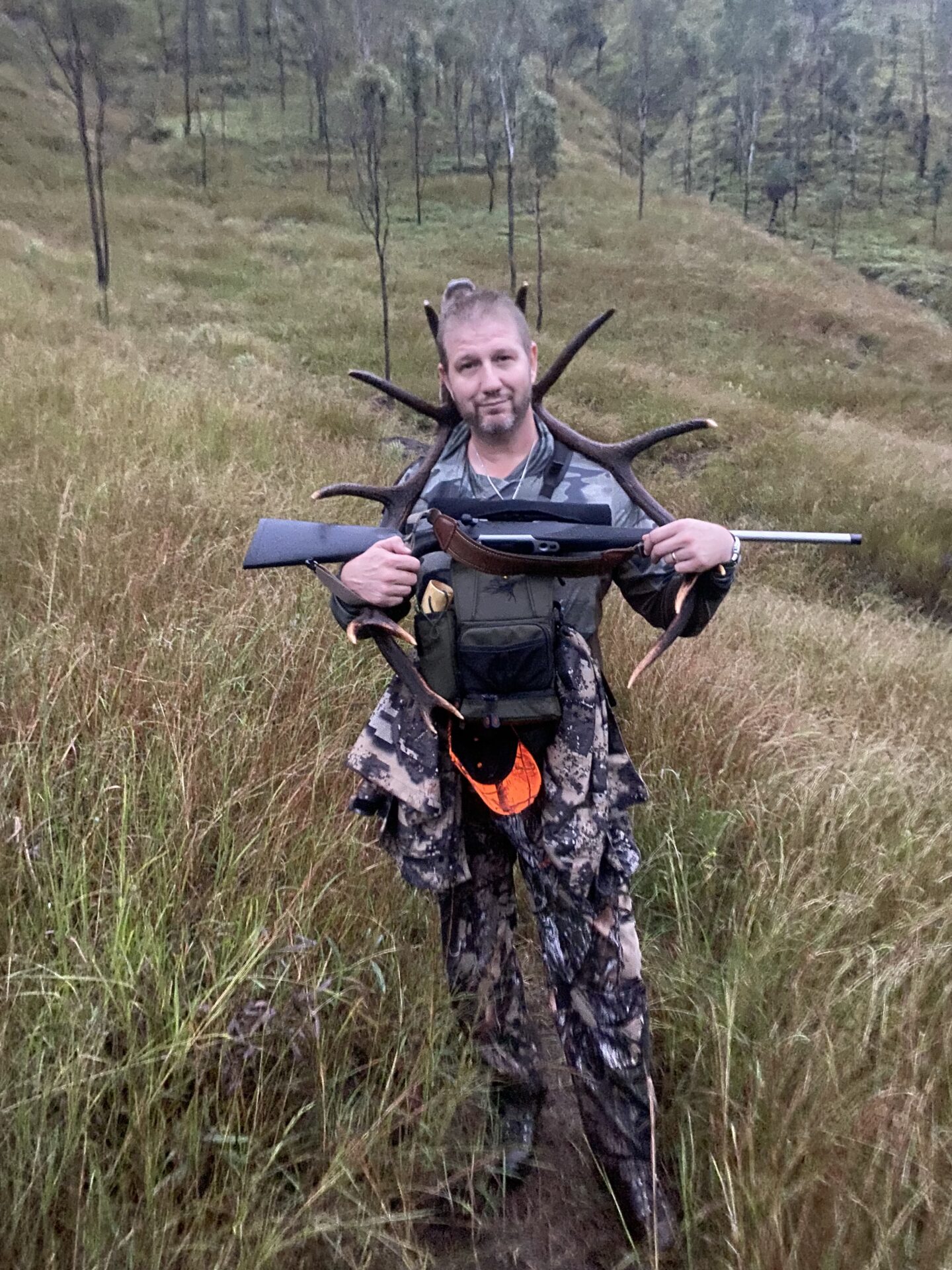
Will I buy another rifle cartridge to hunt with? Most likely, but don’t tell my wife. Do I need to get another hunting rifle cartridge already owning a .270 Winchester? Probably not. Whether you are considering your hunting rifle cartridge or thinking about a change, the .270 Winchester deserves serious consideration. After 100 years of service, the .270 Winchester remains a practical, reliable and effective choice for Australian conditions.
