

John M. Browning: The greatest gunsmith of all time
By Steve Marchant
Introduction
Of the many gun designers throughout the history of firearms development, there is one who stands above the rest. This year marks the 100th anniversary of John Moses Browning’s passing, yet dozens of his gun designs are still being used across the world by millions of shooters. Browning held 128 patents that covered 80 distinct firearms, from tiny .25 calibre vest-pocket pistols, to equipment-mounted .50 calibre heavy machine guns. Regarded by many as the greatest ever firearms inventor, John Browning was born into a Mormon settler family and raised in a remote western town more than 3,000 kilometres from the centre of the American gun industry in Connecticut.
John Browning’s early life, first design and partnership with Winchester
John Browning was born in Ogden, Utah on the 23rd of January 1855. His father had a blacksmithing, tannery and gunsmithing business, and John began helping out in the workshop at the age of six. He made his first gun when he was ten using parts found in his father’s scrap piles.
John attended school in Ogden, but once he had learned the basic three Rs (reading, ‘riting and ‘rithmatic) he left school to work fulltime repairing guns for the family business. Browning had an enquiring mind, so the various mechanisms that he came across were meticulously scrutinised in order to find ways of improving their operation.
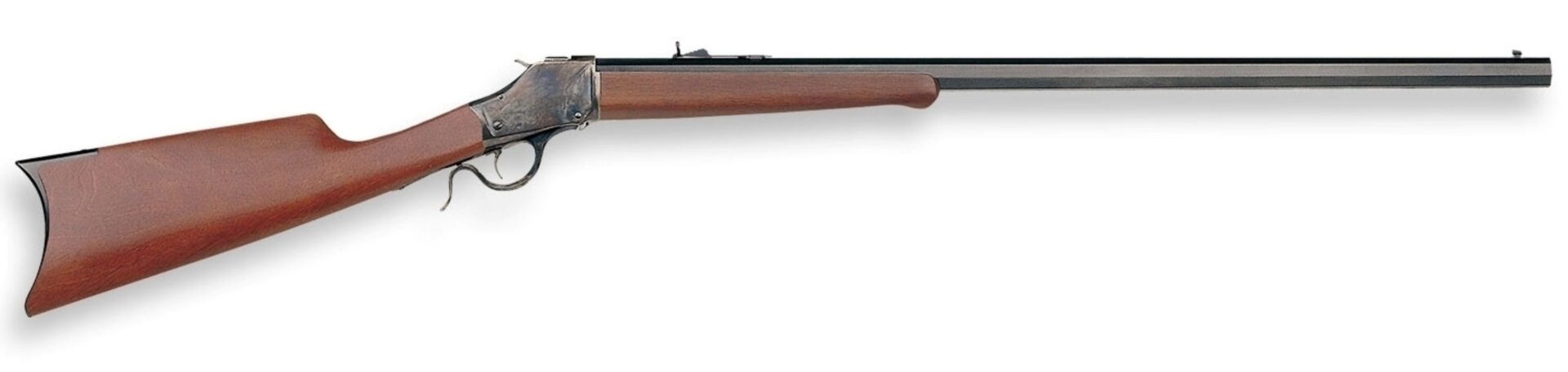
Browning designed his first complete gun at the age of 23. It was a single shot rifle, with a lever-action falling-block breech mechanism that was patented in 1879. That same year his father passed away, leaving the gun shop to John. Business was going well, so John and his brother and stepbrothers built a new premises and began manufacturing Browning single shot rifles, selling them for $25 each.
In 1883 a Winchester sales representatives saw a used Browning Single Shot for sale. Instantly recognising the excellence of its design, he purchased the gun for $15 and sent it back to the Winchester factory at New Haven, Connecticut. At that time Winchester had a major gap in their product line for such a rifle and in less than a week, the board of management decided to acquire the design. Winchester’s General Manager, T.G. Bennett, personally undertook the cross-country train trip to find out what he could about the Browning company, because it was unknown on the East coast.
When Bennett arrived at the Browning gun shop, he found the brothers busy at their lathes and anvils. A succinct discussion between the general manager of one of the world’s largest arms manufacturers and the young men from the small, remote town of Ogden, Utah concluded with a letter of understanding, written by Bennett on the shop counter. This first contract between John Browning and Winchester was for $8,000 and gave Winchester sole manufacturing and sales rights for Browning’s single shot rifle. In today’s currency $8,000 is about $260,000, quite a tidy windfall.
Winchester began selling Browning’s Single Shot Rifle in 1885. Such was the strength, reliability and flexibility of John Browning’s design, it was ultimately chambered in more than 30 calibres, from .22 Short to .50 Winchester Express. It also successfully made the transition from black to smokeless powders. Better known around the world as the Winchester Model 1885 High Wall, Browning’s first rifle design was produced between 1885 and 1920, with 140,000 units sold. Long regarded as a classic firearm, the Browning designed Winchester High-Wall lives on today via high-quality reproductions from manufacturers such as Uberti.
Between 1883 and 1900, Winchester purchased the manufacturing rights for 44 of Browning’s rifle and shotgun designs. Not all of these went into production, but those that did sold exceptionally well. For example, in 1892 T.G. Bennett asked John Browning to design a new lever-action based on the .44-40 cartridge. The new gun was to replace the Model 73 Winchester and Browning was offered $10,000 to produce a prototype in three months. The prototype, which was a simpler and lighter version of Browning’s existing Model 1886 lever-action design, was delivered to New Haven in one month. This included John’s five-day train trip back to Ogden and sending the prototype from Ogden to Connecticut! Winchester paid Browning $20,000 for his endeavours, which was a fantastic bargain for Winchester, as more than 1,000,000 copies of the Model 1892 were sold during its 49 years of production.
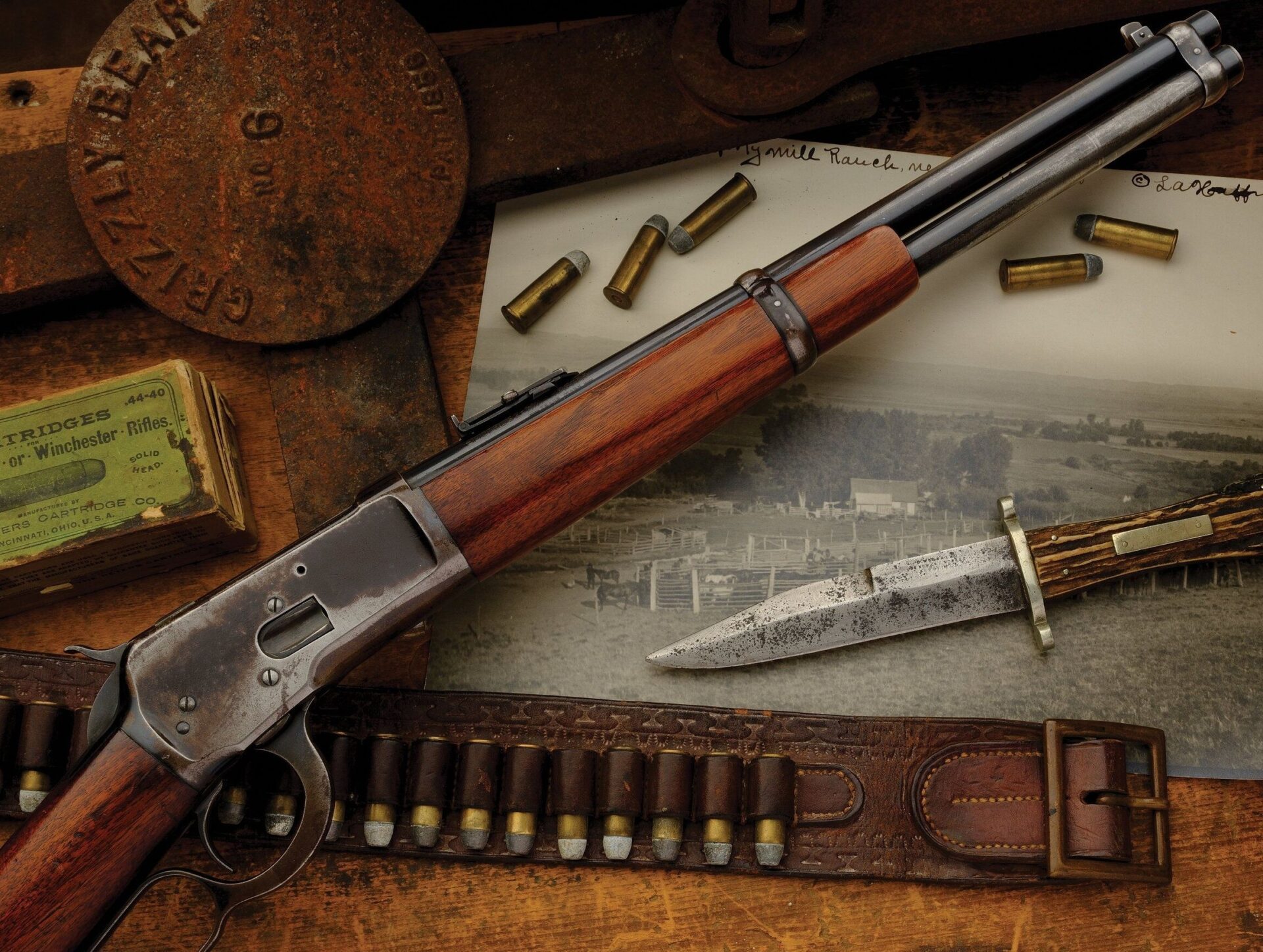
Browning also created the most famous and widely used lever-action of all, the Model 1894 Winchester. The Model 1894 was originally designed for black powder cartridges but was quickly adapted to fire the new smokeless cartridges. It remained in production until the 1990s and more than 2,500,000 were made.
John Browning’s self-loading weapons and Colt & FN partnerships
Browning first began to think about self-loading weapons in 1889. He was at an Ogden gun range watching a shooter firing a rifle, when he saw that each time the man fired, some weeds in front of the muzzle moved with the discharge. To confirm what he thought he saw, John returned home, secured a rifle to a rest and placed a wooden board near the muzzle. Upon firing the rifle, the board went spinning across the room. Browning quickly surmised that the gas from the muzzle blast might be used to reload the gun.
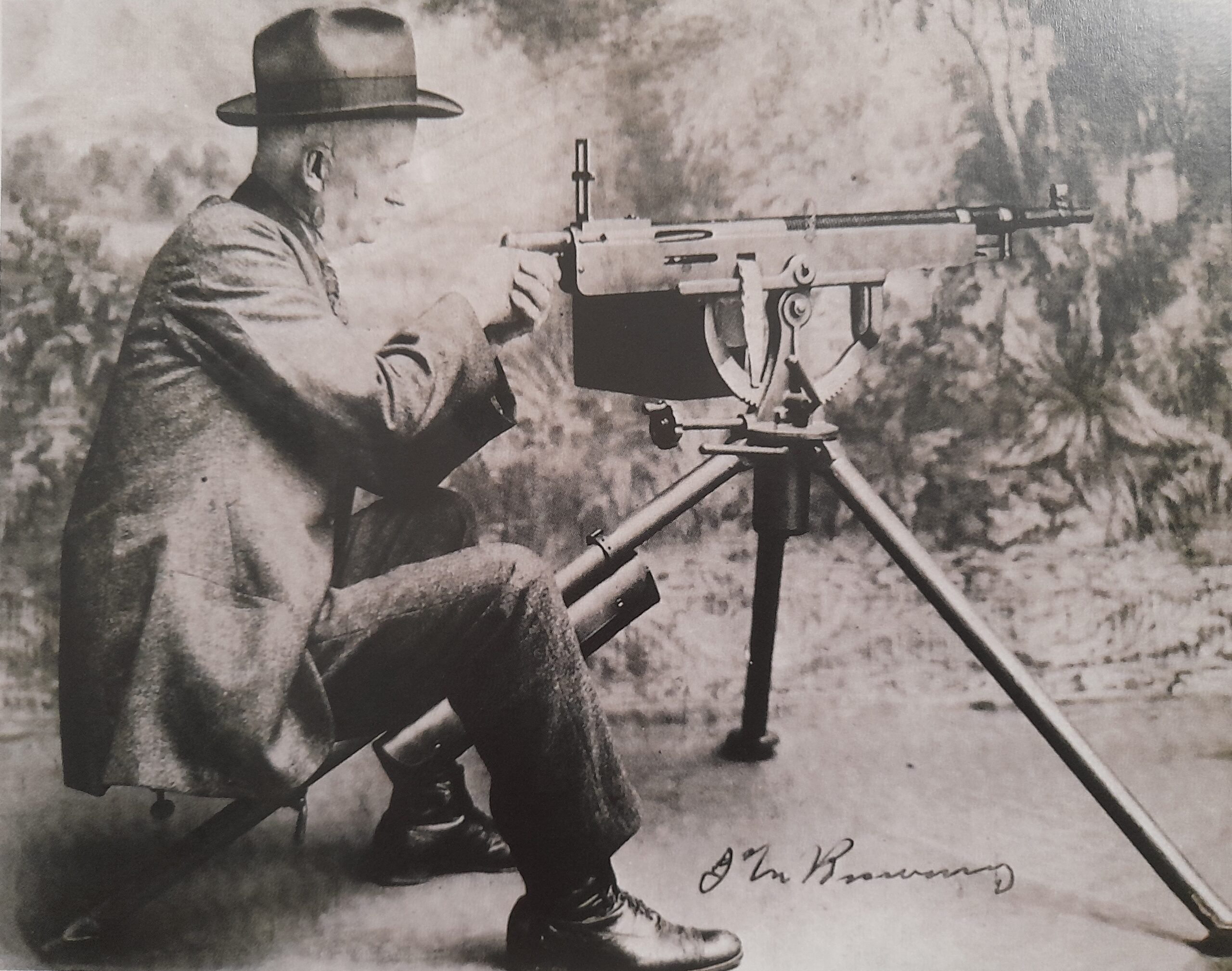
Three years and five patents later, John took his first prototype ‘machine gun’ to Colt, where he and brother Matt fired four 50-round belts of ammo in one minute without a stoppage, except for changing belts. This performance astounded the Colt management, who quickly organised a second demonstration for two US Navy officers. After more trials, the US Navy classified John’s invention as the ‘Colt Model 1895 machine gun’ and placed an initial order for 50 units.
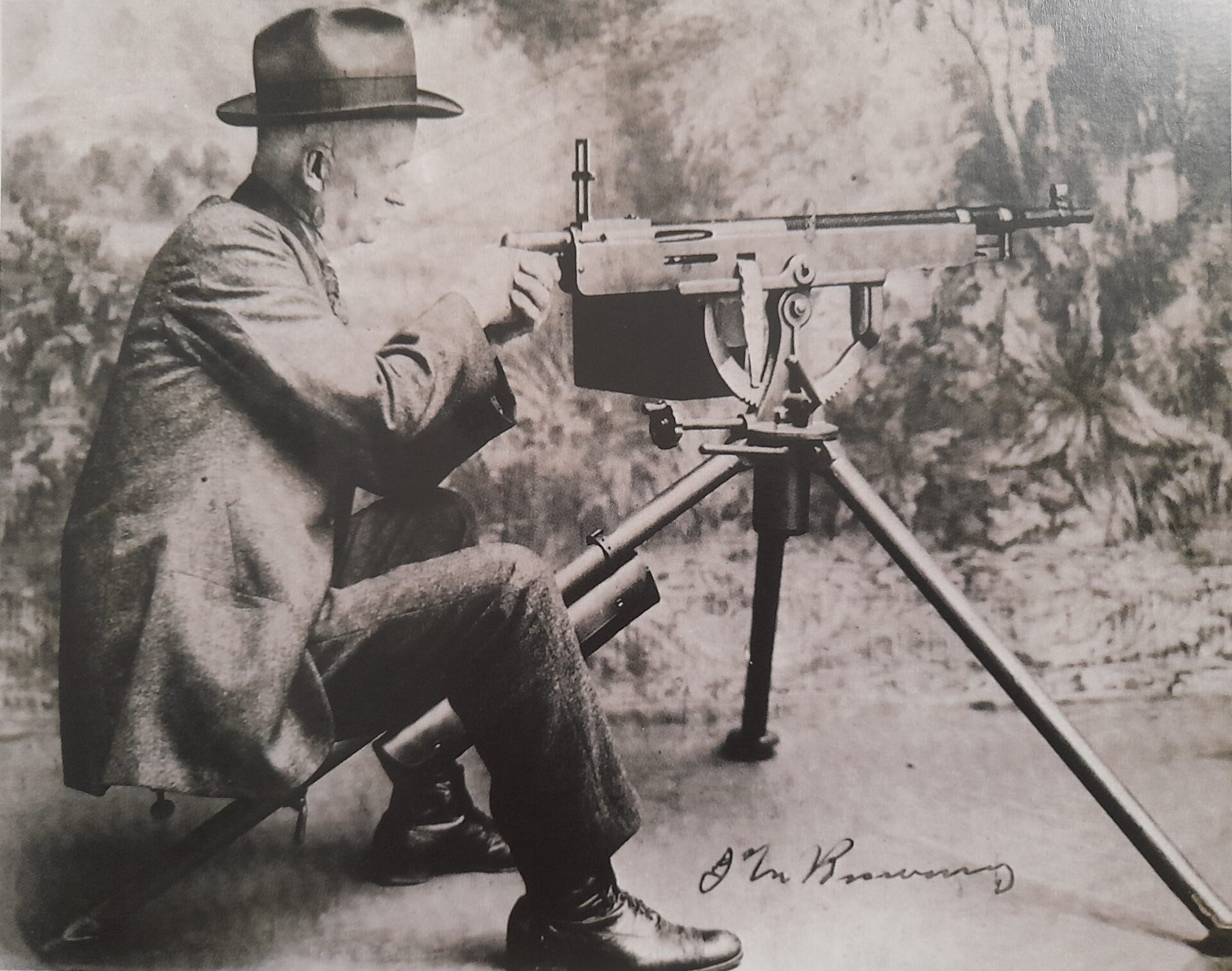
The Model 1895 was air-cooled, and Browning began working on a water-cooled machine gun in 1900, producing a working prototype in only three months. This design was manufactured in air-cooled as well as water-cooled versions and became the progenitor of all ensuing Browning machine gun designs, many of which are still in service.
During World War II, the British converted .30-06 calibre Browning machine guns to .303 and mounted four on each wing of their Spitfire and Hurricane fighters. Such was its performance in aerial combat, the Browning machine gun became widely regarded as the weapon that won the Battle of Britain.
John Browning also designed the world’s first reliable semi-automatic shotgun in the late 1890s, patenting it in 1900. He took the design to Winchester, but T.G. Bennett quibbled over producing the gun for two years. Browning then arranged a meeting with the president of Remington Arms Company, Marcellus Hartley, but Hartley died of a heart attack just before the meeting.
The Belgian arms manufacturer Fabrique Nationale (FN), had been producing Browning’s .32 ACP pistol for a couple of years. It had been selling well, and FN didn’t hesitate to sign a contract with John for the manufacturing rights to his semi-auto shotgun in return for royalty payments.
The Browning Automatic 5, more commonly referred to as the Auto-5 or simply A-5, is a recoil-operated semi-automatic shotgun with a capacity of five rounds: four in the magazine and one in the chamber. The A-5 is easy to recognise, even at a distance, because of its highly distinctive humpback-shaped receiver, for which it received the nickname ‘Old Humpback’.
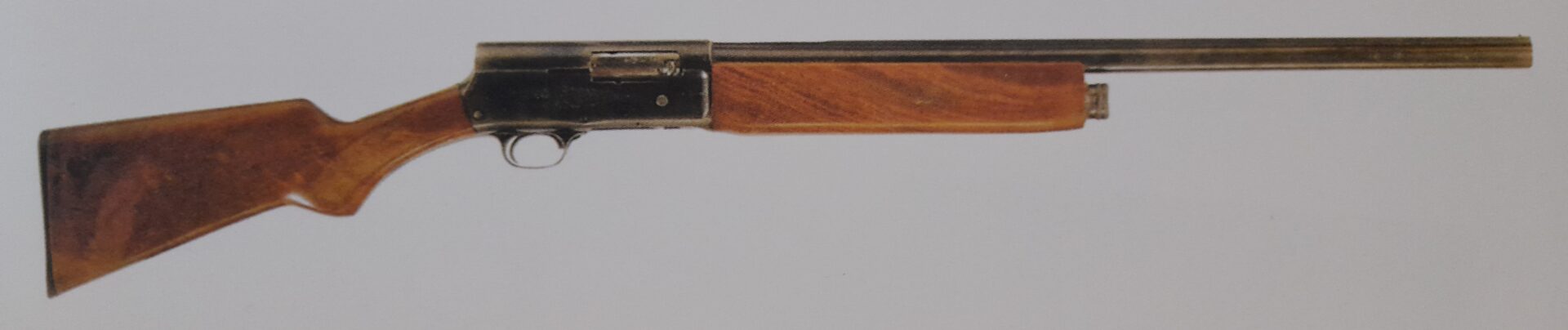
The A-5 was produced in 16, 20 and 12-gauge models in various barrel lengths and finishes, and it catered to a broad range of users, from hunters to sports shooters. Throughout a 96-year production run, more than 2.7 million units were manufactured and widely used in the US, Europe, Asia and other parts of the world. This included military service from World War I through to the Vietnam War. Indeed, the A-5 was used extensively by the British Special Air Services (SAS) in the Malayan Emergency (1948-1960) and Borneo Emergency (1963-1966). Designated L32A1 by the British Military, Browning A-5 Sporters with sawn-off barrels were mandated for use by SAS patrols for close-quarter jungle fighting.
John Browning’s legacy and death
The above examples of John M. Browning’s inventive genius are but a few of his classic designs. A true appreciation of his long-lasting and continuing legacy to firearms users may be gained from the accompanying table.
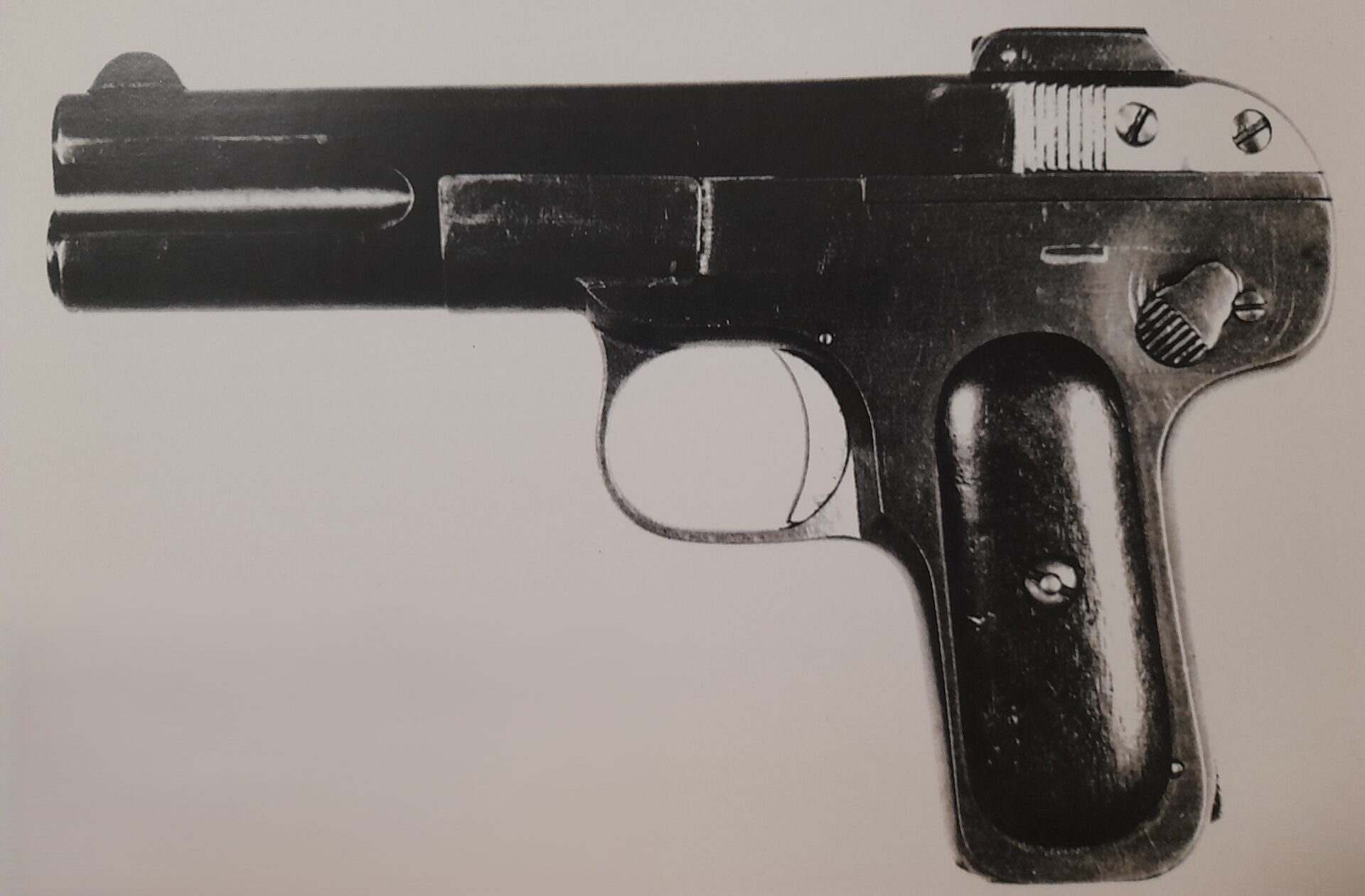
The 7.65mm Model 1900 FN pistol was the first Browning design sold to a foreign country. Between 1900 and 1910 more than 725,000 were sold.
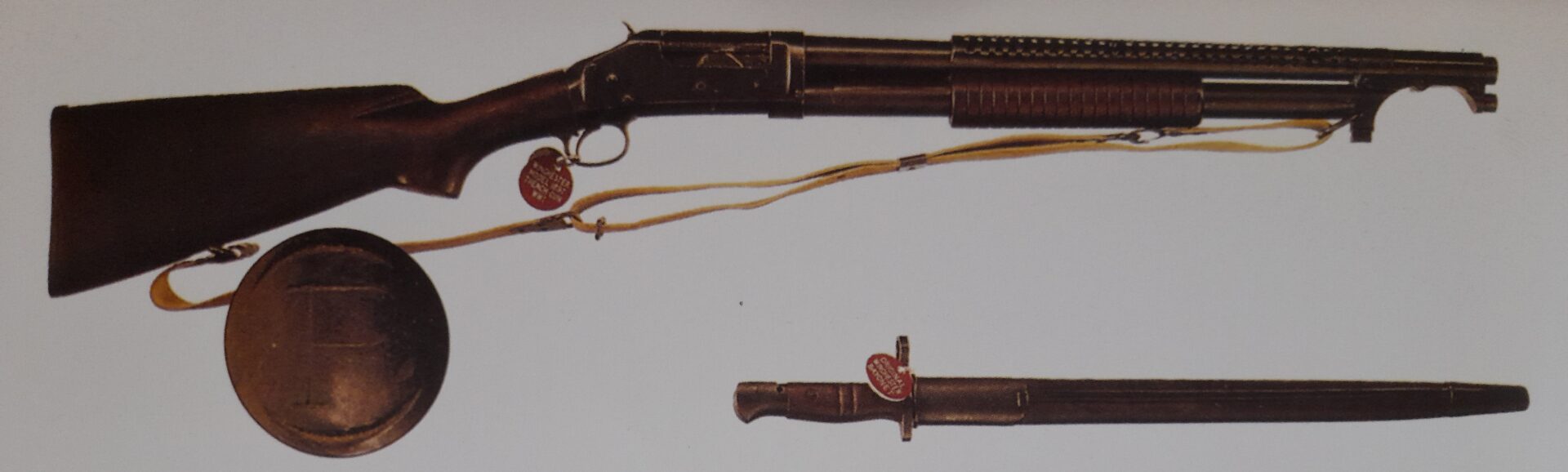
Winchester 1897 ‘Trench Gun’ (with bayonet) for use in close combat. This Browning designed Pump-Action Shotgun was in production for 60 years.

The Cold 1911 semi-automatic pistol is one of the most famous Browning creations and one of the greatest small arms design of all time.
| Weapons and ammunition designed by John M. Browning | |
| Pistols (Calibre) | Rifles |
| FN 1900 (32 ACP) | Winchester M1885 SS |
| Colt 1900 (.38 ACP) | Winchester M1886 L/A |
| Colt 1902 (.38 ACP) | Winchester M1890 P/A (.22) |
| Colt 1903 Pocket Hammer (.38 ACP) | Winchester M1892 L/A |
| FN 1903 (9mm Browning Long) | Winchester M1894 L/A |
| Colt 1903 (.32 ACP) | Winchester M1895 L/A |
| Colt 1905 (.45 ACP) | Winchester M1900 SS (.22) |
| FN 1906 Vest Pocket (.25 ACP) | Remington M8 S/A |
| Colt 1908 (.380 ACP) | Browning 22 S/A (.22 LR) |
| FN 1910 (.32 ACP, 380 ACP) | FN Trombone P/A (.22) |
| FN 1922 (.32 ACP, 380 ACP) | |
| US 1911 (.45 ACP) | |
| FN Hi-Power (9mm Luger) | Machine Guns |
| Colt Woodsman (.22 LR) | M1895 Colt air-cooled MG |
| M1917 Browning water-cooled MG | |
| Shotguns | M1918 Browning Automatic Rifle |
| Reminton M17/ Ithaca 37 P/A | M1919 Browning air-cooled MG |
| Stevens M520/620 P/A | M2 Browning .50-cal heavy MG |
| Winchester M1887 L/A | M4 cannon 37mm |
| Winchester M1893 P/A | |
| Winchester M1897 P/A | Ammunition (Year introduced) |
| Browning Auto-5 S/A | .25 ACP (1905) |
| Browning Superposed O/U | .32 ACP (1899) |
| .380 ACP (1908) | |
| 9mm Browning Long (1903) | |
| .38 ACP (1900) | |
| .45 ACP (1905) | |
| .50 BMG (1918) | |
| L/A = Lever Action MG = Machine Gun O/U = Over/Under P/A = Pump Action S/A = Semi Auto SS = Single Shot | |
On the morning of November 26, 1926, accompanied by his wife and son, John Browning went into the FN factory in Liège, Belgium, to inspect a new shotgun design. Upon arrival, he complained of chest pains and was forced to lie down but passed away shortly after. John M. Browning died as he had lived: in a gun factory, working on one of his designs. It was a befitting end to the life of the greatest gunsmith of all time.
