

Australia’s Own Owen Gun
By Tom Lewis
Military historian, public speaker, author of 25 books and a retired naval officer, Dr Tom Lewis, received the Order of Australia Medal (OAM) for services to naval history.
Troops in World War II found that they were fighting in a very different conflict than the Great War on 1914-1918. There, soldiers were mostly locked into entrenched situations, where long arms and enfilade-firing machineguns kept both sides contained in a largely static situation. The new modern rifles, with their high rates of fire and their accuracy, prevented individual attempts to break out of the trench situation. The murderous massed fire of the machineguns, firing along the longest part of any massed formation, devastated and stopped that, too.
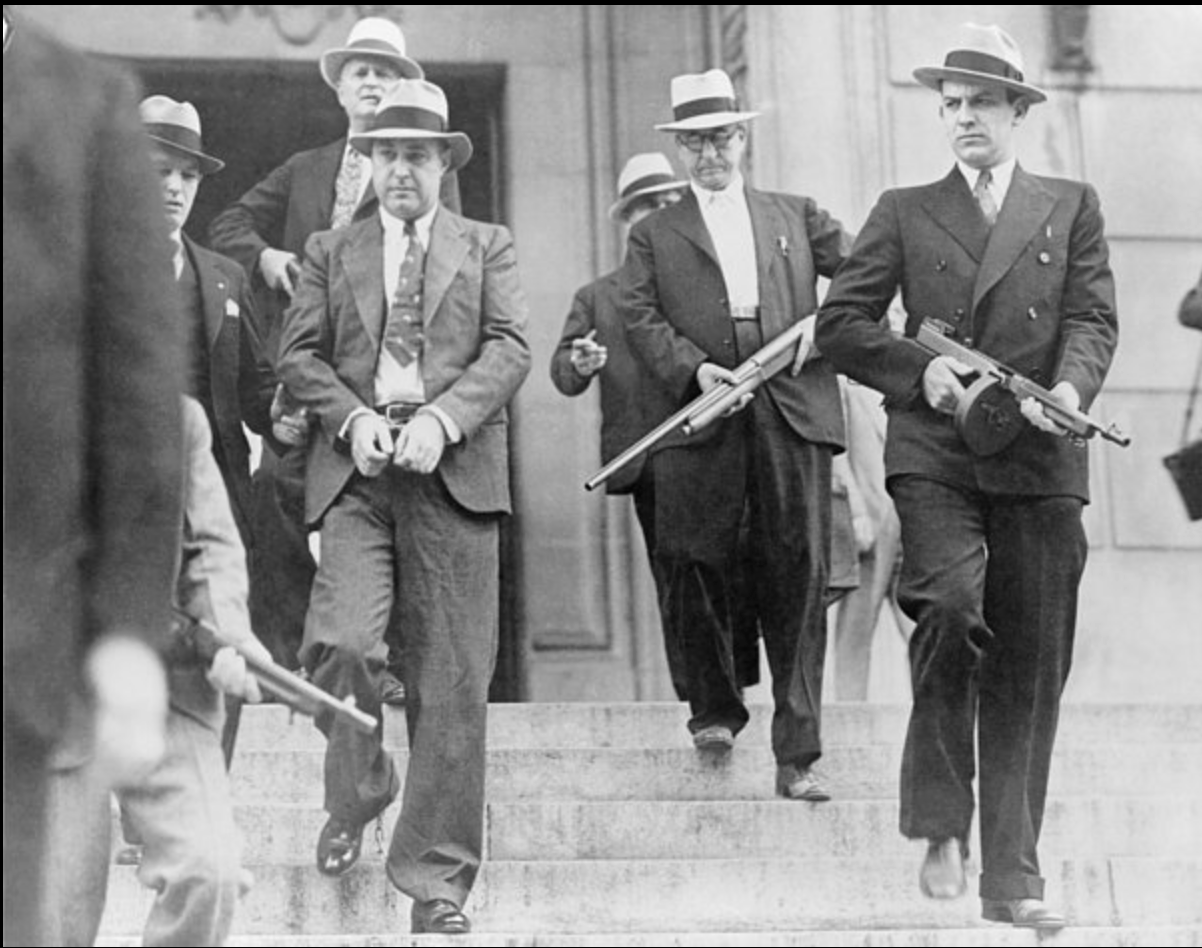
In small brutal actions in close quarters, there was indeed a need for a short-range short-barrel firearm that would deliver massed fire against a mob of charging enemy – but it wasn’t around. This shortfall was recognised in the Western Front but, despite several inventions, a sub-machine gun – or SMG, machine pistol, or machine carbine – did not really appear in quantity in combat until post-war. By then the Thompson had been developed, due largely to the tireless efforts of its inventor, General John T Thompson. It was used successfully by the US Marine Corps in the 1930s, despite its association with gangster gangs and crooks such as the appropriately named Machine Gun Kelly.
Inventors generally found that firing low-velocity cartridges was one of the keys to successful sub-machine fire. The name derives from this, as the weapon is not a machinegun, due to its lower muzzle velocity. High-velocity cartridges caused too many problems with this design, intrinsically designed to be more portable and therefore smaller and lighter.
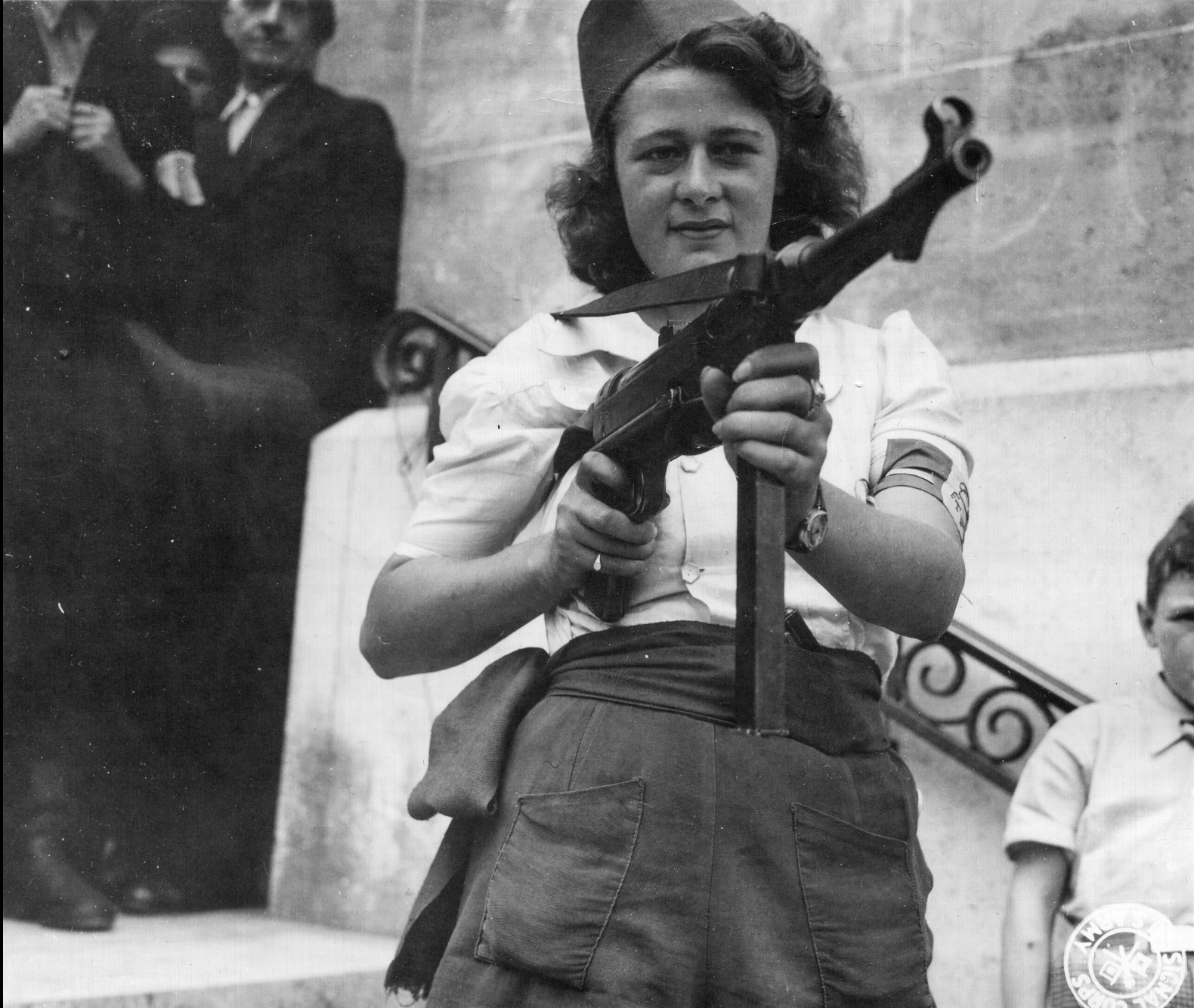
Around the world, as had once been the case with steam engines and flying machines, it was now ‘sub-machine gun time.’ The German MP40 was probably the best of the Axis bunch. Similarly made of metal stampings, it was descended from the MP36 and the MP38, each time becoming simpler and cheaper. Often mistakenly referred to as a Schmeisser – it was actually made by Erfurter Maschinenfabrik (ERMA) – the MP40 in its variants saw 1.1 million produced over the duration of the war.
In Australia, a young member of the army had been an experimenter with weapons from his youth. Evelyn ‘Evo’ Owen, from Wollongong, had been an inventor and a practical fellow from his youth. After leaving school, he had set up a ready-mixed mortar business with his brother. In his spare time, he experimented with firearms. By 1938, Owen had constructed a prototype of his sub-machine gun, which used .22 LR ammunition, and in 1939 he took it to an ordnance officer at Victoria Barracks in Sydney. Despite advising that the gun could be upgraded to a larger calibre, he was told that the Army would not be interested.
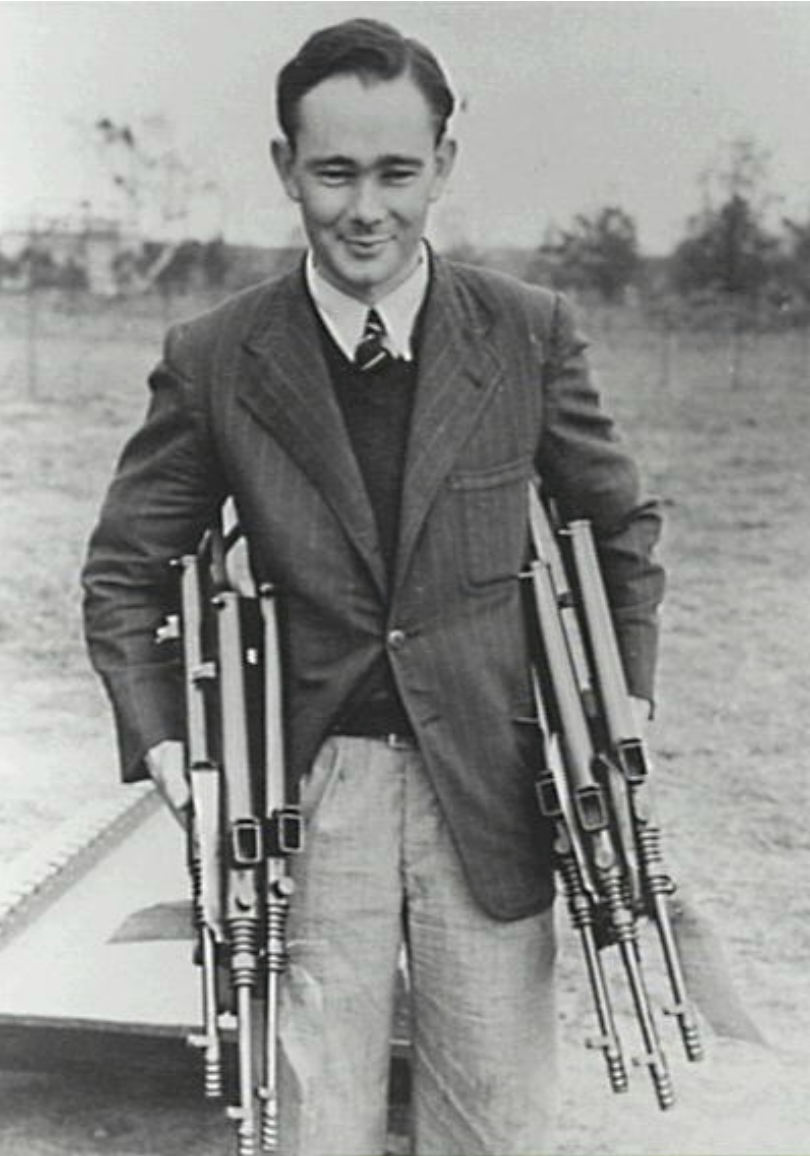
Owen with a collection of his guns.
Owen was later quoted in the Brisbane Sunday Mail:
“So, I enlisted in the AIF and wrapped the gun up in a sugarbag to leave it with my dad in Wollongong before I went on final leave. Lucky for me, I happened to dump it on the footpath for a minute or two outside Mr. Wardell’s home.”
Vincent Wardell was the assistant manager of Lysaghts, Wollongong, a company which manufactured corrugated iron, amongst other related products. Owen recalled:
“He saw her there quite by accident, asked about her, tested her out, and got me dragged off the troopship and set busy drawing plans. And now — at last — we’ve got her accepted, even though the army’s still trying to muck about with the design.”
In fact, the Owen gun had by no means an easy birth and introduction to service. It went into trial production in several calibres: .22, .38, .45 and 9mm. The first was to trial the mechanism and overall design. The others were to try out the different cartridges.
The Austen debate
Suspicion of the Owen gun proposal was profound in some areas of the army. In fact, in the best study of the weapon – The Owen Gun, by Wayne Wardman – the army came out of it badly. Many of their people seemed suspicious; stand-offish, and downright obstinate rather than give support to a local submachine gun. Some of this admittedly was well-founded – they wanted something that was going to be reliable and useful, and where it came from was of little consequence.
The overall push was to wait for deliveries of the British Sten. And then came the proposal to build an ‘Aus-sten’ in Australia. General Thomas Blamey, then the Commander of Allied Land Forces, preferred the Austen because it was said to be cheaper and faster to produce. But trials of the two weapons alongside the Thompson showed a marked difference:
| Owen | Austen | Thompson | |
| Weight (gun plus 11 loaded magazines) | 25lb 6oz 11.5kg | 24lb 14.5oz 11.3kg | 29lb 5oz 13.3kg |
| Rounds | 363 | 308 | 220 |
All three weapons fired at around 600 rounds a minute, although the Thompson was initially capable of 900 before being throttled down to conserve ammunition. The Owen was a clear winner in terms of magazine capacity and weight. Its other virtue – ultimate reliability – was only to be realised in the field.
In fact, the locally produced Austen had a number of other inferiorities. One problem was with the magazine, which was prone to jamming. However, 19,914 were made. The Owen, having received approval, was in production too and being issued.
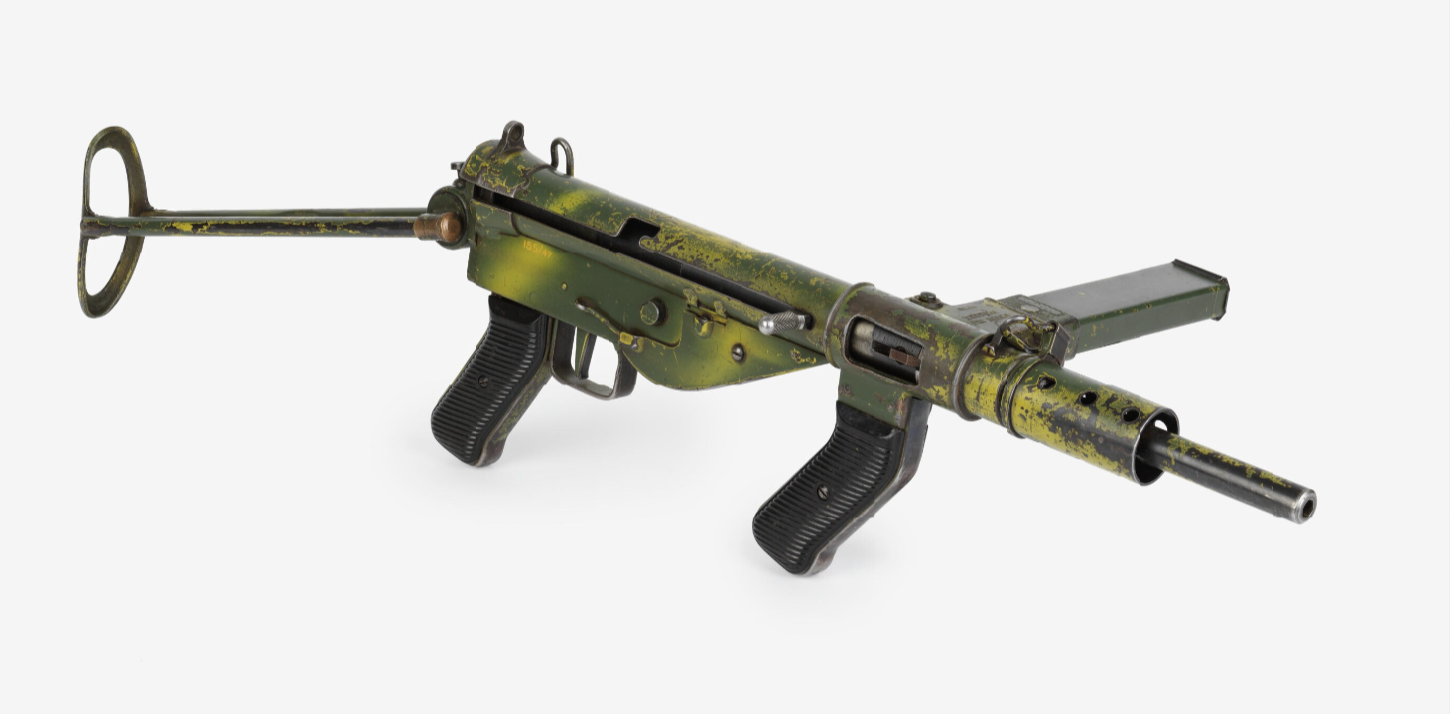
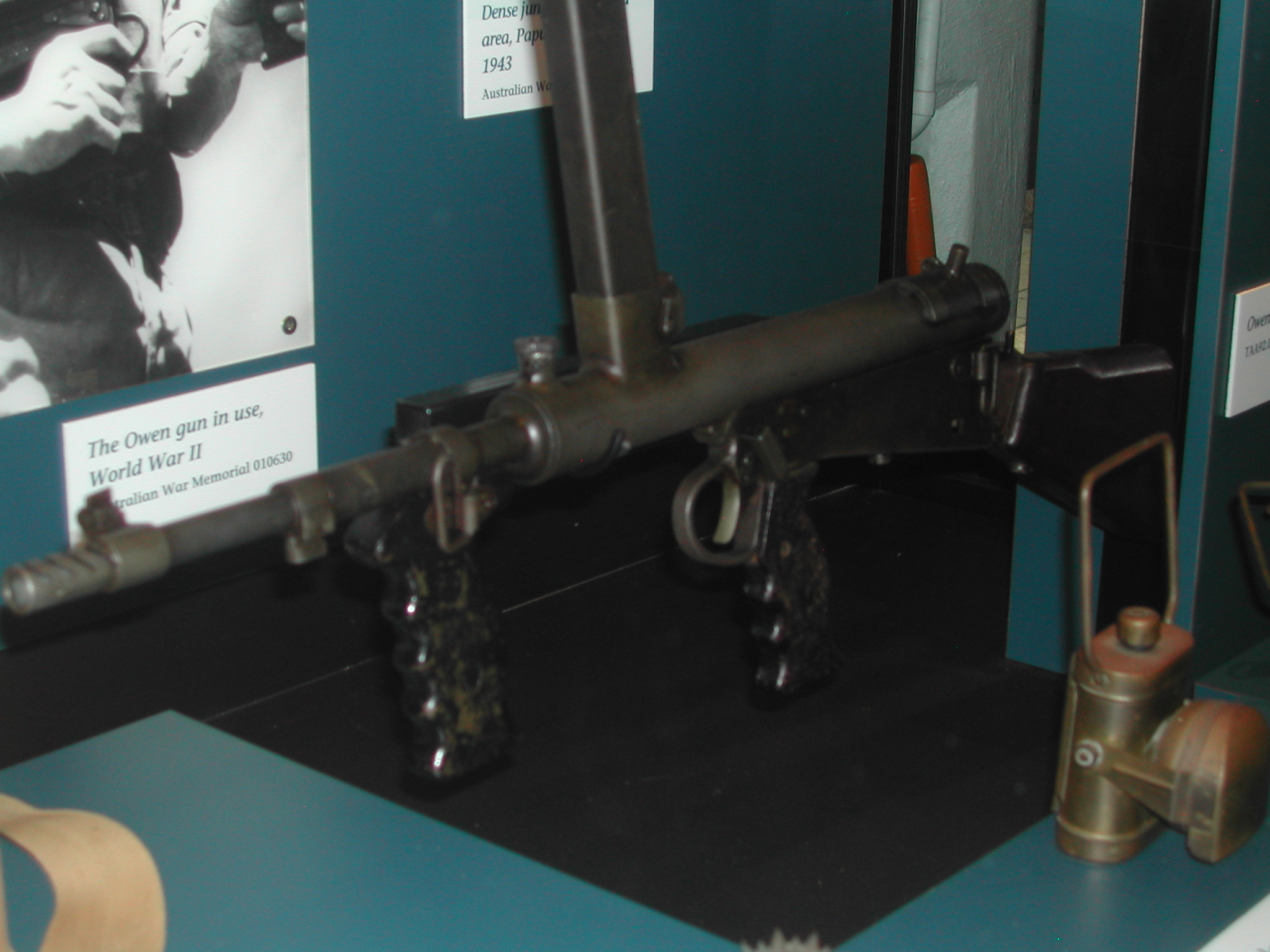
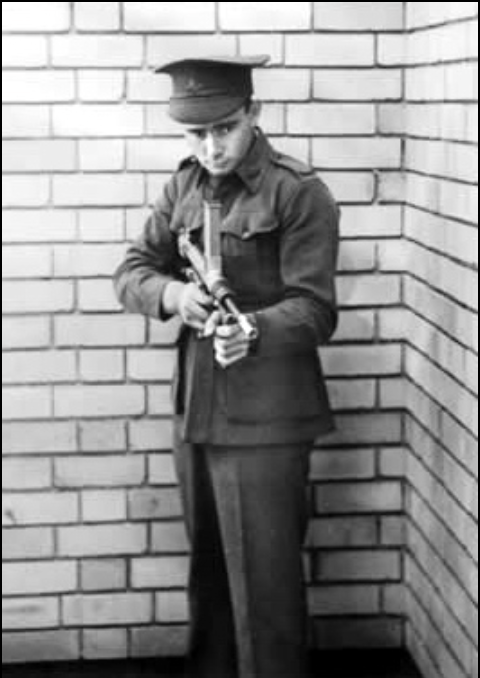
The final Owen design appears at first unconventional and somewhat odd. The gun feeds from the top-placed magazine, and because this impedes the sights they are offset to the right of the magazine. (Then again, in action the gun was often fired from the hip.) The simple blowback design has the ejection port open to the bottom, which allows debris to exit the mechanism.
Another unique feature of the Owen is the ejector. With other SMGs, the base ring of the cartridge being ejected strikes the base ring of the next cartridge as it was withdrawn from the breech to eject from the gun. This was not as reliable as the Owen, where the rear wall of the magazine included a ‘tooth’ to act as the ejector.
The Owen’s baptism in fire likely was with the 2/2 AIF at Templeton’s Crossing on the Kokoda Track in New Guinea in October 1942. Like much of the fighting along the Track, it was an affair of small groups of Australians tackling Japanese machine-guns with small arms and grenades.
Once on the field, the Austen and the Owen were seeing the ultimate test: out in the mud and in combat. The two SMGs were in no way comparable. The Austen was not nearly so reliable, with some parts failing after weeks of use. The Owen stood up to mud and dirt much more reliably, and six magazines could be filled in four minutes – the Austen took a minute more. Back home, the original positive features of the Austen being cheaper and faster to produce both turned out to be wrong.
The Owen gun at war
By mid-1944, the Austen was being withdrawn from the front-line theatres and issued only for home defence. The Sten continued elsewhere around the British Empire forces and went through seven marques over the rest of the war in an effort to improve the gun. The Owen, by comparison, only went through one ‘improvement’, which was so slight a Mark II was not issued and only a Mark I* was put into use, with a small weight reduction of eight ounces – about .2 of a kilogram. A bayonet was added at this point. The gun acquired a nickname of ‘the Digger’s Darling’ and was often informally tried out by other Allied force military members when they were in contact with Australians.
At war’s end, most of the armed force’s Austens were recycled for scrap, and very few are now seen in museums.
Perhaps the greatest writer on firearms, the incomparable Ian Hogg, had this to say of the invention of an Aussie boy: “The Owen is among the most highly respected soldier’s guns in history…the ultimate proof of a weapon is the soldier’s opinion of it: the Owen gun was used by Australian troops throughout the war and for many years afterwards, in Malaysia and Vietnam.”
Post-war SMGs proliferated, perhaps due to the close-quarter nature of conflicts such as guerrilla and counter-terrorist operations. The Owen continued to prove its worth in the Korean War. Major Ben O’Dowd of 3rd Battalion, Royal Australian Regiment recalled at the Battle of Kapyong in 1951: “All hell broke loose as Diggers cut down the first surge of attackers, directing into them as much rapid fire as their weapons could produce, the Owen submachine gun being the most effective weapon for this…”
By this time, unfortunately, the inventor was not around to see its continued sterling service. Paid £10,000 in royalties by Commonwealth of Australia, Evelyn Owen had invested the money into a sawmill at Tongarra, south of Wollongong. He continued to experiment with firearms, by this time now particularly with sporting rifles. However, his heavy use of alcohol took a growing toll on his health. He died in Wollongong hospital of cardiac syncope on April 1, 1949, aged only 33. The Owen was finally succeeded by the F1, which ironically was not as reliable.
Estimates vary, but it is thought about 45,000 Owens were manufactured. It’s worth as a gun was more than just practical: it showed an entire successful weapon system could be devised, implemented and sustained within the relatively new country of Australia. Lysaght is now one of the country’s oldest companies, having been rebadged several times, for example as BlueScope Lysaght. And in 1990, a portrait in bronze of the inventor’s face by Owen’s sister Sally was unveiled in the Wollongong City Council Chambers.
Recommended reading:
The Owen Gun by Wayne Wardman is an excellent history of not only the practicalities of the design but of how the factories were set up and challenges were overcome. Copies are usually only found in libraries or on second-hand sites.
