

Field to Plate: Stuffed Rolled Venison Roast
By Billy Allen
Part one: The field
This hunt saw me in pursuit of fallow deer to fill the freezer and to take a minute out of my domestic life and get outside to enjoy our great Australian outdoors. Descendants of animals released in the 1880s, the Queensland fallow deer main herd established its natural range in the elevated country around the Stanthorpe and Ballandean region. This population of fallow deer travels south over the border into northern New South Wales. Without active population control, their numbers can quickly climb. Wild deer hunting in Queensland is only allowed on private land, with culling the only legal control tool we have at present. No public-land access, no seasons, no bag limits; just a firearms licence and the landowner’s permission. Many of us believe the sensible path is to declare deer a game species, sell licences and tags and let recreation do the heavy lifting on population control. Until that day, the job falls to the farmer and hunters like me on my days off.
The property sits in the Southern Downs of the Granite Belt and has a formal Quality Deer Management program. This property is currently supporting too many deer; the brief was simple – remove does. I rolled in after dark, too late for the afternoon hunt, so everything hinged on the next morning and afternoon before I would have to head home and get back to work and domestic life.
Eager to hunt, I was up early the next day as the sun broke the horizon. I got dressed and forwent my morning ritual coffee. I checked the wind direction and hunted into it, though the wind has a terrible habit of swirling along these paddocks and betraying your presence to unsuspecting deer feeding in the early morning light.
I set off along the inside edge of the long paddock, bordered by semi-open bushland made up of granite boulders large and small, ironbark, stringybark and gum trees with skirts of native grass that spill into the cleared flats. I stayed inside the scrub line to avoid silhouetting myself and giving my movement and presence away to any deer that might feed out into the paddock from the bush’s edge. This morning of deer hunting called for slow stalking with regular glassing through my binoculars as I moved along the inside edge of the bush, hoping I would spot any deer before they spotted me. Fallow deer are quick to pick up movement and sound through their keen senses of sight and hearing and can smell you long before you are close enough to see them.
As I moved along slowly, trying to be careful not to make a noise, the dry ground and the litter of vegetation made every step sound like I was standing on cornflakes. I eventually spotted a herd of deer feeding onto the edge of the paddock about 350 yards from me. Young deer mingled with wary mature does, lingering near the edge of the tree line. They were feeding cautiously, never more than a bound from cover.
I stalked in closer to about 200 yards and ran out of cover. Between the deer and me, there was a small island of granite rocks and lightly covered scrub. If I could get to the island undetected, I could set up for a shot. As it stood from my current location, I could not make an unhindered shot with the island of vegetation blocking an ethical shot. Yearlings and mature does mingled within the herd, prompting my intent to target a mature doe, following the current Quality Deer Management (QDM) strategy.
I checked the wind again and risked getting closer to the deer. Crouching down low and creeping across the open patch of the paddock, I got to the island of vegetation and improved my position to take an ethical shot at a deer. Had I got sprung by the herd’s wary eyes making my way across the open part of the paddock, my stalk would be over and most likely the deer would have run off, alerting all the deer in proximity to my presence.
My luck had held out. After I had made it to the vegetation island in the middle of this paddock, I saw the deer feeding out from the edge of the bush and into the shadows of the paddock. At first, only younger animals were visible within the group, though more wary mature does were approaching from the rear. I tried to get a good shooting position sitting on the ground in the vegetation, but all I could see was grass in my rifle’s scope. So, I stood up and deployed my shooting sticks and got my Sauer 100 .270 Winchester set up on them. For the longest time, I hunted without shooting sticks, but I can’t imagine hunting without them now, with their advantages far outweighing their disadvantages; one large advantage is having a portable rock-steady rest with no need to look for a natural rest like a tree if you need to take a shot from your current position.
Now set behind my rifle on the sticks, a doe fed into the opening and presented broadside for a high heart-lung shot at her vital organs. I checked her distance from my position with my range-finding binoculars, giving me a 130-yard shot. With the crosshairs of my Leupold scope settled where I wanted the shot to go, I squeezed the trigger. On the shot of the rifle, I saw the doe spin and bolt back into the cover of the scrub behind her. I could not see her from my position, but I felt confident that the shot was good.
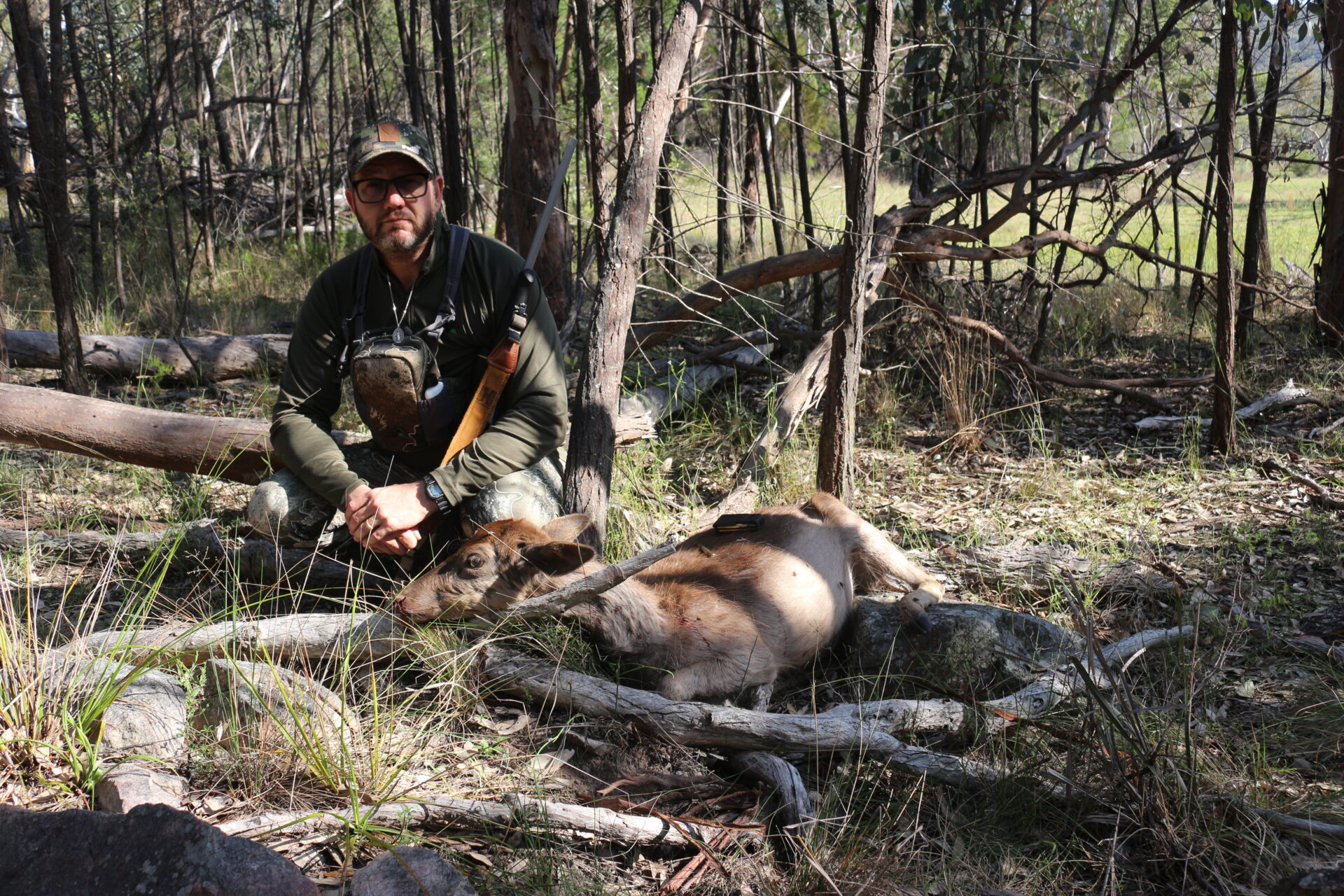
After waiting 15 minutes, I walked over to where I had shot the doe, noticing some blood. I followed the blood trail back beyond the scrub line to find an ever-growing blood trail that led me to the doe at rest against a tree, not 10 yards from where she had been at the time of the shot. The bullet had hit just behind her front leg and exited in front of her shoulder on the off side. In my thoughts, perfect shot placement and execution. Taking this doe, I used hand-loaded copper 120-grain Outer Edge Projectiles, because they penetrate and kill well, plus avoid carcass lead contamination. I have concerns about the micro-fragment particle lead contamination of the meat I eat and serve to my family and friends.
I field-dressed the doe, which was destined for my dinner table, and hung her in the meat house to cool down. At home, I prepared a boneless roast that I could use in my camp oven the next time I had friends over to entertain and feed.
Part two: To the plate
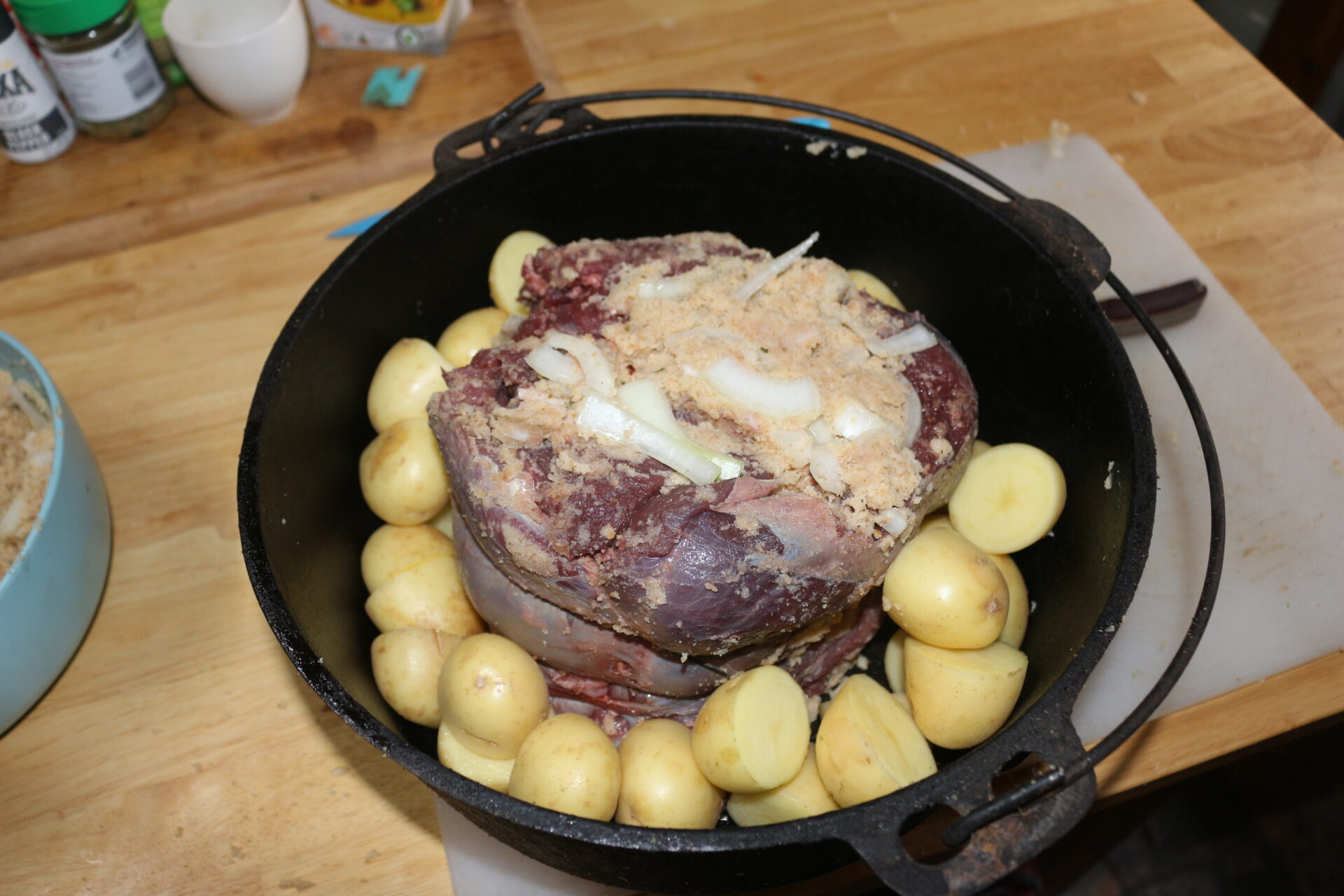
Back in my kitchen, the transformation from field to plate unfolded. I opted to make a Stuffed Rolled Venison Roast, a dish I had not made before, so it was anyone’s guess how it would turn out. But hey, what better way to test out a new dish than by feeding it to your mates for some overly lubricated and honest feedback.
Method:
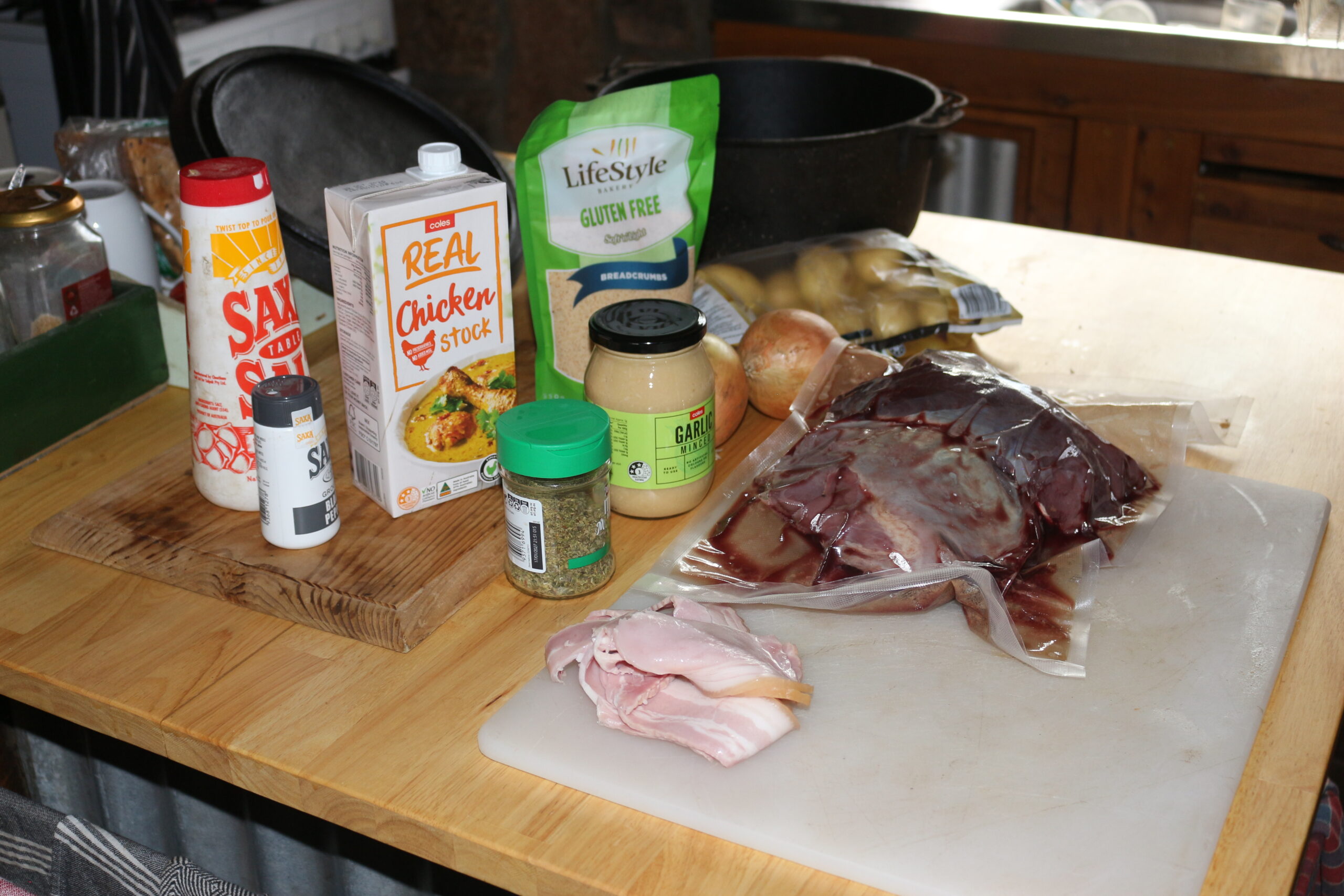
Start by butterflying a 2kg venison leg roast so it opens flat. Season the inside with salt and pepper.
Make the stuffings
Add to a bowl:
2 diced brown onions
2 diced bacon rashers
1 heaping tablespoon of garlic paste
1 teaspoon dried mixed herbs
Salt and pepper to taste
2 cups of breadcrumbs
1 cup vegetable stock
Mix until the crumbs hold together.
Spread the stuffing over the meat. Roll tightly, tie every 3cm with kitchen string, and rub the outside with oil and more salt and pepper and herbs to your liking.
Place the roast in a large camp oven. Set the oven on a bed of glowing coals; heap some coals on the lid. Cook for 1 hour 30 minutes, rotating the oven every half hour and refreshing coals as needed.
Rest 15 minutes under loose foil. Slice thickly and serve with pan juices, roasted veggies and greens. The garlic, bacon and wood-smoke turn humble venison into a campfire triumph. Enjoy.
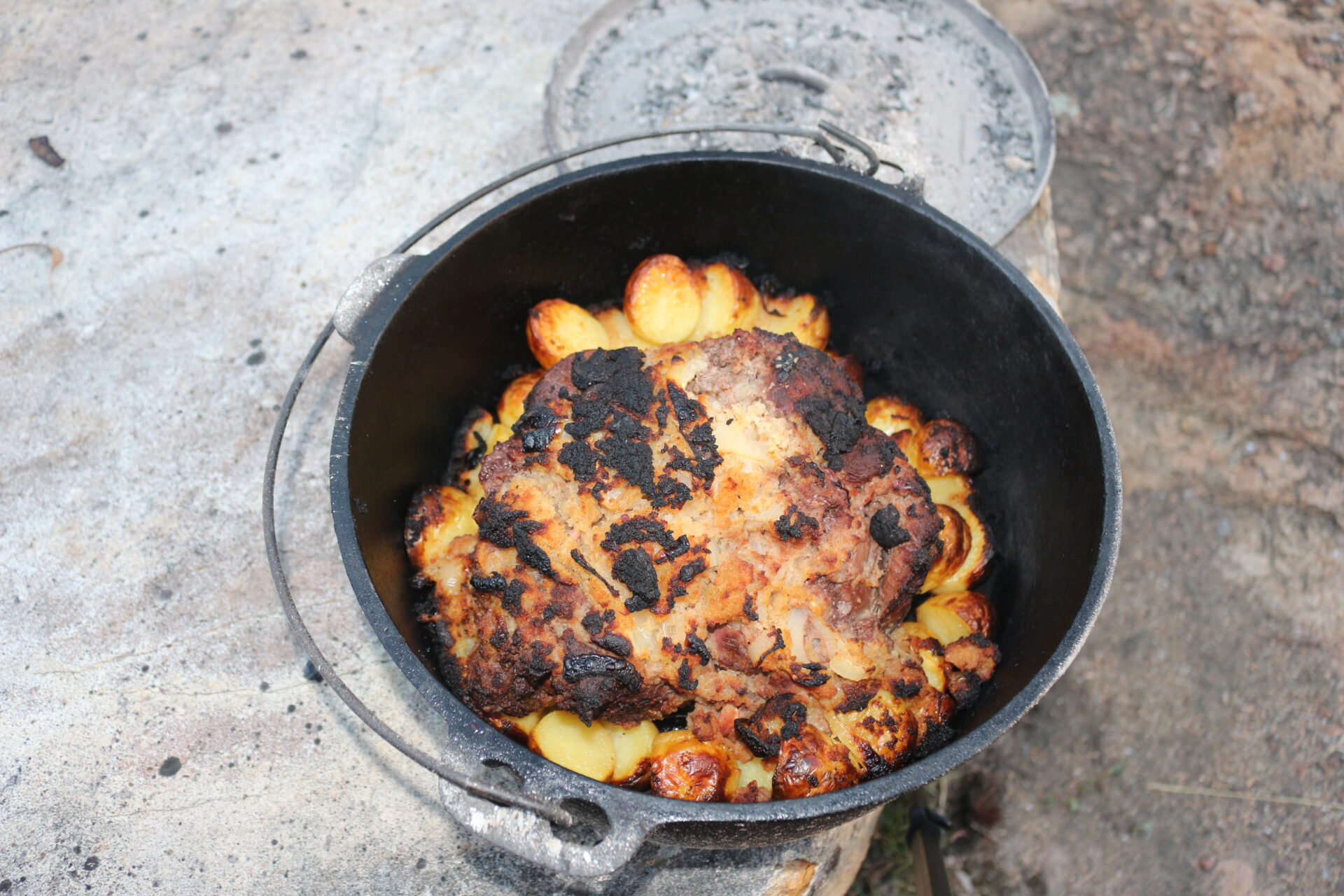
Eating dinner by the fire, the air was rich with the smoky essence of red gum timber. The setting sun casts its final, majestic rays – vivid streaks, like fingers stretching through the clouds, brushing the horizon and fading into the heavens above. They seem to leapfrog from the earth, reaching toward an eternal sky beyond, igniting a quiet courage within.
As I gaze into the fire, its embers flicker and dance, drawing me into the sanctity of this day – a moment crafted with divine precision, a perfect tableau painted by the Creator. By His grace, I have hunted in His garden today, gathering sustenance for my table, as He planned from the dawn of time.
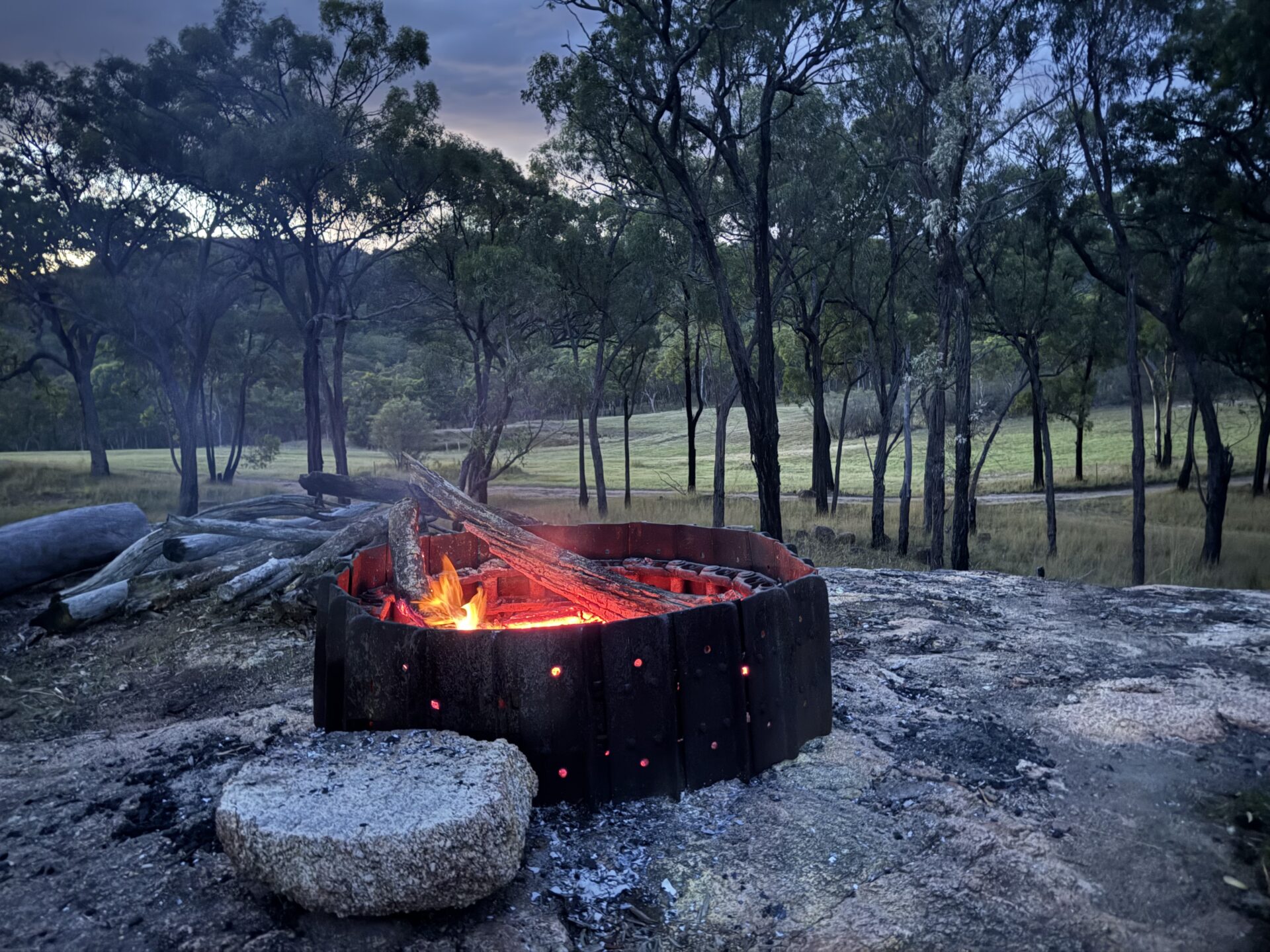
I find peace in nature. I enjoy exploring the wild and using its resources. Hunting and living naturally grounds me. It is a sacred part of life that many have forgotten or never experienced. Hunting and owning firearms are part of my identity. The media often portrays firearm owners negatively, but I believe more families should hunt together and do away with social media and consuming violent media. Taking this straightforward step could significantly contribute to the process of healing a society that is increasingly divided and experiencing challenges.
