

.300 Blackout Ruger American Ranch rifle
It’s a knockout!
By Steve Marchant
The .300 Blackout (BLK) cartridge is basically a 5.56x45mm (.223 Rem) round, shortened and necked up to .308”. It was developed for military use, specifically to deliver similar performance to the 7.62x39mm from an AR15/M4 compatible platform. The .300BLK has two major advantages over the 5.56x45mm cartridge: a larger wound cavity; and superior suppressor compatibility, especially with subsonic loads.
In the USA the .300BLK has become a popular chambering for hunting, particularly in states where suppressors are allowed. Short-barrelled hunting rifles chambered in .300BLK are light, compact and comparatively low-recoiling, yet produce sufficient energy to handle medium game to 50m with subsonic loads and 150m with supersonic loads. There is, however, quite a difference between the trajectories of subsonic 190-230gr projectiles at 1,000fps, and supersonic 110-150gr projectiles at around 2,000fps. The obvious question is: Can one effectively alternate between subsonic and supersonic .300BLK loads using the same rifle and optics?
To answer this question, a suitable test rifle was acquired: Ruger’s American Ranch model – a lightweight, ruggedly reliable firearm with a number of included features, making it great value for money.
| Table 1: .300BLK Ruger American Ranch rifle: Specs & Features | |
| Action type | Bolt |
| Overall length | 36.0 inches |
| Weight unloaded / loaded | 6.0 lbs / 6.5 lbs |
| Action finish | Matte black |
| Barrel finish | Matte black |
| Barrel length / twist | 16.125 inches / 1:7 inches |
| Magazine type / capacity | AR-style detachable box / 10 rounds |
| Stock material / colour | Synthetic / ‘Flat Dark Earth’ |
| Drop at comb / drop at heel | 0.5 inches / 0.75 inches |
| Bedding | Metal pillars & Power Bedding Block |
| Shoulder pad | Soft rubber |
| Length of pull | 13.75 in. |
| Scope-base | Picatinny rail |
| Trigger pull weight | 3.0 – 5.0 lbs. |
| Safety | 2 position tang safety |
| Retail price | $900 (Gen 1) to $1150 (Gen 2) |
Prepping the Ranch rifle
Logic dictates that a lightweight, short-medium range hunting rifle should be fitted with a lightweight, short-medium range scope, which I just happened to possess.
Some years ago, I had a semi-automatic .223 Ruger Mini-14, on which I mounted a Tasco World Class 1-3.5x20mm scope. But after the Port Arthur tragedy, John Howard decreed that I, along with many other law-abiding shooters, could not be trusted with firearms we’d owned and used for years.
Long story short, the Mini-14 went into the crusher and the 1-3.5x Tasco went into the cupboard. But, after a 30-year hiatus, the little Tasco was now mounted on another Ruger carbine, also chambered in a .223 Remington-derived cartridge. Could this be poetic justice?
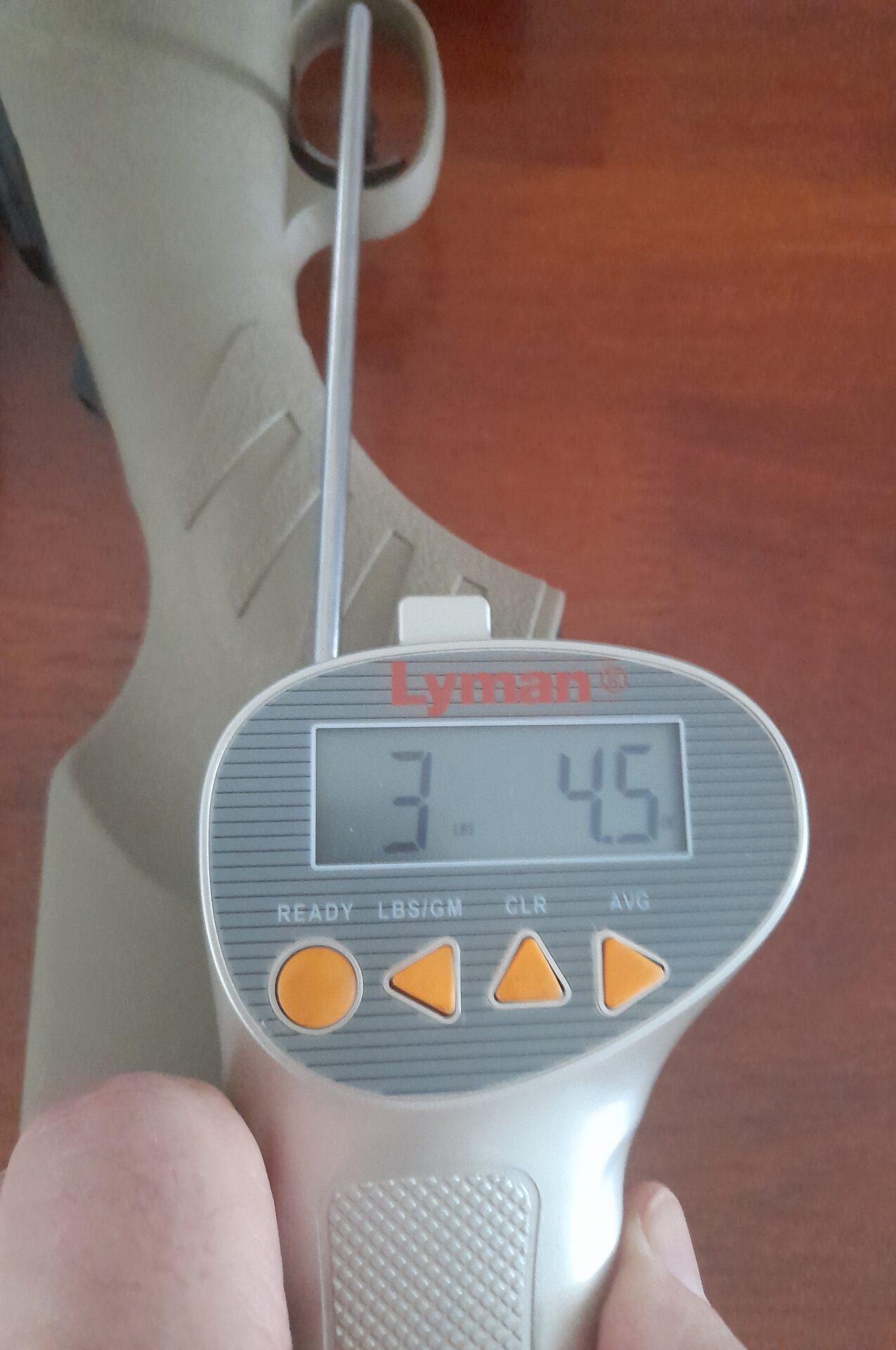
With the scope mounted and bore-sighted, my attention turned to trigger pull weight. The trigger weight on the Ranch rifle was factory set at 4lbs 9oz, which is too heavy for my liking. The barrelled action was thus removed from the stock and the trigger re-adjusted to 3lbs 4.5oz, a fairly simple job, thanks to Ruger’s Instruction Manual. Rifle and scope were now set to go, all that remained was to assemble some handloads for initial sighting in.
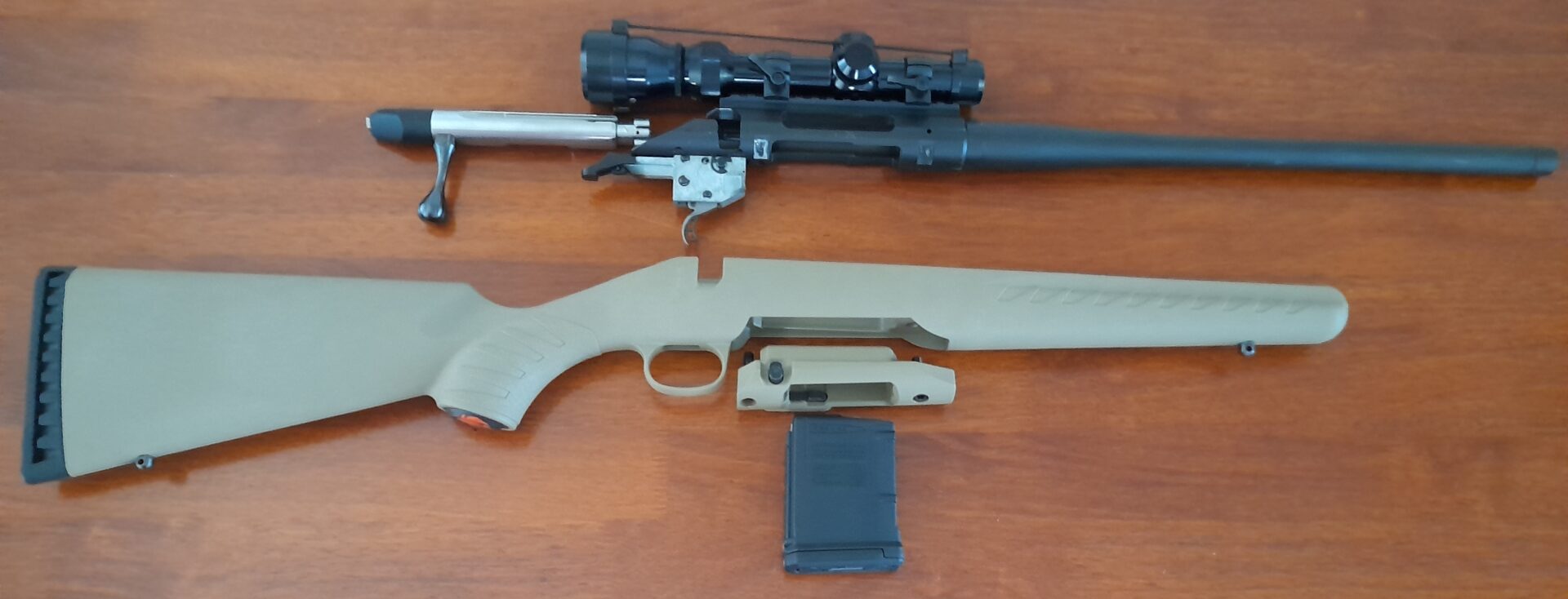
.300BLK Ruger Ranch rifle range tests
As it happened, I had some 180gr Hornady spire points that were purchased for my .30-06 20 years ago. These owed me nothing and I had load data for them, so they were used to get the first shots on paper.
The range tests were conducted at SSAA Townsville’s Hervey Range complex. Initial sighting in was accomplished on a clear, cool morning. A light breeze had minimal effect on the 180gr Hornady’s performance at 50m, and they were grouping where I wanted in pretty short order.
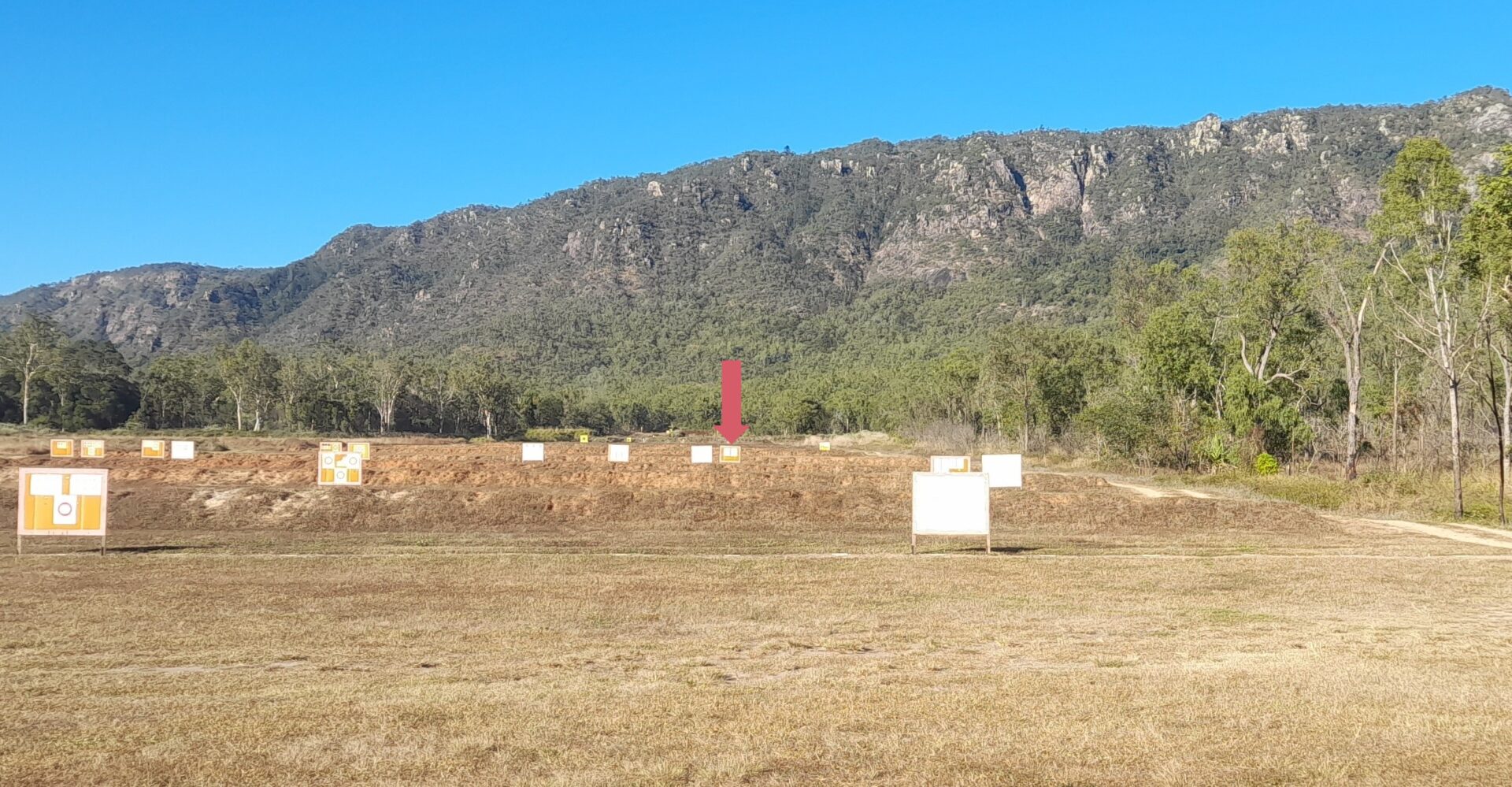
Having zeroed the little Tasco scope, the real test could now begin. First up, the subsonic loads, Hornady 190gr Sub-Xs over 11.5 grains of AR2207 powder, for 1050fps. Day two at the range, and calm, sunny conditions again expedited sighting-in, with only ten rounds expended to produce a 0.75” group right on an inch above point of aim (POA) at 50m.
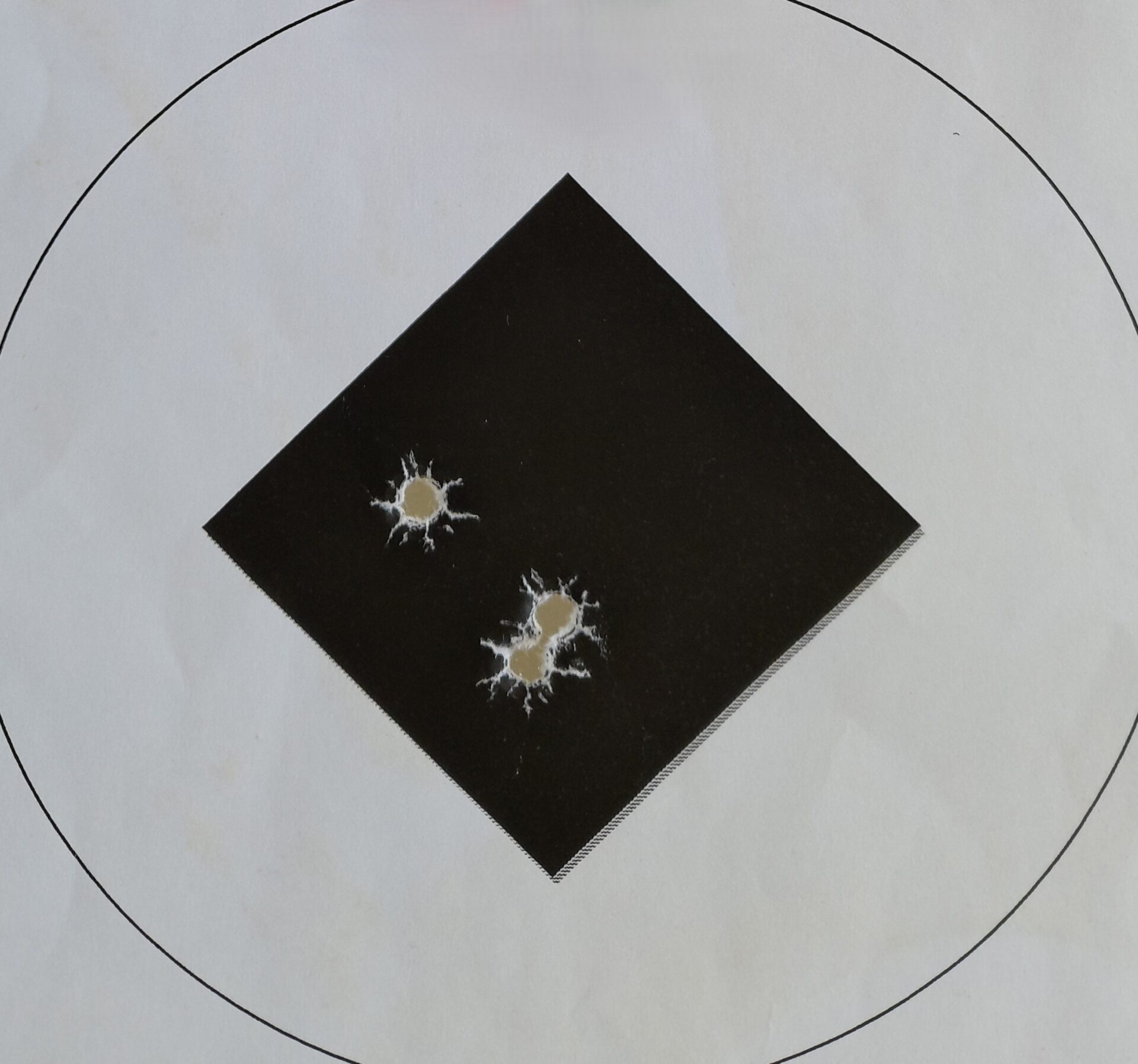
The target was then moved out to 100m to measure the bullet drop at this range. Only one five-shot group was fired before checking the target, because I couldn’t see any hits at all through the scope. Upon inspecting the target, I found that the bullets had dropped about 7” below POA, which was expected, because I’d checked the 190gr Sub-X’s ballistics before leaving home. What was pleasantly surprising, though, was finding all five shots clustered in a 1.44” group.
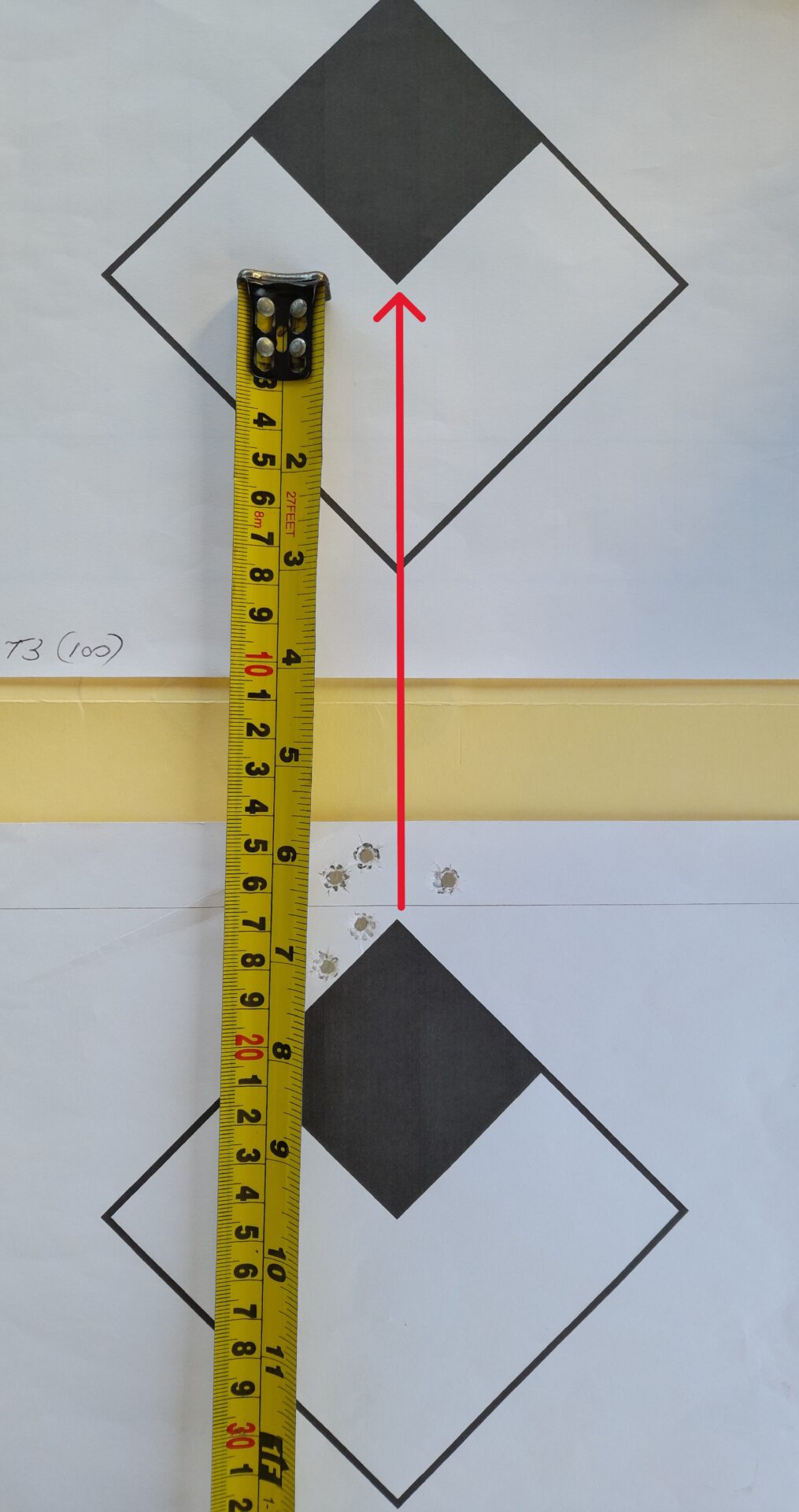
Sub-MOA accuracy guarantees are common now, but for many years Weatherby was the only mainstream firearms manufacturer that provided an accuracy guarantee for their rifles, which was a 1.5” group at 100 yards with premium factory ammunition. With its first group at 100m, the Ruger Ranch rifle produced the same performance with subsonic handloads! I was impressed, to say the least, and couldn’t wait to get back to the range with some supersonic ammo.
For the supersonic load tests, I used Sierra 135gr Varmint HP projectiles. Sierra recommends these for .300BLK hunting use, and they were not only plentifully available, but also good value for money. I loaded them over ADI AR2205, starting with 18.5gr and working up to 19.5gr in 2-3 grain increments. Then it was off to the range again on another awesome winter morning.
The target was placed at 100m, and I set about testing the 135gr Sierra’s, working up from the 18.5gr loads to the 19.5gr loads. Apart from three groups around 1.5”, the rest of my efforts were 2” or more, and I was struggling to get the groups centred on POA. On the way home I wondered if this was simply due to fatigue (I am getting on you know), or had I expected too much out of the Tasco’s 20mm objective lens and 3.5x magnification? After a few seconds of deliberation, I decided to adopt the old ‘if at first you don’t succeed, blame the equipment’ approach. So, the little Tasco was swapped for the 4-12x40mm Bushnell off my .243 and another batch of 135gr Sierras was loaded up, all with 19.3gr of AR2205.
There was a fair bit of fog around on my fourth trip out to the range, but the range itself was completely clear upon arrival. Again, there was very little breeze, just a faint amount of left-to-right movement every now and then.
Having somewhat hastily bore-sighted the 4-12x Bushnell, I began sighting it in at 25m. I needn’t have bothered, because the only sight change required was a 2” windage adjustment. At 50m only one more windage adjustment needed to be made, plus a few clicks of elevation, and the scope was fine-tuned. Eleven rounds fired and I was set to shoot groups at 100m. I was grinning all the way back from the 100m line, then Murphy’s Law caught up with me.
Settling down to ‘take care of business’ at 100m, I peered through the scope and found the target moving ever so slightly right, then left across the vertical crosshairs. Even when I took my hands completely off the rifle, the target kept wobbling around. Looking up from the scope I could just see some heat haze beyond the 50m mark and to the left of my lane of fire. I continued shooting, but the haze interfered with the sight picture throughout the session. My best effort was four shots inside 1.25”, with the fifth opening the group up to 2.25”. I was frustrated about the flyer, but very pleased that the four-shot group was centred virtually dead-on POA.
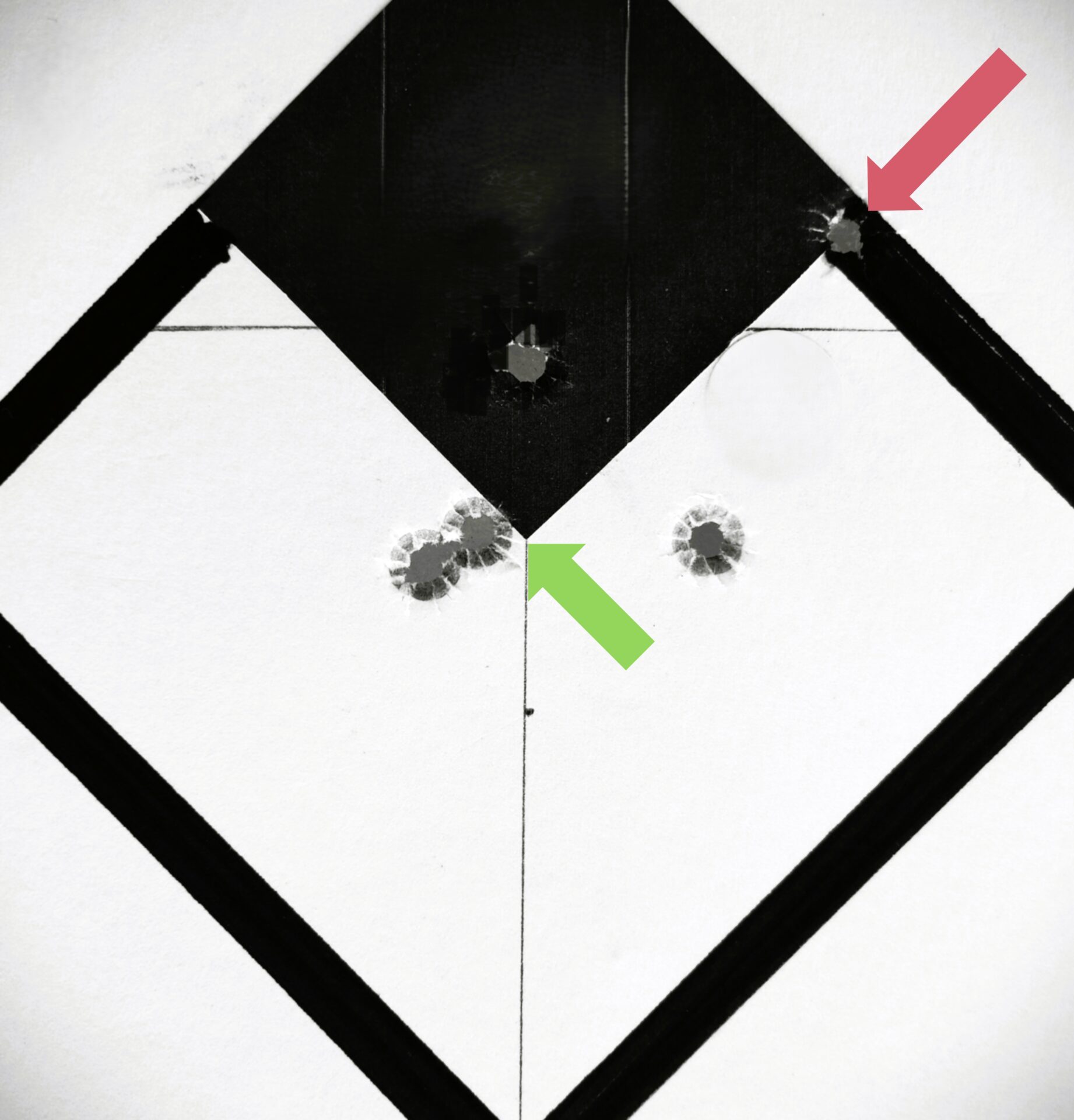
Once again, the last group of the day was three 190gr subsonic loads aimed at the top of my 100m target. Luckily, I’d stapled another target below the 100m one for ‘insurance’, because the three 190 grainers landed 20” below the POA.
Conclusion
The Ruger American Ranch rifle in .300BLK proved capable of at least 1.5 MOA groups with both supersonic and subsonic ammo.
| Table 2: .300 Blackout Load Data Case: Hornady Trim Length: 1.352” Bullet Diameter: .308” | ||||||
| Bullet | C. O. L | Primer | Powder | Load | Velocity | Best Group |
| Hornady 190g SubX | 2.050” | Win SRP | AR2207 | 11.5gr | 1050fps | 0.76” (50m) 1.44” (100m) |
| Sierra 135g Var HP | 2.055” | Rem 61/2 | AR2205 | 19.3gr | 1960fps | 1.07” (50m) 1.57” (100m) |
Without a suppressor, subsonic rounds with an effective range of 50m produce a similar noise level and recoil as supersonic loads that are effective to 150m. Sporting shooters would therefore have little practical use for subsonic .300BLK cartridges, as far as hunting goes, but at least the capability for subsonic use is there. And who knows, our officialdom may one day accept that all firearms are equal in the hands of responsible, law-abiding citizens and lift restrictions on the possession of specialised equipment, such as suppressors, for shooters who have a legitimate use for them, e.g. for hearing protection.
But back to reality. Using supersonic loads, the .300BLK is a genuine short-to-medium range proposition. It isn’t an ‘all-round’ cartridge like the .243, or .308, but for those who require a compact, rugged and inexpensive rifle for the ute, motorbike or quad, the Ruger Ranch rifle in .300BLK should fit the bill. Furthermore, its accuracy, light weight, low recoil and bigger punch than a .223 make it a viable option for a young shooter’s first centrefire rifle. Fig 9
To conclude, the aim of this review was to evaluate the performance of the .300BLK cartridge with subsonic and supersonic ammunition. My expectation was that one of these types of ammo would perform noticeably better than the other, but tests conducted thus far show this is not the case. Indeed, a shooter could effectively alternate between subsonic and supersonic ammunition using the test rifle fitted with a scope that has an MOA reticle.
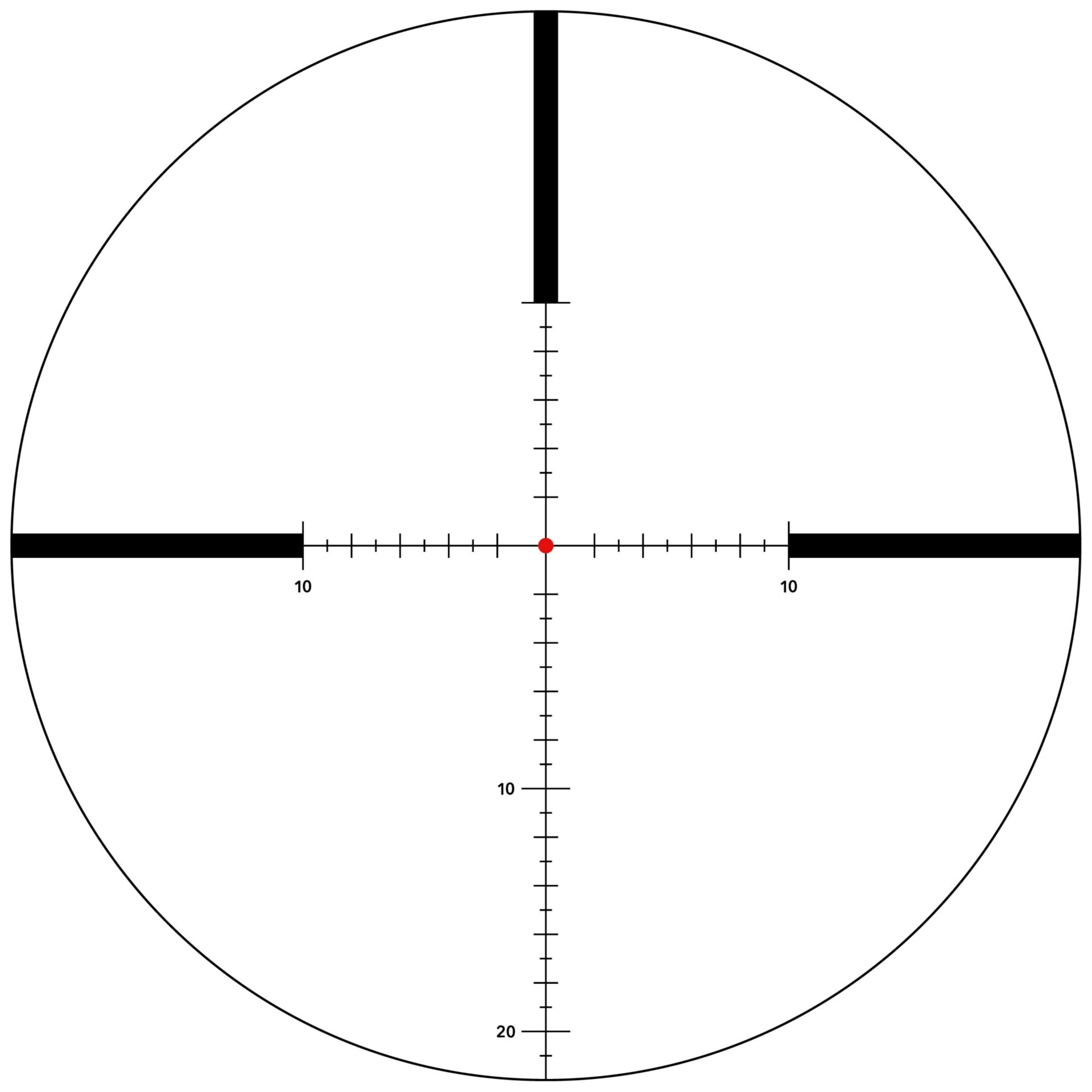
Before carrying out this review I had not considered the .300BLK for hunting, but the light weight, compact package afforded by Ruger’s Ranch rifle is so user-friendly that I’m now compelled to regard the .300BLK in a different light. It is indeed a dual-purpose hunting cartridge, and hopefully I’ll get to test it with a suppressor someday soon.
