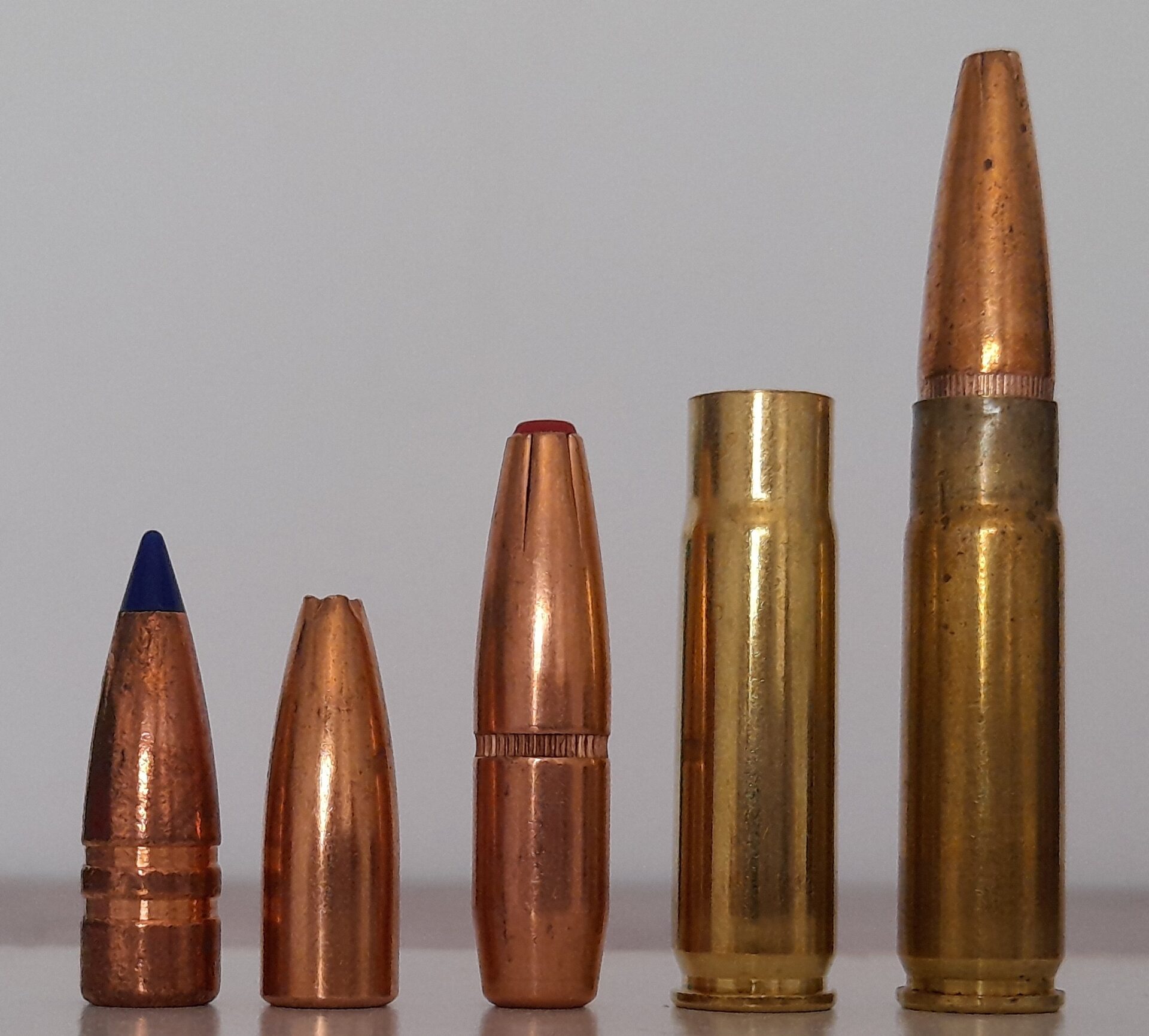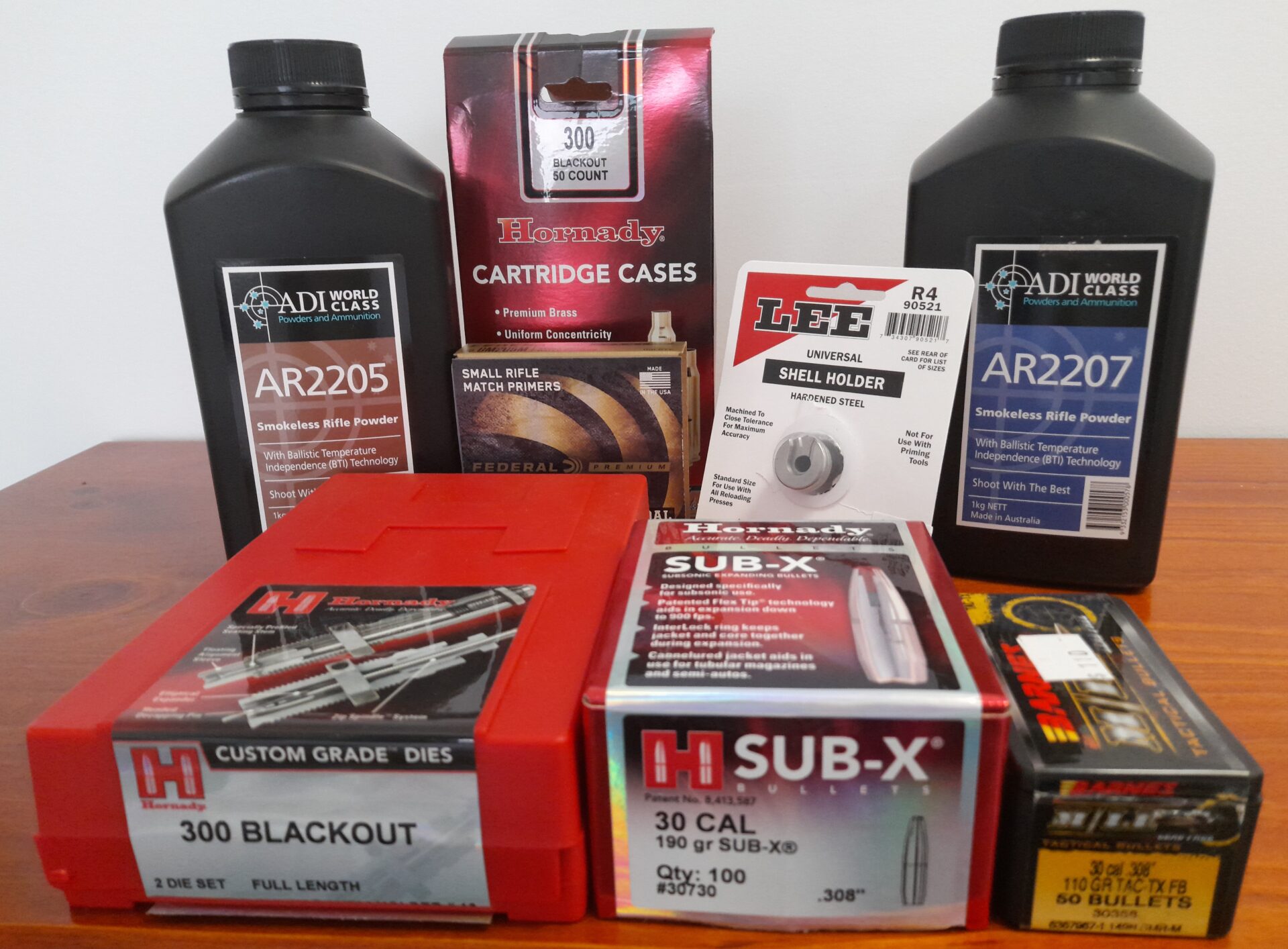

.300 AAC Blackout Cartridge
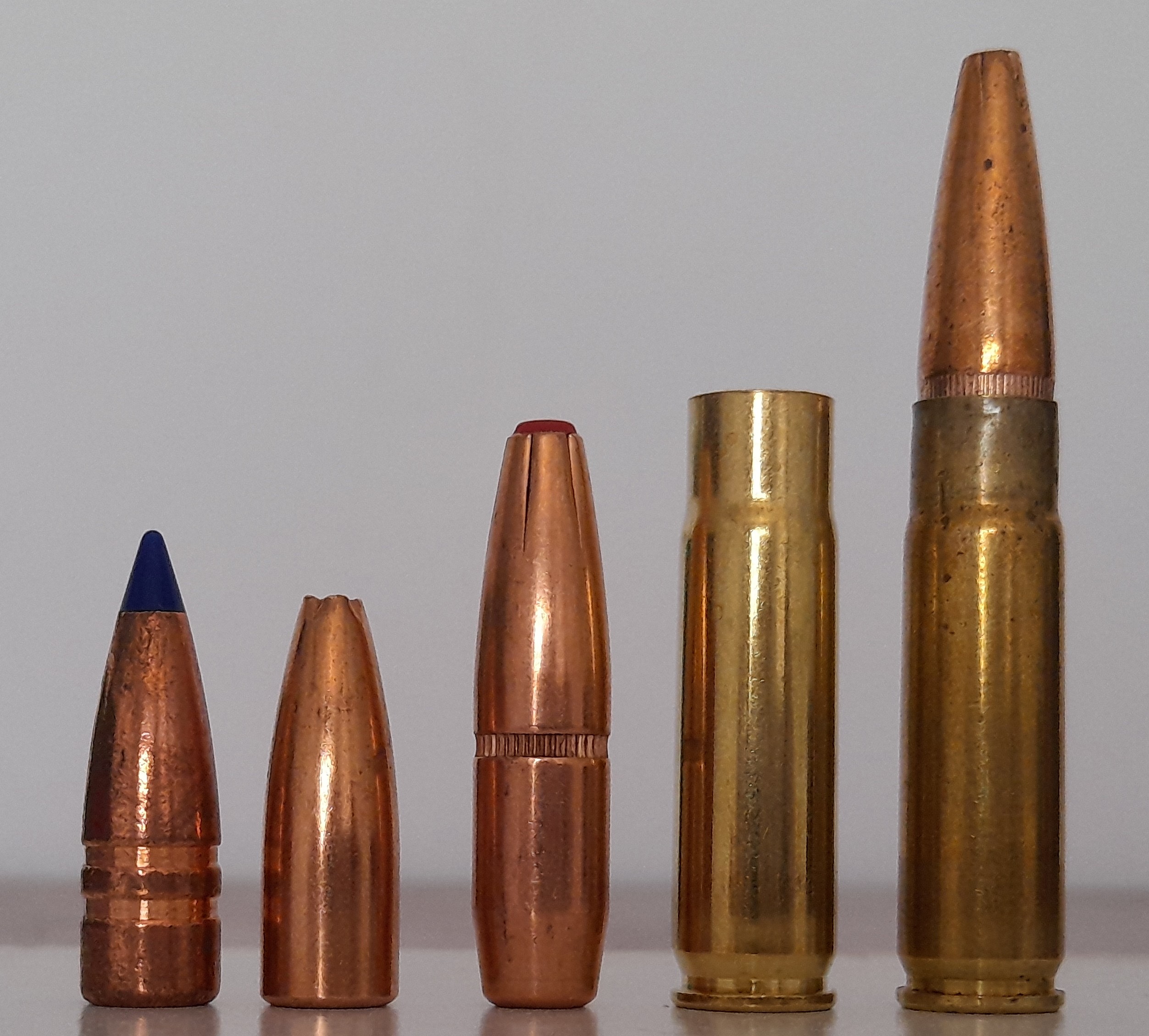
A controversial wildcat
By Steve Marchant
Genealogy
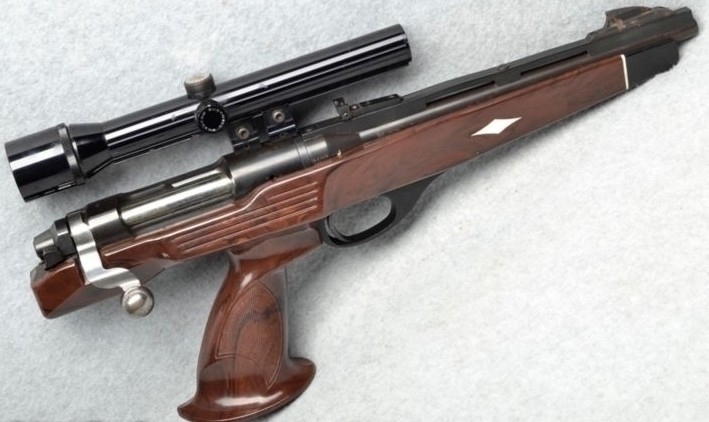
The history of the .300 AAC Blackout begins back in 1963, with the introduction of the .221 Remington Fireball, a cartridge which was developed for Remington’s XP-100 silhouette pistol. Based on a shortened .222 Remington case, the .221 Fireball reaches a muzzle velocity of 2,650 feet per second (fps) with 50-grain (gr) .224” calibre bullets.
Wildcatters soon began necking up the .221 Fireball case to accept .308-inch projectiles. This resulted in a very efficient cartridge that was effective with a range of bullet weights. The .300-221 wildcat became of particular interest to J.D. Jones of SSK Industries. A renowned handgun hunter and prolific inventor, Jones is largely known for two lines of firearms cartridges. His ‘JDJ’ cartridges range from .224 to .950 calibre and are principally intended for Thompson Center Contender single-shot pistols and rifles. Whereas the ‘Whisper’ line of cartridges, which range from .244 to .510 calibre, are devised to cause maximum damage at subsonic speeds. The most renowned of these is the .300 Whisper, a variant of the .300-221 Fireball wildcat. Developed in 1992, the .300 Whisper was designed to utilise relatively lightweight bullets at supersonic velocities and heavier bullets at subsonic velocities.
J.D. trademarked the name ‘.300 Whisper’, which prevented anyone from marketing a firearm chambered in that cartridge, unless a licensing agreement was signed. To circumvent the licensing agreement, the wildcatters simply referred to their own variant of the cartridge by a different name. This resulted in various names and different chamber dimensions being used for basically the same .300-221 cartridge.
Development
In 2010, Robert Silvers, the R&D Director of Advanced Armament Corporation (AAC), was approached by a military client about a way to fire .30 calibre bullets from AR-15/M4 firearms using the standard bolts and 30-round magazines. The ammunition was to be manufactured by Remington Defense. AAC couldn’t use the .300 Whisper cartridge, as Remington is a Sporting Arms and Ammunition Manufacturers’ Institute (SAAMI) company, and will only load ammunition that is SAAMI approved. AAC subsequently adopted the .300-221 wildcat concept and determined chamber specs that would enable full power .30 calibre ammo to be fired from an AR-15 using normal 30-round AR magazines. The cartridge was named the .300 AAC Blackout and was approved by SAAMI on January 17, 2011.
Controversy
Upon its release, many firearm enthusiasts believed that the .300BLK was a completely different cartridge than the .300 Whisper. In fact, the two cartridges are basically identical. Range tests where .300 Whisper factory loads were fired in .300BLK firearms, and .300BLK factory loads were fired in .300 Whisper firearms found no discernible difference in their performances (see Table 1). Whether the .300 Whisper and the .300BLK are the same cartridge or not, the popularity of the 300BLK has now overshadowed the controversy.
| Shooting Test Results .300BLK & .300 Whisper (100 yards) | |||
| Bushmaster Rifle .300 AAC Blackout 16” Barrel | |||
| Cartridge | Ammunition | Muzzle Vel @ 10 yds | Standard Deviation |
| .300BLK | Corbon 125gr | 2188fps | 6 |
| .300 Whisper | Corbon 125gr | 2134fps | 25 |
| .300BLK | Remington 220gr | 961fps | 54 |
| .300 Whisper | Corbon 220gr | 1068fps | 35 |
| SSK Rifle .300 Whisper 16” Barrel | |||
| Cartridge | Ammunition | Muzzle Vel @ 10 yds | Standard Deviation |
| .300BLK | Corbon 125gr | 2179fps | 13 |
| .300 Whisper | Corbon 125gr | 2127fps | 21 |
| .300BLK | Remington 220gr | 899fps | 33 |
| .300 Whisper | Corbon 220gr | 1068fps | 19 |
Military adoption
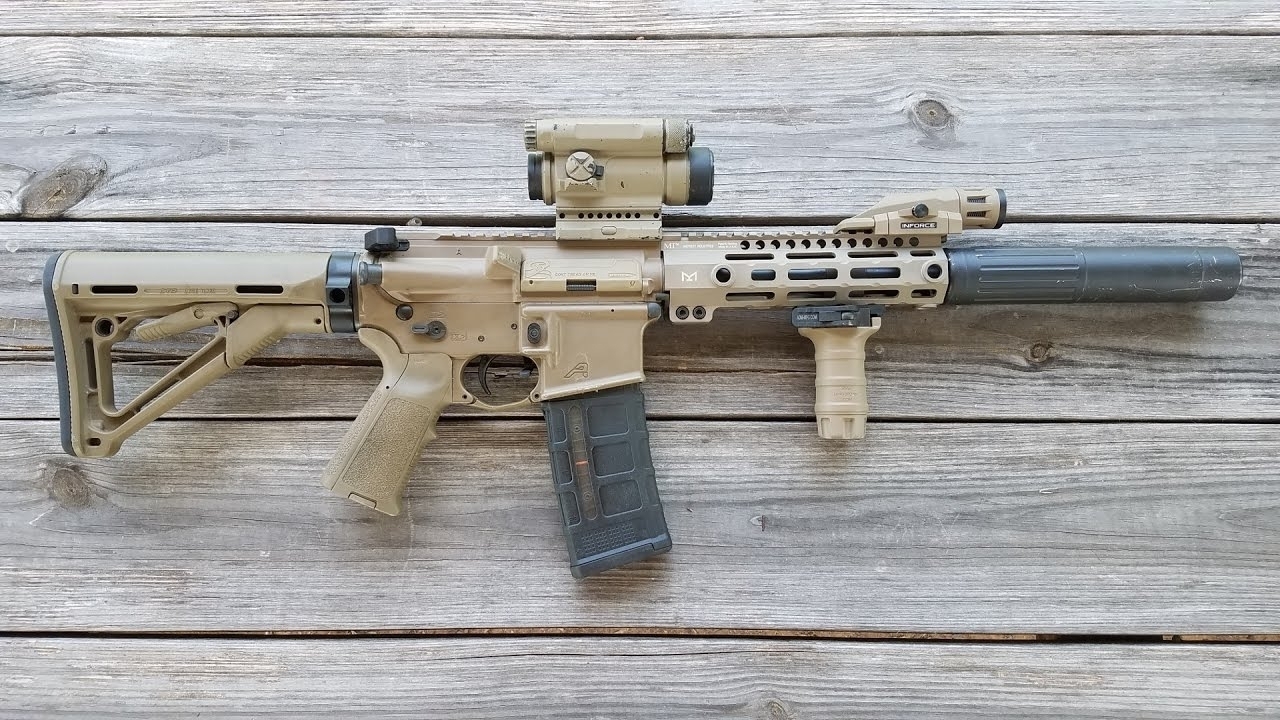
For military use, the .300BLK offers comparable performance to the well-renowned 7.62x39mm, but in a more compact, AR-15/M4 compatible platform. It also provides better suppressor compatibility, especially with subsonic loads. When compared to the performance of the 5.56x45mm cartridge, the .30 calibre bullet of the BLK has 89 per cent more frontal bullet area and thus leaves a larger wound cavity in soft targets. It also penetrates deeper, yaws faster and is effective out of barrels as short as 4.5” (110 mm). The .300BLK has been widely adopted by Special Operations Forces around the globe for specific mission profiles and will probably remain a popular choice for these types of missions into the future.
Non-military adoption
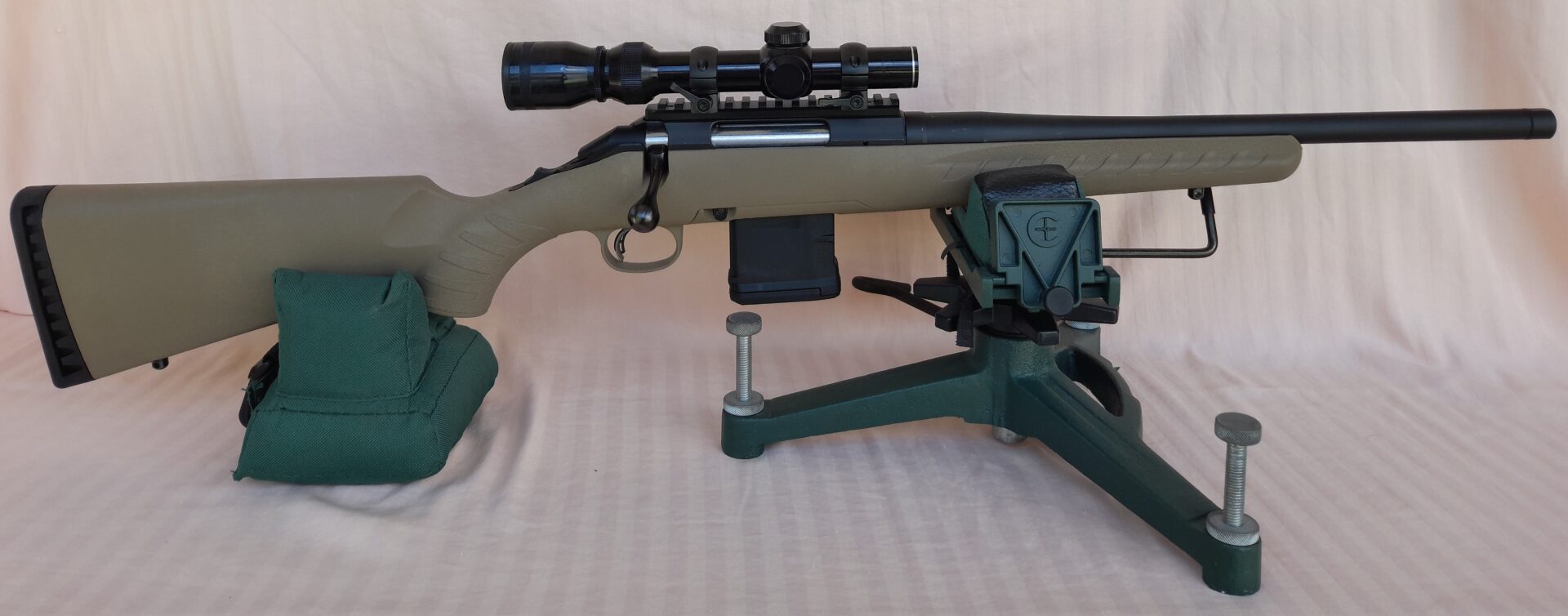
The 300BLK’s performance is slightly different than conventional sporting rifle cartridges in that it offers two distinct levels of performance. A shooter can select either heavy (200 – 240gr) subsonic loads, or lighter (110 – 150 gr) supersonic loads. Heavy, efficient projectiles with high ballistic coefficients retain their velocity and energy well. So, despite having a very low initial velocity, subsonic 200+gr .300BLK loads can provide acceptable performance on medium-size game at ranges within 100 metres.
Supersonic loads are effective on pigs and deer out to 200 metres with quality hunting projectiles. With a 16-inch (or less) barrel, a .300BLK hunting rifle is compact and light. The .300BLK cartridge has a mild recoil (Table 2) and is ideal for snap-shooting situations, as highlighted by Neil Schultz in the December 2025 edition of The Report. Depending on your hunting situation, a low-power variable scope or red dot optic is a good choice for the .300BLK.
| 300BLK v .223 Rem v .243 Win: Cartridge Specs & Performances | ||||||
| Cartridge | Cartridge LOA | Case Length | Bullet Weight | Muzzle Velocity | Muzzle Energy | Recoil Energy* |
| .300BLK | 2.26” | 1.368” | 110gr 220gr | 2350 fps 1050 fps | 1350ft lbs 539ft lbs | 6.4lbs |
| .223 Rem | 2.10” | 1.76” | 55gr | 3240 fps | 1280 ft lbs | 3.2lbs |
| .243 Win | 2.71” | 2.045” | 100gr | 2960 fps | 1945ft lbs | 8.8lbs |
| *Recoil energy is indicative – test firearms are not the same exact weight. | ||||||
Conclusion
The .300BLK is somewhat unique in its ability to effectively perform two different roles. It is an increasingly popular chambering in the USA, mainly with AR-15-equipped target shooters and hunters, who can utilise both its sub-sonic and super-sonic capabilities. Suppressors are not available for general use here in Australia, but with supersonic loads, a lightweight, compact, yet low recoiling .300BLK can deliver sufficient energy to deal effectively with medium game up to 200 metres. Consequently, it should be a useful tool here too, particularly for hunters and property personnel on horseback and in vehicles. On the downside, in Australia, factory .300BLK loadings can be comparatively expensive and limited in availability, so time will tell if the .300BLK really catches on here.